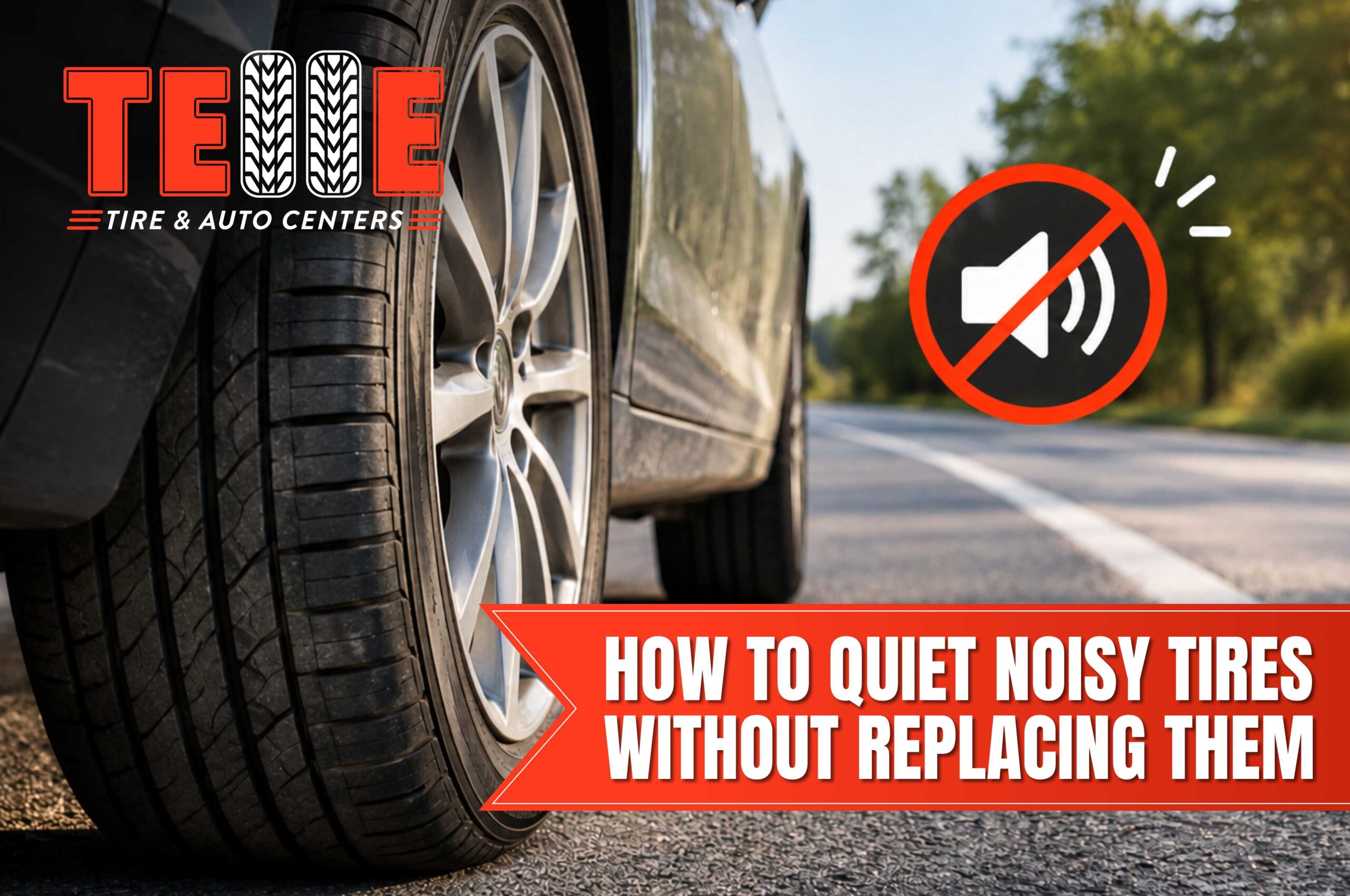
How to Quiet Noisy Tires Without Buying New Ones
 Telle Tire 14 min read
Quick Answer
You can sometimes quiet noisy tires by correcting tire pressure, alignment, or balancing, or by addressing uneven wear, but severe tread damage may require replacement.
In This Article
- Why Are My Tires So Noisy?
- How to Quiet Noisy Tires Without Replacing Them
- Which Tire Problems Can and Cannot Be Fixed?
- When Should You Have Noisy Tires Inspected?
- How to Prevent Tire Noise in the Future
- Frequently Asked Questions
Why Are My Tires So Noisy?
Tires naturally make noise as their tread contacts the road. Air moves through the tread grooves while the rubber flexes against the pavement, creating a humming or rolling sound.
However, unusually loud road noise may indicate uneven wear, incorrect tire pressure, or another vehicle issue. Irregular tread wear is a common cause of increasing tire noise.
Understanding what causes road noise tires produce can help you determine whether a maintenance adjustment may reduce the sound or if your tires need professional attention.
Here are six common causes.
1. Uneven Tire Wear
Uneven wear can result from incorrect tire pressure, poor alignment, suspension problems, or missed tire rotations.
Cupping creates alternating high and low spots across the tread, while feathering creates a sawtooth-like surface. Both can cause humming, rumbling, or thumping sounds.
2. Incorrect Tire Pressure
Underinflated tires flex more than intended, increasing heat and potentially accelerating wear. Overinflated tires may wear unevenly, especially around the tread center.
Check cold tire pressure using the recommended PSI on your driver’s door-jamb placard or owner’s manual, not the maximum pressure printed on the tire.
3. Improper Wheel Alignment
Misaligned wheels can cause tires to drag or scrub against the road, leading to uneven wear and extra noise.
Hitting potholes, striking curbs, or replacing suspension components can affect alignment. Your vehicle may also pull to one side or have a crooked steering wheel.
4. Unbalanced Wheels
Unbalanced wheels can cause vibrations as the tires rotate. You may feel them through the steering wheel, floor, or seats, especially at certain speeds.
Over time, imbalance can also contribute to uneven tread wear and increased noise.
5. Aggressive Tire Tread Patterns
Some tires are naturally louder because of their design. All-terrain and mud-terrain tires have larger tread blocks for off-road traction, which can create more humming or growling on paved roads.
Touring and certain all-season tires are generally designed for quieter, more comfortable rides.
6. Rough Road Surfaces
Coarse asphalt, concrete highways, and rough pavement can increase tire noise. Your tires may sound quiet on one road but louder on another.
This is usually normal. However, a sudden or persistent change in noise should be checked.
How to Quiet Noisy Tires Without Replacing Them
If your tires have sufficient tread and no structural damage, these maintenance steps may help reduce unnecessary noise. Start by identifying the cause.
These tire noise reduction methods focus on correcting maintenance problems rather than masking the noise.
1. Check and Adjust Tire Pressure
Check cold tire pressure with a reliable gauge and compare the readings with the recommended PSI on your driver’s door placard.
- Check all four tires and the spare, if applicable.
- Follow separate front and rear pressure recommendations.
- Inspect for leaks if a tire repeatedly loses air.
Correct pressure supports even road contact and helps prevent additional wear, but it won’t reverse existing damage.
2. Have Your Tires Rotated
Front and rear tires often wear differently. Regular rotation helps distribute tread wear more evenly and may prevent noise caused by developing irregular wear.
Follow your owner’s manual for the correct rotation pattern. Telle Tire offers professional tire rotation services, including complimentary lifetime rotations for tires purchased through its tire package.
3. Get Your Wheel Alignment Checked
Misaligned wheels can scrub against the road, causing uneven wear and extra noise.
Have your alignment checked if you notice:
- Your vehicle pulling to one side.
- An off-center steering wheel.
- Uneven wear along the tire edges.
- Handling changes after hitting a pothole or curb.
Alignment can prevent further uneven wear, but it cannot restore worn tread. Learn more about Telle Tire’s wheel alignment services.
4. Have Your Wheels Balanced
Unbalanced wheels can cause vibrations through the steering wheel, seats, or floor, especially at highway speeds.
A technician uses balancing equipment to identify uneven weight distribution and correct it with small wheel weights.
Balancing reduces vibration, while alignment corrects wheel angles. They address different problems.
5. Inspect Suspension and Steering Components
Worn shocks, struts, bushings, and ball joints can affect tire contact with the road and contribute to uneven wear.
Watch for excessive bouncing, clunking sounds, unusual steering behavior, or a rougher ride. Have the suspension and steering systems inspected if these symptoms appear.
6. Check for Trapped Debris
Small stones and gravel lodged in tread grooves can create clicking or repetitive sounds.
Remove loose debris only when safe. Don’t pull out embedded nails or screws yourself. Have a professional inspect any puncture to determine whether the tire can be repaired safely.
7. Drive More Smoothly
Hard braking, sudden acceleration, and sharp turns can accelerate tire wear.
To help preserve your tires:
- Accelerate and brake gradually.
- Avoid potholes and road debris when safe.
- Slow down before sharp turns.
- Stay within your vehicle’s load limits.
Smoother driving helps reduce unnecessary tread wear, which may prevent additional road noise.
These habits won’t make an inherently noisy tire silent, but they can help maintain its condition.
Which Tire Problems Can and Cannot Be Fixed?
Not every noisy tire needs immediate replacement. However, it’s important to understand the difference between correcting a maintenance problem and reversing existing tire damage.
The following comparison explains which issues may respond to tire noise reduction services and which ones may require new tires.
| Tire problem | Can maintenance help? |
|---|---|
| Incorrect tire pressure | Yes. Adjusting pressure can restore proper inflation. |
| Developing uneven wear | Correcting alignment, pressure, or suspension problems can prevent further damage. |
| Wheel imbalance | Yes. Professional balancing can correct weight distribution. |
| Loose stones in tread | Yes. Safely removing loose debris can eliminate related clicking sounds. |
| Tire cupping | The underlying suspension or balance issue can be corrected, but existing tread damage remains. |
| Feathered tread | Alignment problems can be corrected, but worn tread cannot be restored. |
| Aggressive tread design | No. The tire’s inherent noise characteristics remain. |
| Old or hardened rubber | No. Maintenance cannot restore the original rubber properties. |
The distinction matters because fixing the cause doesn’t necessarily make an already damaged tire quiet again.
For example, correcting a wheel alignment problem may prevent further uneven wear. However, if the tread has already developed pronounced high and low spots, the humming may continue.
A professional inspection can help determine whether your existing tires are still safe to use or if replacement is the better option.
When Should You Have Noisy Tires Inspected?
Some tire sounds are normal, particularly when driving on coarse pavement or at highway speeds. Others can indicate problems that deserve attention.
Pay attention to how the noise develops and whether you notice other changes in your vehicle. Not all road noise tires produce comes from the tread itself. Wheel bearings, suspension components, and other mechanical issues can create similar sounds.
| Noise or symptom | Possible cause |
|---|---|
| Humming that increases with speed | Tire tread pattern, uneven wear, or wheel bearing problems |
| Repetitive thumping | Flat spots, tire damage, or irregular tread wear |
| Growling or roaring | Cupped tires, wheel bearings, or other mechanical problems |
| Clicking sounds | Loose debris, a puncture, or a loose component |
| Vibration with road noise | Wheel imbalance, tire damage, or suspension problems |
| Noise that changes when turning | Possible wheel bearing, tire, or suspension issue |
These symptoms are clues, not definitive diagnoses. For example, a failing wheel bearing can produce a growling sound that resembles tire noise.
Do not ignore sudden or unusually loud noises. Stop driving when you notice a tire bulge, exposed cords, significant pressure loss, or other signs of structural damage. Arrange a professional inspection before continuing.
If you experience severe vibration, impaired steering, or unusual vehicle handling, pull over somewhere safe and arrange assistance.
Telle Tire’s technicians can inspect your tires, check their wear patterns, and help identify possible causes of unusual noise.
How to Prevent Tire Noise in the Future
Once you’ve addressed the source of the noise, consistent maintenance can help keep your tires in better condition.
Here are a few habits worth maintaining:
- Check tire pressure regularly. Measure your tire pressure when the tires are cold and follow the vehicle manufacturer’s recommendations.
- Follow your tire rotation schedule. Rotate your tires according to the owner’s manual to help distribute tread wear more evenly.
- Have your alignment checked when necessary. Pay attention to pulling, off-center steering, and unusual tread wear, particularly after hitting potholes or curbs.
- Keep up with tire balancing. Have your wheels checked when you experience vibrations or after installing new tires or certain tire repairs.
- Inspect your tread periodically. Look for uneven wear, cracks, punctures, and other visible damage.
- Choose appropriate tires for your driving needs. If you eventually need replacements, consider touring or all-season models designed with lower road noise and ride comfort in mind.
If you eventually need replacements, consider touring or all-season models designed for lower road noise. These low-noise tires often feature optimized tread patterns and construction to improve ride comfort.
Drivers comparing low-noise tires should also consider wet and dry traction, tread life, handling, and vehicle compatibility. A quieter tire isn’t necessarily the best choice if it doesn’t meet your driving requirements.
Telle Tire includes complimentary wheel balancing and rotations for the life of tires purchased through its tire package. These services help drivers maintain their tires and monitor wear over time.
Frequently Asked Questions
Can you make noisy tires quieter without replacing them?
Yes, depending on the cause. Correcting tire pressure, wheel imbalance, and alignment problems, and addressing uneven wear can help reduce unnecessary road noise. However, established tread damage and certain tire design characteristics cannot be reversed through maintenance.
Why are my tires so loud all of a sudden?
A sudden increase in tire noise may indicate uneven tread wear, a puncture, tire damage, loose debris, or a mechanical problem such as a failing wheel bearing. Changes in road surfaces can also affect noise levels. Have your vehicle inspected if the sound is unusual or persistent.
Does rotating tires make them quieter?
Tire rotation can help prevent uneven wear by distributing tread use across different wheel positions. This may help reduce noise associated with irregular wear. However, rotation cannot reverse existing tread damage.
Can low tire pressure cause road noise?
Yes, incorrect tire pressure can affect how tires contact the road and how they wear. Underinflation can increase tire flexing and heat buildup, while overinflation may contribute to uneven center wear. Maintaining the recommended pressure helps support proper tire performance and ride comfort.
Does wheel alignment reduce tire noise?
Correct wheel alignment can help reduce additional road noise caused by uneven tire wear. When wheels are properly aligned, tires can roll more evenly instead of scrubbing against the pavement. However, alignment cannot restore tread that has already worn unevenly.
Are all-season tires quieter than all-terrain tires?
Generally, many all-season touring tires produce less road noise than aggressive all-terrain tires. All-terrain models have larger tread blocks and wider grooves designed for traction on loose surfaces, which can create more road noise on paved highways. Actual noise levels depend on the specific tire design.
What are the best low-noise tires for a comfortable ride?
Touring tires and certain all-season tires are popular choices for drivers who prioritize quiet operation and ride comfort. Look for models designed with noise-reducing tread patterns, suitable rubber compounds, and construction that matches your vehicle’s specifications.
When comparing comfortable-ride tires, consider more than just noise levels. Wet traction, braking performance, handling, and tread life are also important factors.
The best choice depends on your vehicle, driving conditions, and performance requirements. You can ask a Telle Tire team member to help compare suitable options when replacement becomes necessary.
Can worn tires become louder even if they still have tread?
Yes. Tires can become noisier as they develop uneven tread patterns, including cupping, feathering, and irregular shoulder wear. Having sufficient tread depth does not automatically mean the tires are wearing properly. A professional inspection can help determine their condition.
Is tire noise dangerous?
Not always. Some rolling noise is normal, especially with certain tread designs and road surfaces. However, a sudden or increase in noise, loud thumping, or noise accompanied by vibration, pulling, or changes in handling may indicate a problem that needs attention. Tire bulges, exposed cords, and suspected structural damage require immediate attention.

Take it to telle
Stay Safe with a Tire Check from Telle Tire
Worried about your tread depth or tire condition heading into the summer storm season? Take it to Telle. Our expert technicians can assess your tires, check pressure levels, and recommend replacements when necessary, helping you stay in control regardless of the weather conditions. Stay safe, stay prepared, and if you’re unsure about your tires, schedule a visit with your nearest Telle Tire & Auto Centers location today.
Stay Informed
Recent Articles from Telle Tire
Which Tires Are Safest in the Rain? What to Look For
Learn which tire features improve wet-road traction, help prevent hydroplaning, and keep your vehicle more stable in rainy conditions.
Towing Over 5,000 lbs? Your Truck Needs LT Tires, Not P-Metric
Quick Answer LT tires are generally better suited for regular heavy towing, but the right choice depends on your truck’s factory specifications, axle ratings, and tire…
Missouri Tire Maintenance Tips for Better Tire Safety
If you drive regularly in Missouri, your tires deal with a little bit of everything. Hot summer pavement, heavy rain, freezing mornings, changing temperatures, potholes, highway…