Which Tires Are Safest in the Rain? What to Look For
 Telle Tire 15 min read
Quick Answer
The safest tires for rain offer strong wet braking, effective water-channeling tread grooves, and adequate tread depth, so compare wet grip ratings and independent test results rather than relying on the all-season label alone.
In This Article
- What Makes a Tire Safe to Drive in the Rain?
- Best Tire Features for Wet Road Traction
- All-Season Tires vs. Dedicated Rain Tires
- How to Choose the Best Tires for Rain
- How Tread Depth Affects Hydroplaning
- Signs Your Tires Are No Longer Safe in the Rain
- When Should You Replace Your Tires?
What Makes a Tire Safe to Drive in the Rain?
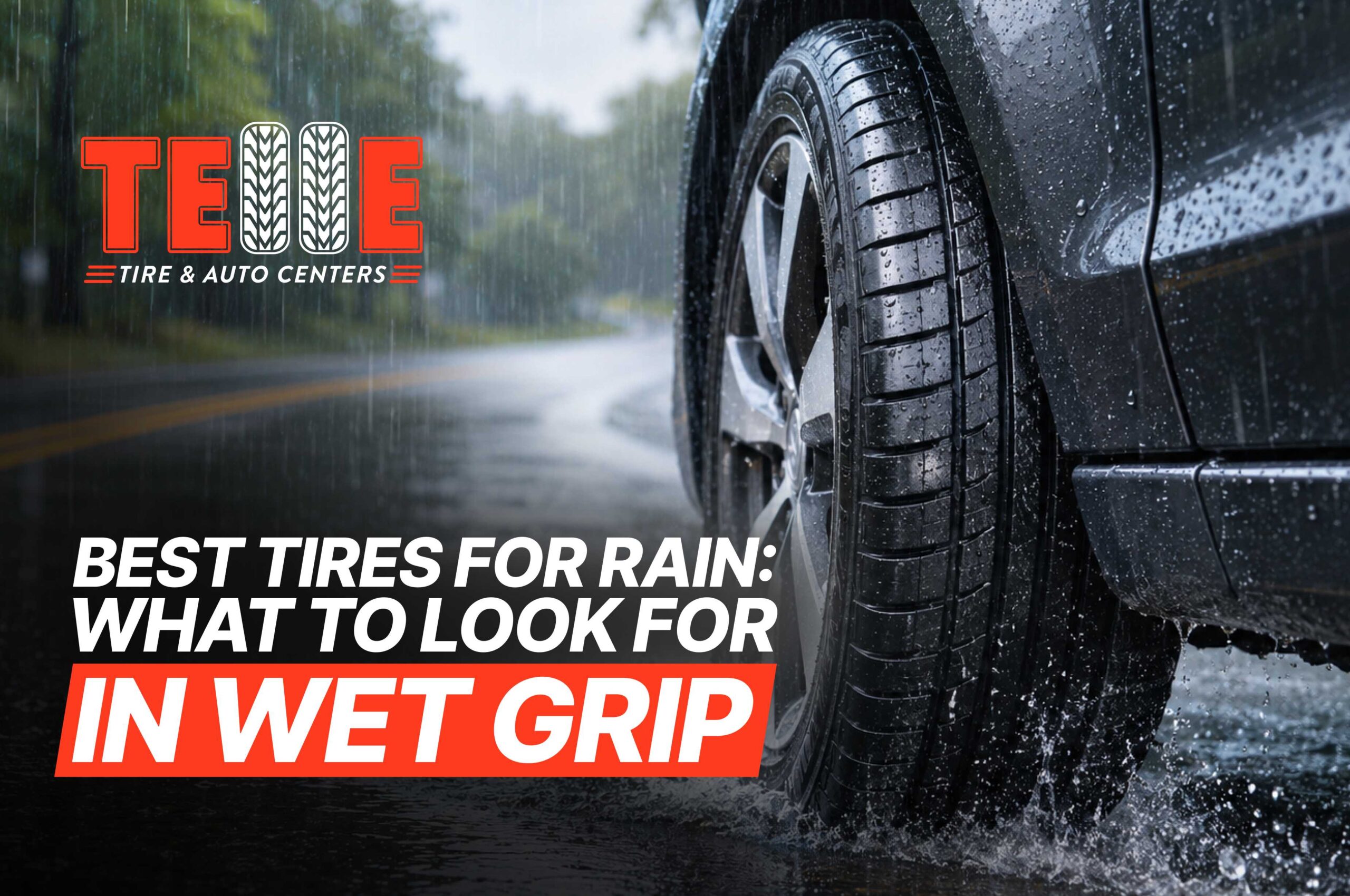
Driving on wet pavement requires more than simply having tires with visible tread. The best tires for rain maintain contact with the road while moving water away from the contact area. Their tread design, rubber compound, and condition all influence how well they handle wet conditions.
When rain covers the pavement, a tire’s tread grooves help channel water away from the surface underneath it. This allows the rubber to maintain contact with the road, supporting braking, steering, and acceleration.
Several factors influence how well tires perform in wet conditions:
- Tread depth: Deeper, properly maintained tread provides more space to channel water away.
- Tread design: Circumferential grooves, lateral channels, and other tread features help move water away from the contact patch.
- Rubber compound: The tire’s rubber formulation affects how well it grips wet pavement.
- Tire pressure: Incorrect inflation can affect the tire’s contact with the road and its ability to handle water.
- Vehicle speed: Driving faster gives the tire less time to clear water.
These factors work together. A tire with an advanced tread pattern may still perform poorly if it is worn down or improperly inflated.
What Is Hydroplaning?
Hydroplaning occurs when a layer of water builds up between the tire and the road, causing the tire to lose some or all contact with the pavement.
When this happens, you may notice:
- The steering suddenly feels lighter or less responsive.
- The vehicle begins to drift or pull in one direction.
- The tires feel like they are sliding across the road.
- Steering and braking become difficult to control.
Hydroplaning is more likely when driving through standing water at higher speeds, especially with worn tires.
Tire width, tread design, tread depth, vehicle weight, and inflation pressure also influence how easily hydroplaning can occur.
No tire can completely prevent hydroplaning in every condition. Even the best tires have limits when water is deep enough or driving speeds are too high.
Best Tire Features for Wet Road Traction
When comparing wet grip tires, focus on tread design, rubber compound, and wet braking performance. These features affect how well tires handle water, maintain traction, and stop on wet pavement.
1. Deep, Well-Maintained Tread Grooves
Tread grooves channel water away from the tire’s contact patch. As they wear down, their ability to move water decreases, increasing the risk of hydroplaning.
Compare tread depth and design when shopping for replacement tires, but remember that deeper tread alone does not guarantee better wet traction.
2. Circumferential and Lateral Grooves
Circumferential grooves run around the tire, while lateral grooves cross the tread. Both help move water away from the contact patch.
Some rain tires also feature directional V-shaped patterns to evacuate water. However, directional tread is not automatically better than symmetrical or asymmetrical designs. Overall performance depends on the complete tread pattern.
3. A Rubber Compound Designed for Wet Grip
A tire’s rubber compound affects its grip on wet pavement. Some manufacturers use specialized compounds to maintain flexibility and improve traction during braking and cornering.
When comparing rain tires and all-season options, check the manufacturer’s information on wet traction rather than judging by tread appearance alone.
4. Strong Wet Braking Performance
Wet braking tests measure how far a vehicle travels before coming to a stop on wet pavement. When comparing the best tires for rain, look for independent test results covering:
- Wet braking distance
- Wet handling and cornering
- Straight-line stability
- Hydroplaning resistance
Shorter wet braking distances generally indicate better stopping performance under the specific test conditions. Results can vary by vehicle, tire size, temperature, and road surface.
5. Appropriate Tire Traction Ratings
The U.S. Uniform Tire Quality Grading (UTQG) system assigns traction grades to many passenger tires.
| Grade | Meaning |
|---|---|
| AA | Highest traction grade |
| A | High traction grade |
| B | Intermediate traction grade |
| C | Lowest traction grade |
These grades measure performance on specified wet-test surfaces but do not cover all aspects of wet traction, such as hydroplaning resistance or cornering grip.
Use the traction grade as one comparison point, not the only factor when choosing tires.
All-Season Tires vs. Dedicated Rain Tires
Do you need a special set of rain tires, or can all-season tires handle wet roads?
For most everyday drivers, quality all-season tires are a practical choice. They are designed to provide balanced traction in dry, wet, and some light winter conditions.
However, not every all-season tire delivers the same level of wet-road performance.
Here’s how the main tire categories compare:
| Tire Type | Wet-Road Performance | Best Suited For |
|---|---|---|
| Grand touring all-season | Generally balanced wet and dry traction | Everyday commuting and highway driving |
| Performance all-season | Often emphasizes responsive handling and wet grip | Drivers who want more responsive handling |
| Summer performance | Can provide strong wet and dry grip in suitable temperatures | Performance vehicles and warmer climates |
| All-weather | Designed for year-round use, including more demanding winter conditions | Drivers who encounter changing seasonal weather |
| Dedicated winter | Designed for cold temperatures, snow, and ice, with wet-road performance varying by model | Drivers in areas with harsh winters |
When evaluating all-season wet traction, compare individual tire models instead of relying on category labels. Some all-season tires perform particularly well in wet braking tests, while others may prioritize comfort, tread life, or dry-road handling.
How to Choose the Best Tires for Rain
Choosing the best tires for rain means comparing wet-weather performance while meeting your vehicle’s requirements. Consider these factors before buying.
1. Check Your Vehicle’s Recommended Tire Size
Check the driver’s door placard or owner’s manual for the approved tire size, load capacity, speed rating, and recommended cold pressure. Never choose a tire that fails to meet your vehicle’s specifications.
2. Compare Independent Wet-Weather Tests
Look for independent results covering:
- Wet braking distance
- Wet handling and cornering
- Hydroplaning resistance
- Performance at different speeds
Compare similar tire sizes and test conditions for more reliable results.
3. Examine the Tread Pattern
Look for well-defined grooves that channel water away from the contact patch. Directional and asymmetrical tread designs can both provide good wet traction when properly engineered.
4. Consider Your Driving Conditions
Match tire performance to your regular routes:
- City driving: Prioritize wet braking, comfort, and tread life.
- Highway driving: Look for stability and hydroplaning resistance.
- Performance driving: Consider tires designed for responsive handling in wet and dry conditions.
- Changing weather: Compare all-season and all-weather options based on local temperatures.
5. Compare Overall Tire Performance
Wet grip matters, but also consider tread life, dry braking, road noise, fuel efficiency, warranty, and availability in your vehicle’s size. The best tires for rain should offer dependable traction without compromising everyday driving needs.
How Tread Depth Affects Hydroplaning
Tread depth plays a major role in how well your tires handle wet roads.
As the tread wears down, the grooves become shallower and have less room to move water away from the contact patch.
When researching hydroplaning tires, remember that no tire can eliminate the risk completely. Tires designed to improve hydroplaning resistance can help move water away from the contact patch, but sufficient tread depth, correct inflation, and appropriate driving speed remain essential.
This makes it harder for the tire to maintain contact with the pavement, particularly when driving through standing water.
What Is the Minimum Safe Tread Depth?
In the United States, tires are considered worn out when their tread reaches 2/32 of an inch. This is the tire replacement threshold identified by the National Highway Traffic Safety Administration
However, reaching the legal replacement threshold does not mean a tire still offers good wet-weather performance.
For an additional safety margin in rainy conditions, many tire professionals recommend replacing tires at around 4/32 of an inch, especially if you regularly drive on wet highways.
This is a precautionary guideline rather than a universal legal requirement. Actual replacement decisions should also account for tire condition, manufacturer recommendations, and driving conditions.
You can check your tread depth using a tread depth gauge or have a technician measure it during an inspection.
How to Check Your Tire Tread
There are several ways to check your tires at home.
- Use a tread depth gauge.
A tire tread depth gauge provides a direct measurement of how much tread remains. Measure several areas across the tire, including the inner, center, and outer sections.
- Check the built-in treadwear indicators.
Most tires have small raised bars inside the tread grooves.
When the surrounding tread becomes level with these indicators, the tire has reached approximately 2/32 of an inch and should be replaced.
- Look for uneven wear.
Check whether one side of the tire is wearing faster than the other. Uneven wear may indicate improper inflation, alignment problems, or suspension-related issues.
If you’re unsure about your tire condition, have a technician measure the tread and inspect the tires.
Signs Your Tires Are No Longer Safe in the Rain
Your tires may not provide adequate wet-road traction even if they still appear to have some tread.
Watch for these warning signs:
- Frequent hydroplaning: The vehicle loses traction on relatively shallow standing water.
- Longer stopping distances: The vehicle takes noticeably longer to slow down on wet pavement.
- Uneven tread wear: Certain sections of the tire have significantly less tread than others.
- Visible cracks or bulges: Damage to the tread or sidewall may compromise tire safety.
- Repeated pressure loss: A tire that continually loses air may have a puncture, valve issue, or other damage.
A bulge in the sidewall can indicate internal structural damage. If you notice one, stop driving on that tire and arrange for professional inspection and replacement as needed.
Do not assume that replacing worn tires alone will resolve every wet-road handling problem. Alignment, suspension, and other vehicle issues may also affect stability.
Telle Tire’s guide to common tire wear patterns explains what uneven tread wear can indicate and when professional attention may be needed.
When Should You Replace Your Tires?
Knowing when to replace your tires is just as important as choosing the right replacement set.
Even tires that look acceptable at first glance may have reduced wet-road performance due to tread wear, age, or damage.
Consider replacing your tires when:
- The tread depth reaches 2/32 of an inch.
- The tread is approaching 4/32 of an inch and wet-road performance has become a concern.
- You notice cracks, bulges, or cuts that compromise tire safety.
- Your tires show signs of irregular wear that cannot be corrected through maintenance.
- You experience a noticeable decline in traction or handling.
Tire age also matters. Rubber can deteriorate over time, even when a vehicle is driven infrequently. Follow the tire manufacturer’s inspection and replacement recommendations.
If your tires show signs of wear or struggle to maintain traction in wet conditions, visit your local Telle Tire store for an inspection.
Frequently Asked Questions
What are the best tires for rain?
The best tires for rain combine strong wet braking performance, effective water-channeling tread grooves, and rubber compounds designed for wet-road grip. Compare independent wet-weather tests and choose tires that meet your vehicle’s specifications.
Are all-season tires safe in heavy rain?
Quality all-season tires can provide reliable wet traction, but performance varies by model. Look for independent wet-braking results, adequate tread depth, and manufacturer information on wet-weather performance.
Do rain tires prevent hydroplaning?
No tire can completely prevent hydroplaning. However, tires with appropriate tread designs, sufficient tread depth, and correct inflation can help reduce the risk by moving water away from the contact patch.
What tire tread depth is best for driving in the rain?
For better wet-weather performance, consider replacing tires when tread depth approaches 4/32 of an inch, particularly if you regularly drive in heavy rain. The legal replacement threshold in the United States is 2/32 of an inch.
Are wider tires more likely to hydroplane?
Wider tires can be more susceptible to hydroplaning under certain conditions because they have a wider footprint through which water must be displaced. However, tire width is only one factor. Speed, water depth, tread design, inflation pressure, and tread depth also influence the risk of hydroplaning.
Do directional tires perform better in the rain?
Directional tires often feature V-shaped tread grooves designed to channel water away from the contact patch. They can provide good hydroplaning resistance, but directional tread patterns are not automatically better than every asymmetrical or symmetrical design.
How often should I check my tires before driving in the rain?
Check tire pressure at least once a month, and regularly inspect tread depth and the visible condition of the tires. Before longer trips, check for damage, uneven wear, and proper inflation. Have your tires professionally inspected if you notice anything unusual.
Can worn tires still perform well on wet roads?
Worn tires generally have less ability to channel water away from the contact patch. Even if they still have some tread remaining, their wet braking and resistance to hydroplaning may be reduced. Consider replacing them before they reach the legal minimum, especially if you regularly drive in rainy conditions.

Take it to telle
Stay Safe with a Tire Check from Telle Tire
Worried about your tread depth or tire condition heading into the summer storm season? Take it to Telle. Our expert technicians can assess your tires, check pressure levels, and recommend replacements when necessary, helping you stay in control regardless of the weather conditions. Stay safe, stay prepared, and if you’re unsure about your tires, schedule a visit with your nearest Telle Tire & Auto Centers location today.
Stay Informed
Recent Articles from Telle Tire
Towing Over 5,000 lbs? Your Truck Needs LT Tires, Not P-Metric
Quick Answer LT tires are generally better suited for regular heavy towing, but the right choice depends on your truck’s factory specifications, axle ratings, and tire…
How to Quiet Noisy Tires Without Buying New Ones
Quick Answer You can sometimes quiet noisy tires by correcting tire pressure, alignment, or balancing, or by addressing uneven wear, but severe tread damage may require…
Missouri Tire Maintenance Tips for Better Tire Safety
If you drive regularly in Missouri, your tires deal with a little bit of everything. Hot summer pavement, heavy rain, freezing mornings, changing temperatures, potholes, highway…