Tire Bulges and Cracks: Warning Signs You Should Not Ignore
 Telle Tire 15 min read
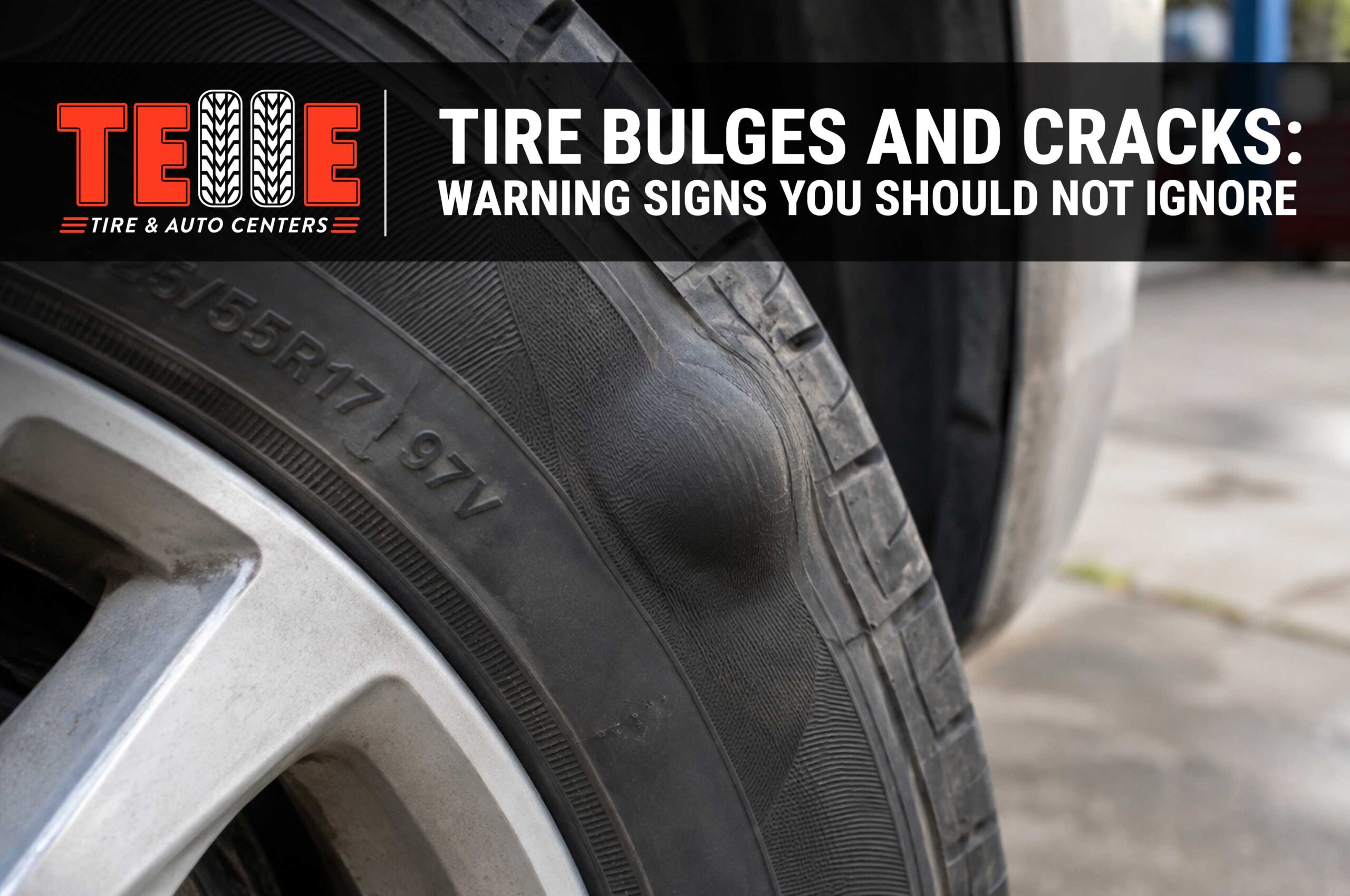
A tire can look fine at a glance while developing damage that puts your vehicle at risk. Tire bulges and cracks warrant attention because they can indicate damage to the tire’s internal structure, age-related deterioration, or issues from road impacts.
A bulge is especially concerning. It can indicate that the internal cords have been damaged, allowing air pressure to push against the outer rubber. A crack can have several causes, from normal aging to environmental exposure, but deeper cracking needs professional attention.
For drivers in Missouri and Tennessee, regular tire checks can be especially useful after pothole impacts, curb strikes, long highway trips, and seasonal temperature changes.
TL;DR for Tire Bulges and Cracks
- Tire bulges and cracks can signal serious damage – A visible bulge usually indicates internal structural damage and calls for prompt tire replacement rather than a repair.
- A cracked tire sidewall can develop with age – Sun, ozone, heat, chemicals, and normal aging can cause rubber to lose flexibility and develop cracks.
- Potholes and curbs can damage tires internally – A tire may develop a bulge after an impact even when the original damage seemed minor.
- Tire sidewall damage needs careful inspection – Sidewall damage differs from a repairable tread puncture, so have questionable damage evaluated by a qualified tire professional.
- Do not ignore changes in handling or pressure – Vibrations, repeated pressure loss, unusual noise, or a new bulge can indicate a tire problem that needs prompt attention.
What Tire Bulges and Cracks Can Tell You
The sidewall helps support the vehicle and absorb some of the forces created as the tire travels over uneven pavement. It also flexes continuously as the tire rotates, so damage in this area can affect the tire’s structural strength.
A tire bulge appears as an outward bubble or raised area. A crack usually looks like a line or network of small lines in the rubber. These conditions do not all have the same cause or severity, which makes proper identification important.
Here are the warning signs worth checking during a quick tire inspection:
- A raised bubble on the sidewall – An outward bulge can indicate broken or separated internal cords. Michelin identifies this type of protrusion as a serious condition requiring replacement.
- Visible sidewall cracks – Fine surface cracks can develop as rubber ages, while deeper or spreading cracks may indicate more advanced deterioration. Cracks near the bead area deserve particular attention.
- A new vibration while driving – A vibration that appears after hitting a pothole or curb can point to tire or wheel damage. The source should be checked rather than dismissed as a minor driving annoyance.
- Repeated loss of tire pressure – A tire that keeps losing air without an obvious tread puncture deserves inspection. Internal damage can sometimes exist without an obvious external mark.
- Unusual thumping or road noise – A rhythmic thump can accompany tire damage or an irregularity in the tire’s shape. Have the tire checked if the sound is new or becomes more noticeable with speed.
A visual check takes only a few minutes, but it cannot reveal every type of internal damage. After a significant road impact, a professional inspection can be worthwhile even when the tire looks normal from the outside.
What Causes Tire Bulges and Cracks
Understanding the cause can help you prevent another tire from being damaged. Some problems develop suddenly after an impact, while others appear gradually as the rubber ages.
Common reasons a tire develops a bulge
A bulge generally points to damage inside the tire rather than a simple cosmetic problem.
- Pothole impacts – A sharp pothole edge can pinch the tire against the wheel and damage its internal cords. The damage may become visible as a bulge later rather than immediately after the impact.
- Curb strikes – Hitting a curb at an angle or with significant force can damage the sidewall structure. This can happen during parking, turning, or navigating a narrow road.
- Road debris – A hard object in the roadway can produce enough force to injure the internal layers of a tire. The outer rubber may hide the damage until symptoms appear later.
- Driving with improper inflation – Incorrect tire pressure changes how the tire flexes and handles impacts. Keeping pressure at the vehicle manufacturer’s recommended level helps reduce unnecessary stress.
- Manufacturing-related problems – Tire construction defects can occur, although they are less common than impact-related damage. A professional inspection can help determine the likely source of an unusual bulge.
A bulge should never be treated as something that can be flattened, patched, or monitored indefinitely. The internal structure cannot be restored with an ordinary tire repair.
Common reasons for a cracked tire sidewall
Cracking often develops more gradually than a bulge. Age and environmental exposure are major factors, although driving conditions and maintenance also play a role.
- Age and rubber deterioration – Tire rubber gradually changes when exposed to oxygen and ozone. Older tires can develop surface cracking even when tread depth remains acceptable.
- UV exposure – Sunlight can accelerate rubber deterioration, particularly when a vehicle spends long periods outdoors. Frequent exposure can contribute to weathering and cracking.
- Heat and temperature changes – Repeated heat cycles can contribute to rubber aging. Vehicles driven frequently in hot conditions can place additional thermal stress on tires.
- Harsh tire-cleaning chemicals – Some products used to make sidewalls shine can affect protective compounds in the rubber. Michelin advises avoiding certain sidewall cleaning products, particularly those containing silicone.
- Improper inflation and vehicle load – Incorrect pressure and excessive loading can increase stress on the tire. Following the pressure and loading information supplied by the vehicle manufacturer helps reduce unnecessary strain.
Fine surface checking does not always mean immediate tire failure, so the depth and location matter. Cracks that become deep, spread noticeably, expose internal material, or occur alongside a bulge require much greater concern.
Are Tire Bulges and Cracks Dangerous
A confirmed sidewall bulge should be treated as a serious safety problem. A bulge indicates that the tire’s internal structure has been compromised, creating the potential for sudden pressure loss or tire failure.
Cracks require a little more context because not every visible surface line has the same significance. A qualified technician can evaluate their depth, location, and overall condition.
Watch for these combinations:
- Bulge plus vibration – A visible bulge combined with vibration is a strong reason to stop using the tire and arrange an inspection or replacement. Do not continue normal highway driving while hoping the symptom disappears.
- Deep cracks plus exposed material – Cracks that reach deeper layers of the tire indicate deterioration that should not be ignored. The tire should be evaluated before further driving.
- Cracks around the bead area – Damage close to the area where the tire meets the wheel deserves careful inspection because this is an important part of the tire assembly.
- Cracks plus pressure loss – When cracking appears alongside unexplained pressure loss, the tire may have deteriorated beyond a superficial cosmetic issue. Have it inspected promptly.
- Bulge after a pothole impact – A new bulge after hitting a pothole is a classic sign of possible internal impact damage. Tire manufacturers recommend professional evaluation after significant impacts.
The safest approach is to take visible structural damage seriously rather than waiting for a tire to fail. A tire that looks questionable is worth inspecting before it becomes an emergency.
Can You Drive With a Tire Bulge
No. A tire with a confirmed sidewall bulge should not be driven normally.
A bulge can mean the internal cords have been damaged. As the tire rotates, flexes, and heats up while carrying the vehicle’s weight, the damaged area remains under stress. Michelin specifically advises replacing a tire with a sidewall bulge and not driving on it.
If you discover a bulge in your driveway or parking lot, consider these steps:
- Avoid driving the vehicle – Do not assume the tire is safe because it still holds air. Structural damage can exist before a sudden pressure loss.
- Check for a spare tire – If your vehicle has a usable spare and you know how to install it safely, use it according to the vehicle manufacturer’s instructions.
- Arrange professional tire service – A tire professional can inspect the damaged tire and determine the appropriate replacement.
- Inspect the wheel and suspension – A hard pothole or curb impact can affect other components as well. The original impact should be considered when diagnosing the problem.
- Replace the damaged tire – A confirmed bulge cannot be safely restored through a conventional tire repair.
For drivers searching for “tire inspection near me,” the priority should be finding a qualified tire service provider who can inspect the entire tire and wheel assembly rather than simply adding air.
Can a Cracked Tire Be Repaired
A cracked tire needs to be evaluated based on the severity and location of the cracking. Superficial weathering is different from deep cracking that reaches structural layers.
A tire professional can look for several factors when assessing tire sidewall damage. The inspection may include the sidewall, tread, bead area, tire pressure, tread wear, and signs of impact.
The basic rule is simple. A tire with serious sidewall deterioration generally needs replacement rather than a patch or plug. Sidewall damage cannot be treated like a small puncture in the repairable portion of the tread.
This distinction matters for first-time car owners. A nail in the central tread area may sometimes qualify for repair after proper inspection, while a damaged sidewall presents a different structural concern.
If you are unsure how serious a cracked tire sidewall is, avoid judging its condition by appearance alone. A technician can determine whether the cracking is superficial or indicates that the tire has reached the end of its useful service life.
How to Check Your Tires at Home
You do not need specialized equipment to perform a basic visual inspection. A few minutes before a longer trip can help you spot obvious problems early.
- Walk around all four tires – Look at both the tread and visible sidewall surfaces. Remember that damage can occur on the inner sidewall, where it is harder to see without additional inspection.
- Look for outward bulges – A protruding bubble is different from a shallow inward indentation. Some indentations can occur naturally where internal cords overlap, while an outward bulge can indicate structural damage.
- Look for cracks and cuts – Check for lines, splits, abrasions, or other changes in the rubber. Pay particular attention to areas where the tire flexes.
- Check tire pressure – Use a reliable gauge and compare the reading with the vehicle manufacturer’s recommended pressure. That information is typically found on the driver’s doorjamb label or in the owner’s manual.
- Look at the tread condition – Uneven wear can provide clues about alignment, suspension, inflation, or other vehicle issues. A tire can have adequate tread and still have sidewall damage.
If you notice something unusual, take a clear photo and have the tire inspected. Photos can help you document a change over time, but they cannot replace a hands-on professional evaluation.
How to Prevent Tire Bulges and Cracks
You cannot prevent every road hazard, but consistent tire care can reduce avoidable damage and help you catch problems earlier.
- Maintain the recommended tire pressure – Check pressure regularly and before longer trips. Correct inflation helps the tire carry its intended load and reduces unnecessary flexing.
- Slow down for potholes when possible – Give yourself enough distance to spot road hazards and reduce speed safely. A sharp impact can damage the tire even if the vehicle continues to drive normally afterward.
- Avoid unnecessary curb contact – Parking and tight turns can put significant force through the sidewall. A small scrape may be harmless, but a hard strike can damage internal cords.
- Inspect tires during routine maintenance – Tire checks fit naturally into oil changes, rotations, and other scheduled maintenance. Regular inspections make it easier to notice gradual changes.
- Pay attention to tire age and condition – Mileage alone does not determine tire condition. A vehicle that sits for long periods can still develop age-related rubber deterioration.
A little attention goes a long way. Keeping tires properly inflated, avoiding harsh impacts, and addressing unusual symptoms early can reduce the chance of a preventable tire problem becoming a roadside emergency.
Protect Your Tires With Telle Tire & Auto Centers
Tire bulges and cracks can be easy to overlook, especially when your vehicle still drives normally. A visible bulge, deep crack, unexplained pressure loss, or new vibration deserves attention before you put more miles on the vehicle.
For drivers in Missouri and Tennessee, Telle Tire & Auto Centers can help evaluate tire condition and identify problems that may require tire replacement or additional vehicle service. If you are unsure about tire sidewall damage, getting a professional opinion can give you a clearer answer than trying to diagnose the problem yourself.
When a tire problem appears, early attention can make the difference between a planned service visit and an unexpected roadside problem. Check your tires regularly, take pothole and curb impacts seriously, and schedule an inspection when something looks or feels different.
If you notice a bulge, crack, vibration, pressure loss, or another tire concern, schedule service with Telle Tire & Auto Centers before continuing normal driving.
Book an appointment online at https://www.telletire.com/schedule-service/ and have your tires checked by a professional.

Take it to telle
Stay Safe with a Tire Check from Telle Tire
Worried about your tread depth or tire condition heading into the summer storm season? Take it to Telle. Our expert technicians can assess your tires, check pressure levels, and recommend replacements when necessary, helping you stay in control regardless of the weather conditions. Stay safe, stay prepared, and if you’re unsure about your tires, schedule a visit with your nearest Telle Tire & Auto Centers location today.
Stay Informed
Recent Articles from Telle Tire
Missouri Tire Maintenance Tips for Better Tire Safety
If you drive regularly in Missouri, your tires deal with a little bit of everything. Hot summer pavement, heavy rain, freezing mornings, changing temperatures, potholes, highway…
How to Read a Wheel Alignment Report Before Repairs
A wheel alignment report can look confusing when you first see rows of numbers, red and green boxes, and unfamiliar terms. However, understanding a few key…

Tennessee Road Conditions And Tire Wear: Protect Your Tires
Driving in Tennessee means experiencing a wide variety of road conditions throughout the year. From busy highways and city streets to rural roads with uneven pavement,…