Kansas City Vehicle Maintenance Checklist for High Mileage Cars
 Telle Tire 13 min read
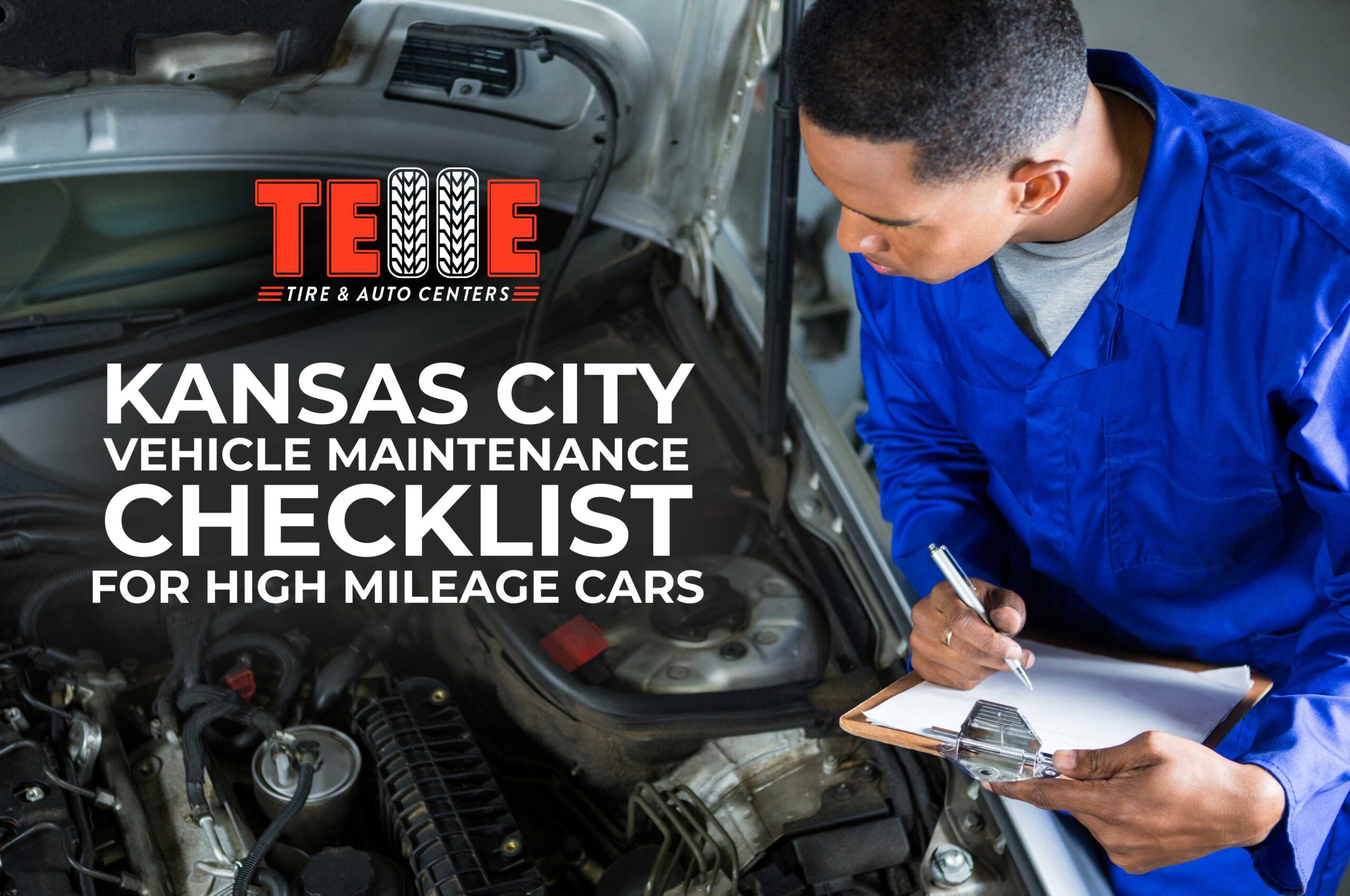
If your car has reached 100,000 miles, regular auto maintenance becomes especially important to keep it dependable. This Kansas City vehicle maintenance checklist can help local car owners, SUV drivers, and first-time vehicle owners keep track of the systems that deserve closer attention as their vehicles age.
A high-mileage vehicle can still have plenty of life left. Many modern cars continue to run well beyond 200,000 miles when owners follow the manufacturer’s maintenance schedule and address wear before it becomes a larger repair.
For Kansas City drivers, that means looking past oil changes. Tires, brakes, suspension, fluids, belts, batteries, cooling systems, and drivetrain components all deserve regular attention. Here’s how to build a practical maintenance routine for an older vehicle.
Kansas City Vehicle Maintenance Checklist for High Mileage Cars
Before getting into mileage intervals, remember that your owner’s manual should remain the primary guide for service intervals. A high-mileage checklist works best as a supplement because the right maintenance schedule varies by make, model, engine, transmission, age, mileage, and driving conditions.
If you bought a used car and don’t know its maintenance history, an inspection can also help establish a baseline. That gives you a clearer idea of what has already been serviced and what may be approaching the end of its useful life.
The following checklist covers the areas worth discussing with a qualified technician.
-
Check the engine oil and filter
Oil becomes particularly important as an engine accumulates miles. Older engines may develop small leaks or consume oil between services, so checking the oil level periodically can help you catch a problem before the level becomes dangerously low.
Follow the oil type and interval specified by your vehicle manufacturer. High-mileage oil may be appropriate for some older vehicles, but it should be selected based on the vehicle’s needs rather than mileage alone.
-
Inspect the cooling system
The cooling system helps keep the engine within its proper operating temperature. Coolant level, hoses, radiator condition, thermostat operation, and leaks all deserve attention as a vehicle ages.
Overheating can turn a relatively manageable cooling-system problem into a major engine repair. If you notice a rising temperature gauge, coolant smell, visible leaks, or repeated coolant loss, have the vehicle inspected promptly.
-
Check the transmission
Transmission fluid helps lubricate and cool internal components. Service intervals vary considerably between vehicles, so don’t automatically assume every transmission needs the same treatment.
Telle Tire notes that many vehicles need transmission fluid service between 30,000 and 60,000 miles, depending on the vehicle and how it is used.
Pay attention to delayed engagement, slipping, harsh shifting, unusual noises, or a burning smell. These symptoms deserve diagnosis rather than simply adding fluid and continuing to drive.
-
Inspect belts and hoses
Rubber components age from heat, time, and repeated exposure to operating conditions. Serpentine belts, coolant hoses, and related components should be checked for cracking, glazing, soft spots, swelling, or other deterioration.
A belt or hose that fails while you’re driving can leave you stranded. Preventive inspection is generally much easier to plan than an unexpected roadside breakdown.
-
Check the battery and charging system
A high-mileage car may have already gone through several batteries, but the charging system also deserves attention. A weak alternator, corroded connection, or charging problem can cause starting issues and electrical problems.
Watch for slow engine cranking, dimming lights, battery warning lights, or unusual behavior from electrical accessories. A battery test and charging-system inspection can help identify problems before the vehicle refuses to start.
These checks create a useful baseline for older vehicles. Once you know which components are healthy and which are showing wear, you can plan repairs based on urgency rather than waiting for something to fail.
High-Mileage Car Maintenance in Kansas City by Mileage
Mileage is useful for planning, but it should never be treated as a universal replacement schedule. Your owner’s manual may specify different intervals, and severe driving conditions can change how frequently certain components should be inspected.
For example, frequent short trips, heavy traffic, towing, prolonged idling, and extreme temperatures can place additional demands on a vehicle. Use your maintenance history and driving habits alongside the manufacturer’s recommendations.
Around 100,000 miles
Reaching 100,000 miles is a good reason to review the vehicle’s complete maintenance history.
- Review the factory maintenance schedule – Check whether major services recommended around this mileage have been completed. Pay particular attention to services that are specific to your engine and drivetrain.
- Inspect the timing system – If your vehicle uses a timing belt, verify its replacement interval and service history. Timing chain systems also have components that can wear out, including guides and tensioners.
- Check spark plugs – Spark plugs have different service lives depending on the vehicle. Worn plugs can contribute to rough running, reduced performance, and starting problems.
- Inspect suspension components – Shocks or struts, ball joints, tie rods, bushings, and other components can accumulate significant wear by this point.
- Evaluate fluids – Review the condition and service history of engine oil, coolant, transmission fluid, brake fluid, and other applicable fluids.
A 100,000-mile service is also a good opportunity to establish a written maintenance record. If you plan to keep the vehicle for several more years, knowing what has been replaced can make future decisions much easier.
Around 150,000 miles
At 150,000 miles, preventive inspections become increasingly valuable because several wear-related systems may require attention simultaneously.
- Monitor oil consumption – Record how much oil you add between scheduled services. A noticeable increase can be a useful early clue that the engine needs further diagnosis.
- Inspect the cooling system – Look for aging hoses, leaks, radiator problems, and other components that can compromise temperature control.
- Check the transmission – Review the service history and pay attention to changes in shift quality, noises, or fluid condition.
- Inspect steering and suspension – Worn bushings, ball joints, tie rods, wheel bearings, shocks, and struts can affect handling and tire wear.
- Review the exhaust system – Check for corrosion, leaks, loose components, or unusual noises that may indicate an aging exhaust system.
At this stage, think in terms of condition rather than mileage alone. A well-maintained 150,000-mile vehicle may be a better prospect than a neglected vehicle with significantly fewer miles.
Around 200,000 miles and beyond
Reaching 200,000 miles is a significant milestone, but it doesn’t automatically mean your vehicle needs to be replaced. Proper maintenance has allowed many vehicles to continue serving their owners well beyond this point.
- Track recurring repairs – Keep records of repairs, parts replaced, fluid services, and inspections. Patterns can help you anticipate future expenses.
- Monitor leaks – Small leaks should be identified and evaluated before they become larger problems or cause fluid levels to drop.
- Inspect drivetrain components – Depending on the vehicle, this may include CV joints, axles, differential components, transfer-case components, or other drivetrain parts.
- Evaluate wheel bearings – Humming, grinding, looseness, or changes in noise while turning can indicate a bearing that needs inspection.
- Review overall vehicle condition – Consider safety, reliability, repair history, and expected future costs when deciding whether continued ownership makes sense.
The goal at 200,000 miles is smart planning. Some repairs are worth making because they keep a dependable vehicle on the road, while others may signal that several major systems are reaching the end of their service lives.
Signs Your High Mileage Car Needs Service Soon
One of the most valuable aspects of high-mileage vehicle service is recognizing changes before they lead to breakdowns. You know how your car normally starts, idles, shifts, brakes, and handles, so changes in those behaviors are worth taking seriously.
- New dashboard warning lights – A warning light can range from a relatively simple issue to a serious mechanical problem. Have unfamiliar warning lights diagnosed rather than cleared, and hope they disappear.
- Unusual engine noises – Ticking, knocking, squealing, rattling, or grinding can point to different problems. The timing and conditions under which the noise occurs can help a technician identify the source.
- Changes in braking – A soft pedal, vibration, pulling, grinding, or increased stopping distance should receive prompt attention. Brake problems can affect safety quickly.
- Fluid spots or unusual smells – Puddles under the vehicle or smells of burning oil, coolant, or fuel can indicate a leak or mechanical issue. The color and location of a fluid can provide useful clues, but professional diagnosis is still important.
- Steering or suspension changes – Excessive bouncing, clunking, pulling, steering-wheel vibration, or uneven tire wear may indicate suspension, steering, tire, or alignment problems.
A new symptom doesn’t necessarily mean your vehicle needs a major repair. Early diagnosis can sometimes identify a relatively small problem before it damages surrounding components.
How Kansas City Driving Can Affect High Mileage Vehicles
Your driving habits matter for preventive car maintenance in Kansas City. Two vehicles with identical mileage can have very different maintenance needs because one may have spent most of its life on highways while the other has faced frequent stop-and-go driving.
Kansas City drivers may encounter hot summers, cold winter conditions, heavy traffic, potholes, and frequent short trips. These conditions can affect tire wear, battery performance, cooling system demands, brakes, and other components.
- Frequent short trips – Repeated short drives can prevent the engine and exhaust system from reaching normal operating conditions for long periods. If most of your driving consists of short trips, discuss your usage with your technician when reviewing the maintenance schedule.
- Stop-and-go traffic: Frequent acceleration and braking can increase demands on the brakes and drivetrain. Drivers who spend substantial time in traffic may benefit from more frequent inspections.
- Hot summer temperatures – Heat places additional stress on batteries, cooling systems, tires, and air-conditioning components. Check fluid levels and tire pressures regularly during periods of extreme heat.
- Cold winter conditions – Cold temperatures can make starting harder and reduce battery performance. Make sure your battery and charging system are in good condition before the coldest part of the season.
- Rough or uneven roads – Potholes and impacts can affect tires, wheels, alignment, steering, and suspension components. If your vehicle suddenly pulls to one side or develops vibration after an impact, arrange an inspection.
Understanding your driving environment makes a generic maintenance schedule more useful. It allows you and your technician to prioritize the components that experience the most stress.
Keep Your High Mileage Car Ready for the Road
A high-mileage vehicle can remain a dependable daily driver when maintenance is approached proactively. The key is to follow the manufacturer’s schedule, pay attention to changes in the vehicle’s handling, and address small problems before they become expensive failures.
For drivers in the Kansas City area, Telle Tire & Auto Centers offers local access to tires and automotive services at eight locations across Independence, Lee’s Summit, Liberty, Midtown Kansas City, KC North, Raytown, and South Kansas City.
If your vehicle has passed 100,000 miles or you aren’t sure what maintenance is due next, schedule a visit with Telle Tire & Auto Centers. A professional evaluation can help you understand your vehicle’s current condition and prioritize the services that matter most.
Schedule service with Telle Tire & Auto Centers and keep your high-mileage car ready for Kansas City roads.

Take it to telle
Stay Safe with a Tire Check from Telle Tire
Worried about your tread depth or tire condition heading into the summer storm season? Take it to Telle. Our expert technicians can assess your tires, check pressure levels, and recommend replacements when necessary, helping you stay in control regardless of the weather conditions. Stay safe, stay prepared, and if you’re unsure about your tires, schedule a visit with your nearest Telle Tire & Auto Centers location today.
Stay Informed
Recent Articles from Telle Tire
Tennessee Vehicle Maintenance Checklist for Reliable Driving
Owning a vehicle in Tennessee means dealing with changing road conditions, seasonal weather, and daily driving demands. A reliable car does not happen by accident. It…
Tire Age Limit Explained: When Should You Replace Old Tires?
Many drivers assume tires only need to be replaced when the tread wears down. While tread depth is important, tire age is another major factor that…
Steering Wheel Shaking on Highway, Tires or Alignment?
When your steering wheel starts shaking on the highway, even a familiar drive can become stressful. You may notice the vibration around 55 to 70 mph,…