How to Read a Wheel Alignment Report Before Repairs
 ITServices@telletire.com 14 min read
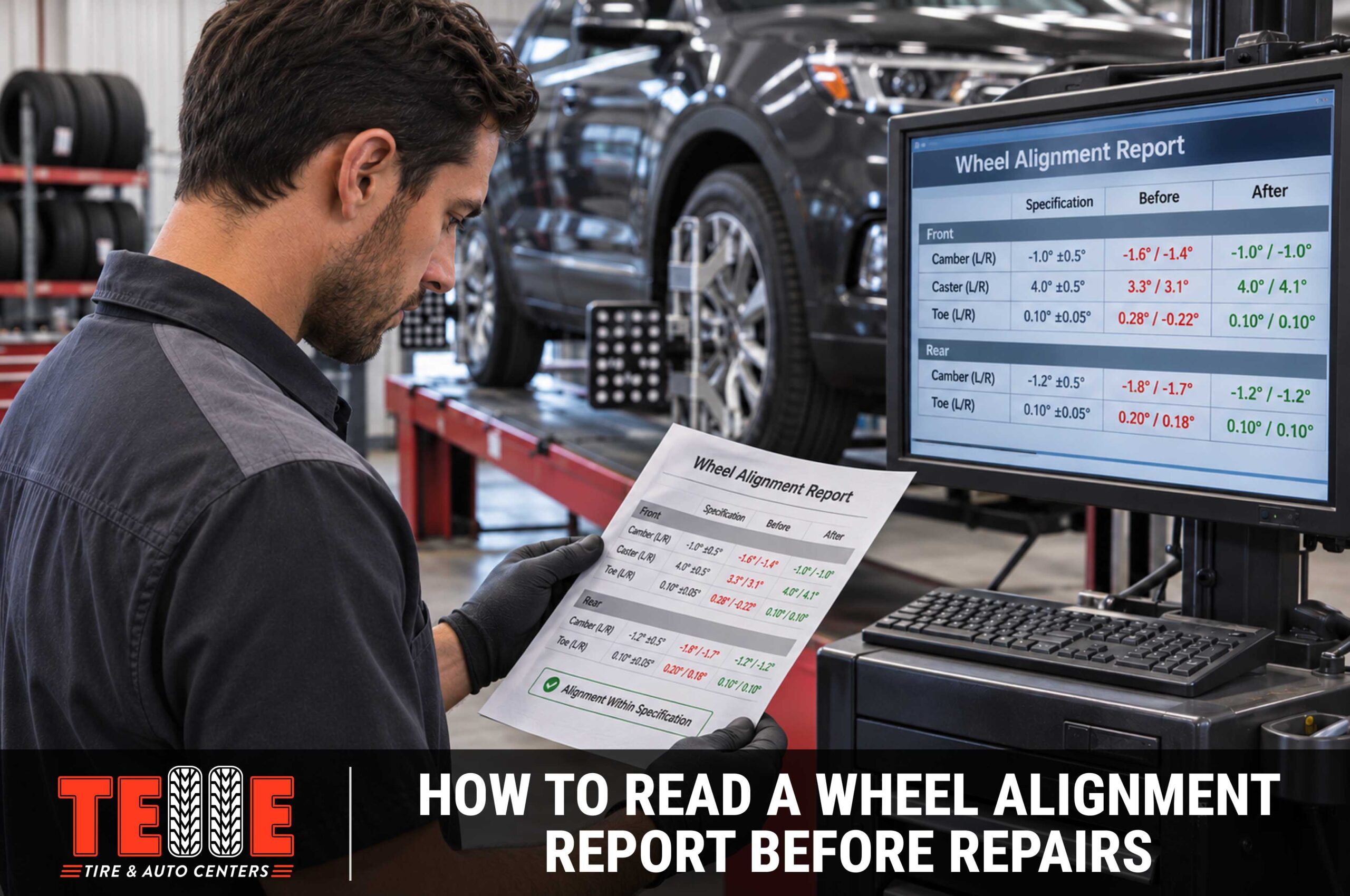
A wheel alignment report can look confusing when you first see rows of numbers, red and green boxes, and unfamiliar terms. However, understanding a few key measurements can help you determine whether your vehicle needs an adjustment, a closer inspection, or a specific repair.
Learning how to read a wheel alignment report also helps you ask better questions before approving additional work. You can compare the initial readings with the final results, understand what the technician found, and request an explanation when a recommended repair is unclear.
At Telle Tire & Auto Centers, understanding your vehicle’s condition starts with clear information. Here’s what to look for on an alignment printout and how to use it when discussing your repair options.
TL;DR: How to Read a Wheel Alignment Report
- Check the manufacturer’s specifications. These ranges show the acceptable alignment settings for your specific vehicle, rather than a universal set of numbers.
- Compare before and after readings. The initial measurements show the vehicle’s condition before adjustments, while the final readings document the results.
- Understand camber, caster, and toe. These angles affect tire wear, steering response, and the direction your vehicle travels.
- Investigate readings that remain outside the specified range. Ask whether the angle is adjustable or if worn, damaged, or incorrectly positioned components need attention.
- Request an explanation before approving repairs. A technician should connect the recommended work to an inspection finding, measurement, or driving concern.
How to Read a Wheel Alignment Report Step by Step
The easiest way to understand an alignment printout is to read it in a consistent order. Start with the vehicle information, check the acceptable measurement ranges, and then compare the initial and final results.
1. Confirm the vehicle information
Before reviewing the numbers, check that the report correctly identifies your vehicle. Alignment specifications can vary according to the make, model, model year, suspension configuration, and other equipment.
This matters because the wrong vehicle profile can produce misleading comparisons. A modified SUV, for example, may have a different suspension geometry from that of a standard version of the same model.
2. Find the specification range
Look for labels such as “Specifications,” “Factory Specs,” “Min/Max,” or “Target.” This section identifies the manufacturer’s acceptable range for each alignment angle.
The target may be a single preferred value surrounded by minimum and maximum limits. A final reading need not match the preferred value exactly, provided it meets the applicable specifications and the manufacturer’s service requirements.
3. Compare the before and after measurements
The “Before” column records the alignment measurements taken before adjustments. The “After” column shows the final measurements once the technician has completed the alignment work.
Look at the difference between the two columns. If an angle started outside the acceptable range and ended within it, the report provides evidence that the measurement was corrected.
However, a changed number does not automatically mean every concern has been resolved. Check the final readings, technician notes, and any remaining recommendations together.
4. Check the color indicators
Many computerized alignment systems use colors to make the results easier to interpret.
- Green – The measurement usually falls within the programmed specification range.
- Red – The measurement usually falls outside that range.
- Yellow or amber – Some systems use this color for borderline readings or other status indicators.
Color conventions can vary between alignment machines, so confirm the legend printed on your report. Green readings are encouraging, but they do not prove that every steering, suspension, or tire problem has been eliminated.
5. Review the front and rear readings
Do not focus exclusively on the front wheels. Rear alignment measurements can affect the vehicle’s tracking and the steering wheel’s position during straight-line driving.
Check both axles and ask whether the service included the appropriate measurements and adjustments for your vehicle. Some vehicles have limited rear adjustment options, so the technician should explain any relevant restrictions.
What Do Camber, Caster, and Toe Mean on an Alignment Report?
The three main alignment angles are camber, caster, and toe. Each describes a different aspect of wheel or steering geometry, and each can affect how your vehicle handles the road.
Camber measures wheel tilt
Camber describes the inward or outward tilt of a wheel when viewed from the front of the vehicle.
- Positive camber – The top of the wheel tilts outward.
- Negative camber – The top of the wheel tilts inward.
- Camber near the specified target – The wheel’s tilt falls within the intended range for that vehicle.
Incorrect camber can contribute to uneven tire wear and handling concerns. However, the tire’s wear pattern alone cannot establish the exact cause.
If a camber reading remains outside the specified range, ask the technician to inspect relevant suspension components and check for ride-height problems, damage, or adjustment limitations.
Caster affects steering stability
Caster describes the angle of the steering axis when viewed from the side of the vehicle. It contributes to directional stability, steering feel, and the steering wheel’s tendency to return toward center after a turn.
Caster is not always directly adjustable on every vehicle. A reading outside specifications may require further investigation, particularly when the vehicle pulls to one side or has recently experienced an impact.
Ask whether the difference between the left and right caster measurements is significant for your vehicle. The manufacturer’s specifications and the technician’s diagnosis should guide the next step.
The toe shows the direction the wheels point
Toe describes whether the wheels point slightly inward or outward when viewed from above.
- Toe-in – The front edges of the wheels point toward each other.
- Toe-out – The front edges point away from each other.
- Toe within specification – The measured angle falls within the acceptable range for that vehicle.
An incorrect toe can cause rapid or uneven tire wear because the tires may scrub against the road as they roll. This is one reason technicians pay close attention to toe measurements during an alignment.
When reviewing your wheel alignment readings, check both individual toe values and the total toe value for each axle, if provided. A satisfactory total does not always tell the whole story if the individual settings or steering-wheel position are incorrect.
How to Tell Whether Your Before and After Alignment Report Shows a Successful Result
A useful report documents the starting condition, the adjustments performed, and the final measurements. It should give you enough information to discuss the completed service with the technician.
Look for these five indicators.
- Final adjustable readings meet specifications – The final values should generally fall within the applicable factory ranges for the adjusted angles. If a reading remains outside the range, ask for the reason.
- The technician explains unresolved readings – Some angles cannot be corrected through routine adjustments alone. The technician should identify the suspected cause and explain what further inspection or repair may be needed.
- The steering wheel is centered – Correct alignment measurements should be accompanied by an appropriate steering-wheel position. Ask whether the steering wheel was centered and the vehicle was checked after the adjustment.
- The rear measurements were reviewed – Rear toe and thrust angle, where applicable, can influence how the vehicle tracks. The technician should explain any rear readings that remain outside the target range.
- The report matches the work performed – Confirm that the printout corresponds to your vehicle and service visit. Keep a copy for future tire inspections or follow-up appointments.
A successful alignment is supported by the final measurements and the vehicle’s behavior after service. If the car still pulls, the steering wheel remains off-center, or tire wear continues, request a follow-up inspection rather than assuming the report rules out every possible cause.
What to Check Before Approving an Alignment-Related Repair
An alignment printout can reveal a measurement outside the acceptable range, but it does not always identify the underlying mechanical cause. Before authorizing additional work, ask the technician to connect the measurement to a specific inspection finding.
Ask these questions before saying yes
- Which measurement is outside specification? Ask the technician to point to the exact value on the report and explain how it differs from the acceptable range.
- What is causing the reading? A worn bushing, damaged control arm, bent component, incorrect ride height, or seized adjuster may affect alignment. The technician should explain which condition applies to your vehicle and what evidence supports the diagnosis.
- Can the angle be adjusted? Some alignment angles have no routine adjustment provision. Ask whether a standard adjustment is possible or whether a component needs further inspection or replacement first.
- What happens if I postpone the repair? The answer depends on the fault. The technician should explain the potential effects on handling, tire wear, or component condition, and whether the vehicle is safe to drive.
- Is there an itemized estimate? Request the part, labor, and any additional inspection costs. This gives you a clearer basis for deciding which work to authorize.
A red reading does not automatically mean you need a new suspension part. Likewise, a green reading does not prove every component is in good condition. The report should support the diagnosis, not replace a physical inspection.
Example of a repair recommendation
Suppose your report shows that the front camber is outside the manufacturer’s range. The technician recommends replacing a control arm.
Before approving the work, ask which inspection finding supports that recommendation. If the control arm is bent or its bushing is excessively worn, the technician should be able to explain the evidence and how the condition affects alignment.
If the component appears sound, ask whether ride height, another suspension component, or an adjustment limitation could explain the reading. This does not mean the recommendation is wrong. It means you have the information needed to understand the repair.
What Causes Wheel Alignment Readings to Fall Outside the Range?
Several conditions can change wheel alignment over time. Identifying the cause helps prevent repeat adjustments and unnecessary expenses.
- Potholes and road impacts – A hard impact can alter suspension geometry or damage a wheel or suspension component. Have the vehicle inspected if a noticeable change in handling follows an impact.
- Worn suspension components – Bushings, ball joints, tie rods, and other parts can develop wear that affects wheel positioning. Replacing a worn component may be necessary before the alignment can be corrected.
- Accidents or curb strikes – A collision or substantial curb impact can bend components or shift mounting points. Persistent out-of-range measurements may justify a more detailed inspection.
- Changes to ride height – Lift kits, lowering springs, or sagging suspension components can change alignment geometry. The technician should account for the vehicle’s actual configuration when interpreting the results.
- Normal use over time – Suspension parts and adjustment hardware can wear, corrode, or become difficult to move. Regular inspections can help identify problems before they lead to more noticeable tire wear or changes in handling.
An alignment check is particularly useful when you notice uneven tire wear, a crooked steering wheel, or a change in the way your vehicle tracks. These symptoms can also have other causes, so an accurate diagnosis matters.
Understand Your Alignment Report With Telle Tire & Auto Centers
Learning how to read a wheel alignment report helps you make informed decisions about your vehicle’s maintenance. Compare the initial and final readings, identify the main alignment angles, and request a clear explanation of any recommended repairs.
At Telle Tire & Auto Centers, a professional inspection can help identify alignment concerns and determine whether further work is appropriate. If you have questions about your vehicle’s handling or tire wear, discuss your concerns with a technician and ask for an explanation of the findings before approving additional work.
If your vehicle pulls to one side, your steering wheel sits crooked, or your tires show uneven wear, schedule a service appointment with Telle Tire & Auto Centers.
Visit Telle Tire & Auto Centers’ service scheduling page to arrange an appointment and discuss your alignment concerns.

Take it to telle
Stay Safe with a Tire Check from Telle Tire
Worried about your tread depth or tire condition heading into the summer storm season? Take it to Telle. Our expert technicians can assess your tires, check pressure levels, and recommend replacements when necessary, helping you stay in control regardless of the weather conditions. Stay safe, stay prepared, and if you’re unsure about your tires, schedule a visit with your nearest Telle Tire & Auto Centers location today.
Stay Informed
Recent Articles from Telle Tire

Tennessee Road Conditions And Tire Wear: Protect Your Tires
Driving in Tennessee means experiencing a wide variety of road conditions throughout the year. From busy highways and city streets to rural roads with uneven pavement,…
Tire Bulges and Cracks: Warning Signs You Should Not Ignore
A tire can look fine at a glance while developing damage that puts your vehicle at risk. Tire bulges and cracks warrant attention because they can…
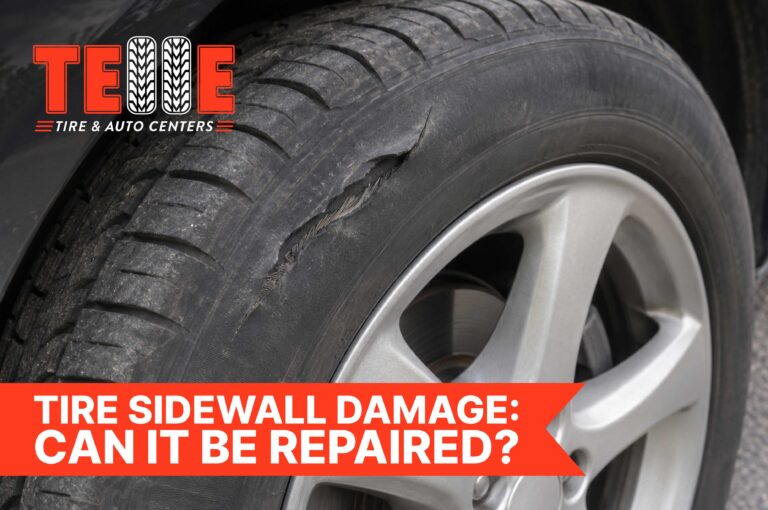
Tire Sidewall Damage: Can It Be Repaired?
Finding a cut, bubble, crack, or puncture on your tire can be alarming, especially when you are unsure whether you can safely drive to a repair…