Tire Vibration While Driving: Causes and How to Fix It
 ITServices@telletire.com 14 min read
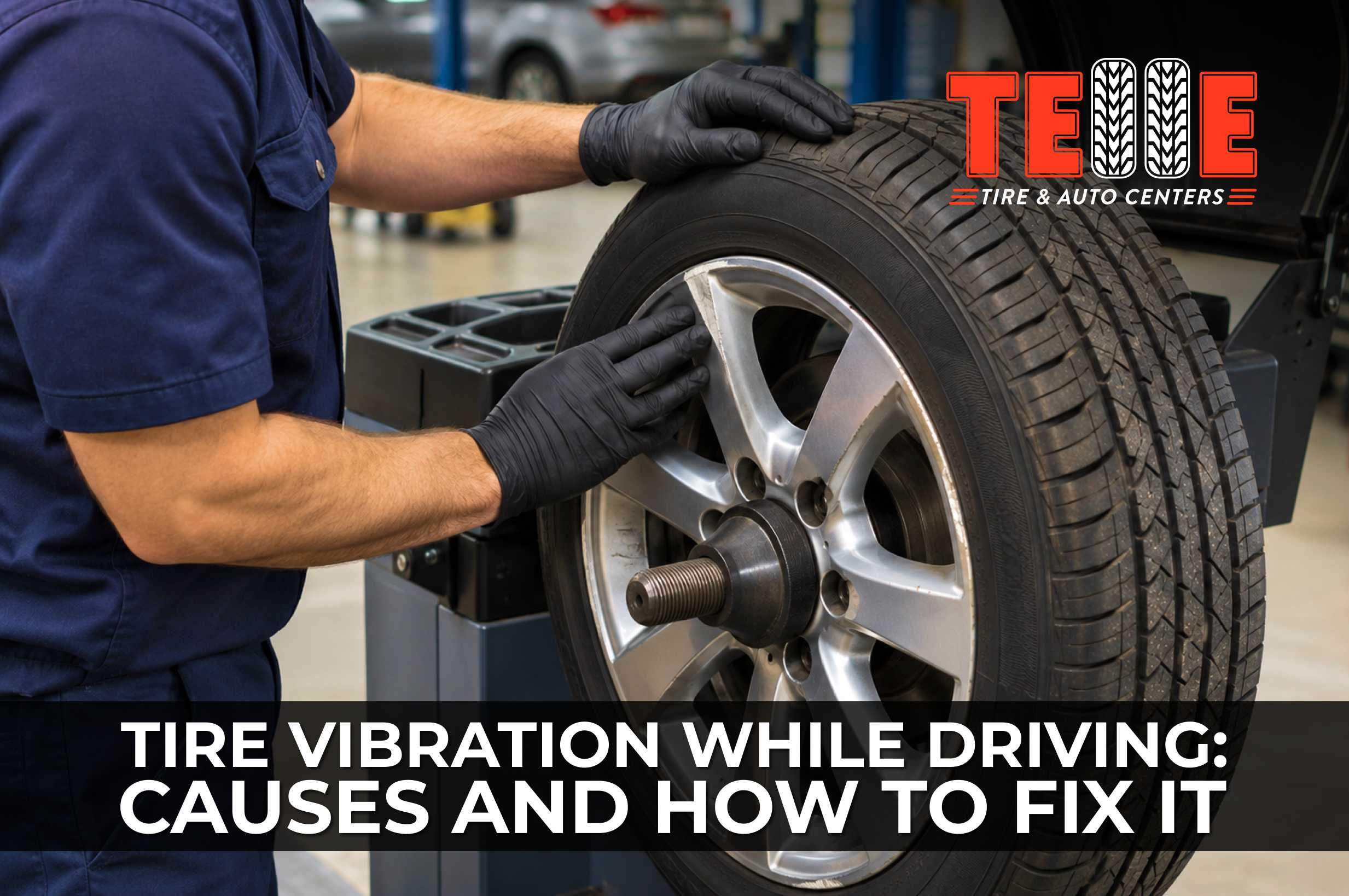
Tire vibration while driving can make even a familiar commute feel uncomfortable. You might notice the steering wheel shaking on the highway, a buzzing sensation through the floor, or a rhythmic thumping that gets faster as your vehicle gains speed. These symptoms can point to a tire or wheel problem, but brakes, suspension parts, and drivetrain components can also cause similar sensations.
The key to finding the right fix is to pay attention to when the vibration starts, where you feel it, and whether anything changes when you accelerate, brake, or turn. Identifying these details helps you explain the problem to a technician and avoid paying for repairs that do not address the underlying cause.
TL;DR: Common Causes of Tire Vibration While Driving
- Unbalanced wheels can cause tire vibration while driving at highway speeds. Wheel balancing corrects uneven weight distribution.
- Damaged or unevenly worn tires can create wobbling, thumping, or shaking. Check for bulges, cuts, and irregular tread wear.
- Steering wheel vibration may point to front tire, wheel, steering, or suspension problems. A professional inspection can identify the cause.
- Shaking during braking or acceleration may indicate brake, axle, or drivetrain issues. When the vibration occurs helps narrow down the possible causes.
- Prompt diagnosis helps prevent further problems. If tire vibration while driving is sudden or severe, or affects steering or braking, stop when safe and arrange professional assistance.
Tire Vibration While Driving and What It Can Mean
Tire vibration while driving results from unbalanced wheels, uneven tire wear, damaged tires, or bent wheels. However, vibrations that occur during braking, acceleration, or turning may indicate a problem with the brakes, suspension, steering, or drivetrain.
The symptom alone cannot confirm which component has failed. A proper inspection is necessary, especially when the shaking is sudden, severe, or accompanied by unusual noises.
What the vibration may be telling you
Pay attention to these common patterns before arranging an inspection.
- Shaking at highway speeds – An imbalance in the tire and wheel assembly or a tire that does not roll evenly may cause shaking at certain speeds.
- Vibration through the steering wheel – This can point toward a front tire, wheel, steering component, or suspension problem.
- Shaking through the seat or floor – Rear wheels, tires, or drivetrain components may be responsible.
- Vibration during braking – Brake rotor thickness variation, uneven pad deposits, or other brake problems may create a pulsation or shake.
- Shaking during acceleration – Worn CV joints, axle problems, engine issues, or drivetrain components may cause vibration under load.
These patterns help narrow down the possibilities, but they are not definitive diagnoses. For example, a front-end vibration does not automatically mean you need new front tires.
What Causes Tire Vibration While Driving?
Several problems can produce similar symptoms. Understanding the main causes can help you recognize what deserves attention first.
1. Unbalanced tires and wheels
Wheel balancing corrects uneven weight distribution within the combined tire-and-wheel assembly. Even a small imbalance can create noticeable shaking as the wheels rotate faster.
You may notice the vibration at a particular speed range, especially during highway driving. Missing balancing weights, uneven tire wear, or recent tire installation can contribute to the problem.
How to fix it: A technician can check the assembly on a balancing machine and add the appropriate weights. If the vibration remains, the inspection should also consider tire shape, wheel condition, and mounting accuracy.
2. Damaged or unevenly worn tires
Tires can develop problems after hitting potholes, striking curbs, running at incorrect pressure, or accumulating miles with worn suspension components.
Look for these warning signs:
- Bulges or bubbles – These may indicate internal structural damage and require immediate attention.
- Uneven tread wear – One shoulder may wear faster than the other, or the tread may develop irregular patches.
- Flat spots or high spots – These can prevent the tire from rolling smoothly.
- Separated tread – Internal tire damage can cause an unusual wobble or rhythmic thumping.
- Cuts or exposed cords – Structural damage can compromise tire safety.
How to fix it: Have a qualified technician inspect the tire and determine whether it can be safely used, repaired, or needs replacement. Do not drive on a tire with a bulge, exposed cords, or suspected tread separation.
3. Bent wheels or rims
A pothole or curb impact can bend a wheel, even when the damage is difficult to see. The wheel may no longer rotate in a true circle, creating a vibration that balancing alone cannot always correct.
How to fix it: A technician can inspect the wheel for visible damage and measure its runout. Depending on the wheel design, material, and extent of damage, replacement may be the safest option.
4. Incorrect wheel alignment
Wheel alignment refers to the angles of the wheels relative to the vehicle and the road. Incorrect alignment often causes uneven tire wear, pulling to one side, or an off-center steering wheel.
Alignment problems are not usually the primary cause of vibration on their own. However, alignment-related tire wear can contribute to a rough or uneven ride.
How to fix it: Have the alignment checked when the vehicle pulls to one side, the steering wheel sits crooked, or the tires show uneven wear. If steering or suspension parts are worn, those issues may need to be corrected before an alignment can be completed properly.
5. Worn suspension or steering components
Your suspension helps keep the tires in contact with the road while absorbing bumps. Worn shocks, struts, ball joints, tie rods, or bushings can affect vehicle stability and contribute to vibration or irregular tire wear.
You may also hear clunking over bumps, notice excessive bouncing, or feel the vehicle wandering within its lane.
How to fix it: A technician should inspect the steering and suspension system for looseness, wear, or damage. Replacing a worn component may resolve the underlying problem and help prevent further tire wear.
6. Brake or drivetrain problems
Not every vibration comes from the tires. Brake rotor irregularities can create shaking during braking, while worn CV joints, axle components, driveshafts, or wheel bearings may cause vibration under specific driving conditions.
Engine misfires and worn engine mounts can also produce shaking, particularly when the engine is under load or running at idle.
How to fix it: Describe exactly when the vibration occurs and whether you hear clicking, grinding, humming, or knocking. A technician can use those clues to decide which systems need further testing.
How to Tell When Tire Vibration Needs Attention
The timing and intensity of the vibration provide useful clues. Use this guide to understand what to report when you schedule an inspection.
| What you notice | Possible cause | Recommended next step |
|---|---|---|
| Shaking at highway speeds | Wheel imbalance or tire or wheel damage | Inspect tires and wheels, then check balance |
| Steering wheel shakes | Front tire, wheel, steering, or suspension issue | Inspect the front end and wheel assemblies |
| Vibration when braking | Brake or rotor problem | Arrange a brake inspection |
| Shaking during acceleration | CV axle, drivetrain, or engine issue | Request a diagnostic inspection |
| Vehicle pulls to one side | Alignment or steering issue | Check tire condition and alignment |
| Sudden wobble after hitting a pothole | Tire damage or bent wheel | Stop safely and inspect before continuing |
A car that shakes while driving should not be ignored simply because the vibration disappears at lower speeds. The underlying problem may still be present, and some types of damage can worsen with continued use.
How to Check Tire Vibration While Driving Safely
You can gather useful information without attempting risky repairs. If the vibration is severe or affects steering and braking, pull over somewhere safe and arrange assistance instead of continuing your drive.
1. Check the tires while parked
Look at each tire for visible bulges, cuts, uneven tread, embedded objects, or obvious damage. Check the tire pressure when the tires are cold and compare the readings with the pressure listed on the driver’s door placard or in the owner’s manual.
Do not attempt to remove an embedded object if doing so could cause air to escape. Leave that assessment to a tire professional.
2. Recall when the vibration began
Think about whether the problem appeared after new tires, a tire rotation, brake service, a pothole impact, or a long period without maintenance.
This information can help the technician identify the most relevant areas to inspect. If the vibration began immediately after wheel service, ask the shop to verify proper wheel mounting and lug-nut torque.
3. Note where you feel the shaking
Record whether the vibration comes through the steering wheel, seat, floor, or brake pedal. Also note whether it occurs at low speeds, highway speeds, during braking, or under acceleration.
These observations are more useful than guessing which part needs replacement. They can also help the technician reproduce the symptom during a controlled road test, if the vehicle is safe to drive.
4. Avoid unsafe road testing
Do not deliberately accelerate to high speeds to reproduce the problem. Avoid sudden braking, aggressive turns, or driving over bumps to test whether the shaking changes.
If you see a tire bulge, suspect a loose wheel, experience severe steering shake, or notice reduced braking control, stop driving when safe and arrange professional assistance.
5. Request a complete inspection
Ask the technician to check tire condition, wheel balance, wheel runout, alignment, where indicated, and relevant steering or suspension components. If the vibration occurs mainly during braking or acceleration, request checks of the brake or drivetrain systems as appropriate.
A systematic diagnosis can prevent unnecessary parts replacement and help you understand which repairs are actually needed.
How to Fix Tire Vibration Without Guessing
The right repair depends on the cause. Replacing tires, performing an alignment, or balancing the wheels will not solve every type of vibration.
Here are the main services that may be appropriate.
- Wheel balancing – Corrects uneven weight distribution within the wheel-and-tire assembly.
- Tire repair or replacement – Addresses eligible punctures or tires with damage and wear that make them unsafe or unsuitable for continued use.
- Wheel inspection or replacement – Identifies bent or damaged rims that prevent smooth rotation.
- Wheel alignment – Corrects wheel angles when measurements show they are outside the vehicle manufacturer’s specifications.
- Steering and suspension repair – Addresses worn or damaged components that affect stability and tire contact.
- Brake service – Investigates vibration that occurs during braking.
- Drivetrain diagnosis – Checks axles, CV joints, driveshafts, and related components when the symptoms point to a problem under acceleration or at road speed.
Before approving repairs, ask the shop to explain the findings and identify the measurements or visible damage that support its recommendation. If the first repair does not resolve the vibration, request further diagnosis rather than automatically repeating the same service.
How to Prevent Tire Vibration From Returning
Regular maintenance can help you catch developing problems before they affect ride quality or tire life.
- Check tire pressure monthly – Incorrect pressure can contribute to uneven wear and poor handling. Use the vehicle manufacturer’s recommended pressure rather than the maximum printed on the tire sidewall.
- Rotate tires as recommended – Follow the maintenance schedule and rotation pattern specified for your vehicle. This helps manage tread wear when the tires are eligible for rotation.
- Inspect tread regularly – Look for uneven wear, cracking, embedded objects, or other changes that warrant professional attention.
- Check alignment when symptoms appear – Pulling, an off-center steering wheel, or uneven wear may justify an alignment inspection, especially after a significant road impact.
- Address suspension noises promptly – Clunks, excessive bouncing, and loose steering can indicate problems that also affect tire wear.
- Have new tires installed correctly – Proper mounting, balancing, and wheel fastening help reduce installation-related vibration.
A simple maintenance routine cannot prevent every mechanical problem, but it can make developing issues easier to identify. Follow the maintenance intervals in your owner’s manual and seek advice when the vehicle’s behavior changes.
Get Tire Vibration Diagnosed at Telle Tire & Auto Centers
Tire vibration while driving is a symptom worth investigating, even when the vehicle still seems manageable at low speeds. Finding the source early can help protect your tires, improve ride comfort, and reduce the risk of a developing mechanical problem going unnoticed.
Telle Tire & Auto Centers can help drivers determine which tire, wheel, or related vehicle systems need attention. Rather than assuming you need a particular repair, start with an inspection and discuss the findings with a qualified technician.
Schedule an online service appointment today to have your vehicle’s vibration evaluated. Describe when the shaking occurs and any recent tire or repair work so the team has a useful starting point for diagnosis.

Take it to telle
Stay Safe with a Tire Check from Telle Tire
Worried about your tread depth or tire condition heading into the summer storm season? Take it to Telle. Our expert technicians can assess your tires, check pressure levels, and recommend replacements when necessary, helping you stay in control regardless of the weather conditions. Stay safe, stay prepared, and if you’re unsure about your tires, schedule a visit with your nearest Telle Tire & Auto Centers location today.
Stay Informed
Recent Articles from Telle Tire

Oil Change Intervals for Short Trips: Time or Mileage?
Short commutes, school drop-offs, grocery runs, and quick drives around Jefferson City can add very few miles to your odometer. However, frequent short trips can affect…
Common Car Problems in Missouri and How to Fix Them Today
Missouri drivers deal with a unique mix of freezing winter temperatures, summer heat, heavy rain, changing road conditions, and potholes that can appear after repeated freeze-thaw…

Best Place to Get Tires Installed in Missouri: Local Shop Guide
Finding the best place to get tires installed in Missouri comes down to more than finding the lowest advertised tire price. You want the right tires…