Common Car Problems in Missouri and How to Fix Them Today
 ITServices@telletire.com 13 min read
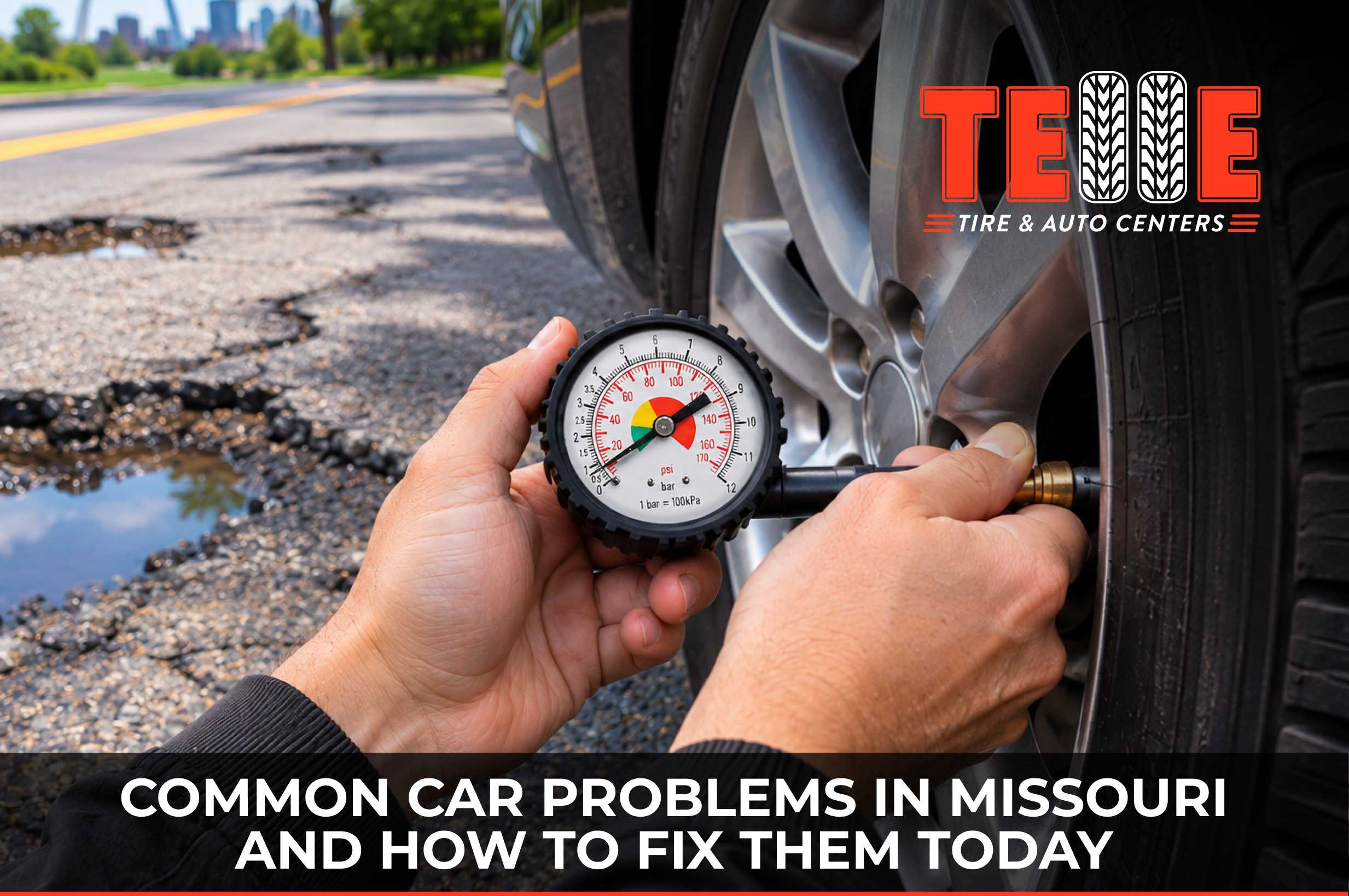
Missouri drivers deal with a unique mix of freezing winter temperatures, summer heat, heavy rain, changing road conditions, and potholes that can appear after repeated freeze-thaw cycles. These conditions can contribute to some of the most common car problems in Missouri, including weak batteries, low tire pressure, brake wear, alignment issues, overheating, and suspension damage.
Many problems give you warning signs before they become expensive repairs. Knowing what to watch for can help you decide when a quick inspection is enough and when your car needs professional attention.
For drivers across Missouri, including St. Louis, Jefferson City, Columbia, Kansas City, and surrounding communities, preventive maintenance can significantly improve reliability.
TL;DR- Common Car Problems in Missouri at a Glance
- Potholes can damage tires, wheels, suspension, and alignment. Watch for vibration, pulling, or uneven tire wear.
- Cold weather can weaken batteries and lower tire pressure. Check both before winter driving.
- Brake and suspension issues can cause squealing, vibration, pulling, or clunking.
- Summer heat can stress the engine, fluids, tires, and A/C system.
- Regular inspections can catch small problems before they become costly repairs.
Common Car Problems in Missouri
The weather and road conditions in Missouri can put extra stress on several vehicle systems. Some problems are seasonal, while others develop gradually because of normal wear.
Here are the issues Missouri drivers should watch most closely.
1. Pothole damage to tires and wheels
Potholes are one of the biggest road-related concerns for Missouri drivers. Water enters cracks in pavement, freezes and expands, then leaves weakened areas behind when it thaws. Passing traffic can eventually break the pavement apart. MoDOT reported patching more than 650,000 potholes across the state in 2025.
A pothole may look harmless, but a hard impact can cause immediate or gradual damage.
- Tire sidewall damage – A sharp impact can create a bulge, cut, or internal tire damage that may not be obvious from the driver’s seat.
- Bent wheels – A strong pothole hit can bend a wheel, leading to vibration, air loss, or difficulty balancing the tire.
- Wheel alignment problems – If your vehicle starts pulling to one side after an impact, the alignment may need to be checked.
- Suspension damage – Struts, shocks, control arms, and other suspension components can take a significant hit from deep potholes.
- Uneven tire wear – Alignment or suspension problems may cause one section of a tire to wear faster than the rest.
If your steering wheel suddenly sits crooked or your vehicle feels different after hitting a pothole, schedule an inspection instead of waiting for the symptoms to disappear.
This is one area where Missouri car maintenance tips can save you money. Catching alignment or suspension problems early may help prevent accelerated tire wear and additional component damage.
2. Dead or weak car batteries
Cold weather is especially hard on aging batteries. The University of Missouri Extension notes that a cold battery cannot deliver as much current, which means a marginal battery may fail when temperatures drop.
Warning signs can appear before the battery completely fails.
- Slow engine cranking – If the engine takes longer than usual to start, have the battery and charging system tested.
- Dim headlights – Lights that become noticeably weaker at idle can point to a battery or charging-system concern.
- Clicking when starting – Repeated clicking without the engine turning over may indicate insufficient electrical power.
- Battery corrosion – White or green buildup around terminals can interfere with electrical connections.
- Frequent jump-starts – Needing repeated boosts is a strong reason to have the battery, alternator, and starting system checked.
Battery testing is especially useful before a Missouri cold snap or a long winter trip. A preventive test can be much easier than discovering a weak battery in a parking lot on a freezing morning.
Missouri Winter Car Problems You Should Watch
Winter deserves special attention because several systems are affected simultaneously. Missouri’s severe winter weather can include snow, ice storms, and extreme cold, with northern areas generally receiving more annual snowfall than southern portions of the state.
3. Low tire pressure and winter tire wear
Tire pressure changes with temperature. University of Missouri Extension explains that tires can lose roughly 1 PSI for every 10-degree drop in temperature.
That makes tire pressure one of the easiest things to overlook when the seasons change.
- Low tire pressure – Check your tires when they are cold and use the pressure recommended on the driver’s door placard or in the owner’s manual.
- Uneven tread wear – Uneven wear can indicate alignment, suspension, inflation, or rotation issues.
- Low tread depth – Worn tires have less ability to maintain traction in rain, snow, and slush.
- Cracked rubber – Inspect the sidewalls for visible cracking, cuts, or bulges.
- Repeated air loss – A tire that keeps losing pressure may have a puncture, damaged valve, or wheel problem.
Good tires matter year-round, but winter quickly exposes weak tire maintenance. Include tire pressure, tread condition, and spare-tire readiness in your Missouri car maintenance checklist.
4. Brake problems
Brakes naturally wear over time, but winter moisture, road debris, and stop-and-go driving can add to the stress. Drivers should pay attention to changes in braking performance rather than waiting for a warning light.
- Squealing or grinding – Persistent brake noise can indicate worn pads or another brake component that needs inspection.
- Soft brake pedal – A pedal that feels unusually soft or sinks farther than normal should be checked promptly.
- Vehicle pulling while braking – Pulling can indicate uneven braking force or another problem affecting the braking system.
- Steering wheel vibration – Vibration during braking may indicate brake or front-end issues.
- Longer stopping distance – A noticeable change in stopping performance deserves immediate attention.
Brakes are safety equipment, so symptoms should always be taken seriously. A professional inspection can determine whether the issue involves pads, rotors, fluid, calipers, or another component.
Missouri Car Repair Problems That Can Start With a Small Symptom
Some of the most expensive repairs begin with symptoms drivers overlook. A strange noise or warning light does not automatically mean you need a major repair, but it does give you a reason to investigate.
5. Check engine light
A check engine light can be triggered by many issues, ranging from a loose fuel cap to a sensor, ignition, emissions, or engine problem.
Avoid guessing based on the light alone. Diagnostic equipment can identify stored trouble codes and help a technician determine the underlying cause.
6. Overheating and cooling system problems
Missouri summers can bring high temperatures, and heavy traffic can place additional demands on the cooling system. An overheating engine can suffer serious damage if the problem is ignored.
- Low coolant – A low coolant level may indicate a leak or another cooling-system problem.
- Temperature gauge running high – A rising temperature gauge is a warning that should never be ignored.
- Coolant leaks – Puddles or visible coolant around the engine area require inspection.
- Damaged hoses – Cracked, swollen, or soft hoses can fail under pressure.
- Weak air conditioning – Poor A/C performance can sometimes indicate an A/C-specific issue, though it should be diagnosed separately from engine overheating.
Missouri car maintenance tips should always include coolant checks and a review of hoses and belts, especially before summer road trips. Missouri winter car problems can also expose weaknesses in the cooling system when temperatures fall sharply.
7. Wheel alignment and suspension problems
If your car feels different after driving over rough roads, do not assume the sensation will go away. Suspension and alignment problems can affect handling and tire life.
Common signs include:
- The vehicle pulls left or right.
- The steering wheel is off-center while driving straight.
- The vehicle bounces excessively.
- You hear clunking over bumps.
- Tires develop uneven wear.
- The ride feels unusually harsh.
These symptoms are especially relevant after impacts from potholes. Getting the vehicle checked early can help identify whether the issue is a simple alignment adjustment or a damaged suspension component.
Car Maintenance in Missouri for Summer Driving
Summer creates a different set of challenges. Long-distance trips, high temperatures, heavy traffic, and extended A/C use can place additional demands on your vehicle.
A practical car maintenance checklist in Missouri should include the following.
- Check engine oil – Confirm that the oil level and change interval match your manufacturer’s recommendations, particularly before a long trip.
- Inspect coolant – The cooling system needs enough properly specified coolant to regulate engine temperature.
- Test the battery – Heat can also shorten battery life, so summer is a useful time to check battery condition.
- Inspect belts and hoses – Look for cracking, fraying, swelling, or other visible signs of deterioration.
- Check the A/C system – Weak airflow, warm air, strange noises, or unusual odors deserve professional diagnosis.
- Inspect tires – Check inflation, tread depth, and visible damage before putting extra highway miles on your vehicle.
These simple checks can reduce the chances of a preventable breakdown. They are also useful for first-time car owners who may still be learning how seasonal weather affects vehicle systems.
How to Prevent Common Car Problems in Missouri
The best repair strategy usually starts before the warning signs become serious. A consistent maintenance routine makes it easier to notice changes in your vehicle and address them before repairs become more complex.
Use these Missouri car maintenance tips throughout the year.
- Follow the manufacturer’s maintenance schedule – Your owner’s manual provides service intervals for oil, filters, fluids, inspections, and other important components.
- Check tire pressure monthly – Seasonal temperature changes make regular checks especially important for Missouri drivers.
- Inspect your vehicle after pothole impacts – If you notice vibration, pulling, steering changes, or tire damage, schedule an inspection.
- Test the battery before extreme weather – A battery test can identify a weak unit before it leaves you stranded.
- Pay attention to warning signs – New noises, smells, vibrations, warning lights, and handling changes deserve investigation.
- Keep up with fluid checks – Engine oil, coolant, brake fluid, and other fluids all play important roles in vehicle reliability.
- Schedule seasonal inspections – A spring or fall inspection can identify weather-related wear before the next season arrives.
The goal is consistency rather than complicated maintenance. A few minutes spent checking your vehicle regularly can help you spot a problem while you still have time to plan the repair.
Keeping Common Car Problems in Missouri From Becoming Bigger Repairs
Missouri roads and weather can be tough on vehicles, but drivers have plenty of opportunities to stay ahead of the most common problems. Regular tire checks, seasonal inspections, timely oil and fluid service, and quick attention to unusual symptoms can make daily driving safer and more predictable.
For Missouri drivers, the biggest advantage is knowing what your vehicle is telling you. A new vibration after a pothole, a slow start on a cold morning, a soft brake pedal, or a rising temperature gauge is useful information. Acting on those signs early can help protect your vehicle and your budget.
If your car is showing signs of tire, brake, battery, alignment, suspension, A/C, or engine trouble, Telle Tire & Auto Centers can help diagnose the issue and recommend the appropriate repair.
Call or schedule service with Telle Tire & Auto Centers when your vehicle needs attention. You can schedule an appointment online and get your vehicle checked before a small problem becomes a bigger one.

Take it to telle
Stay Safe with a Tire Check from Telle Tire
Worried about your tread depth or tire condition heading into the summer storm season? Take it to Telle. Our expert technicians can assess your tires, check pressure levels, and recommend replacements when necessary, helping you stay in control regardless of the weather conditions. Stay safe, stay prepared, and if you’re unsure about your tires, schedule a visit with your nearest Telle Tire & Auto Centers location today.
Stay Informed
Recent Articles from Telle Tire
Best Place to Get Tires Installed in Missouri: Local Shop Guide
Finding the best place to get tires installed in Missouri comes down to more than finding the lowest advertised tire price. You want the right tires…
Tire Replacement Cost Guide: What Drivers Should Expect
Replacing your tires is one of those vehicle expenses that can catch you off guard if you only look at the price printed beside the tire.…
AWD Tire Replacement: Can You Replace Just One Tire?
A flat tire can turn an ordinary day into an unexpected expense, especially when you drive an all-wheel-drive (AWD) vehicle. You might wonder whether you can…