Tire Replacement Cost Guide: What Drivers Should Expect
 Telle Tire 12 min read
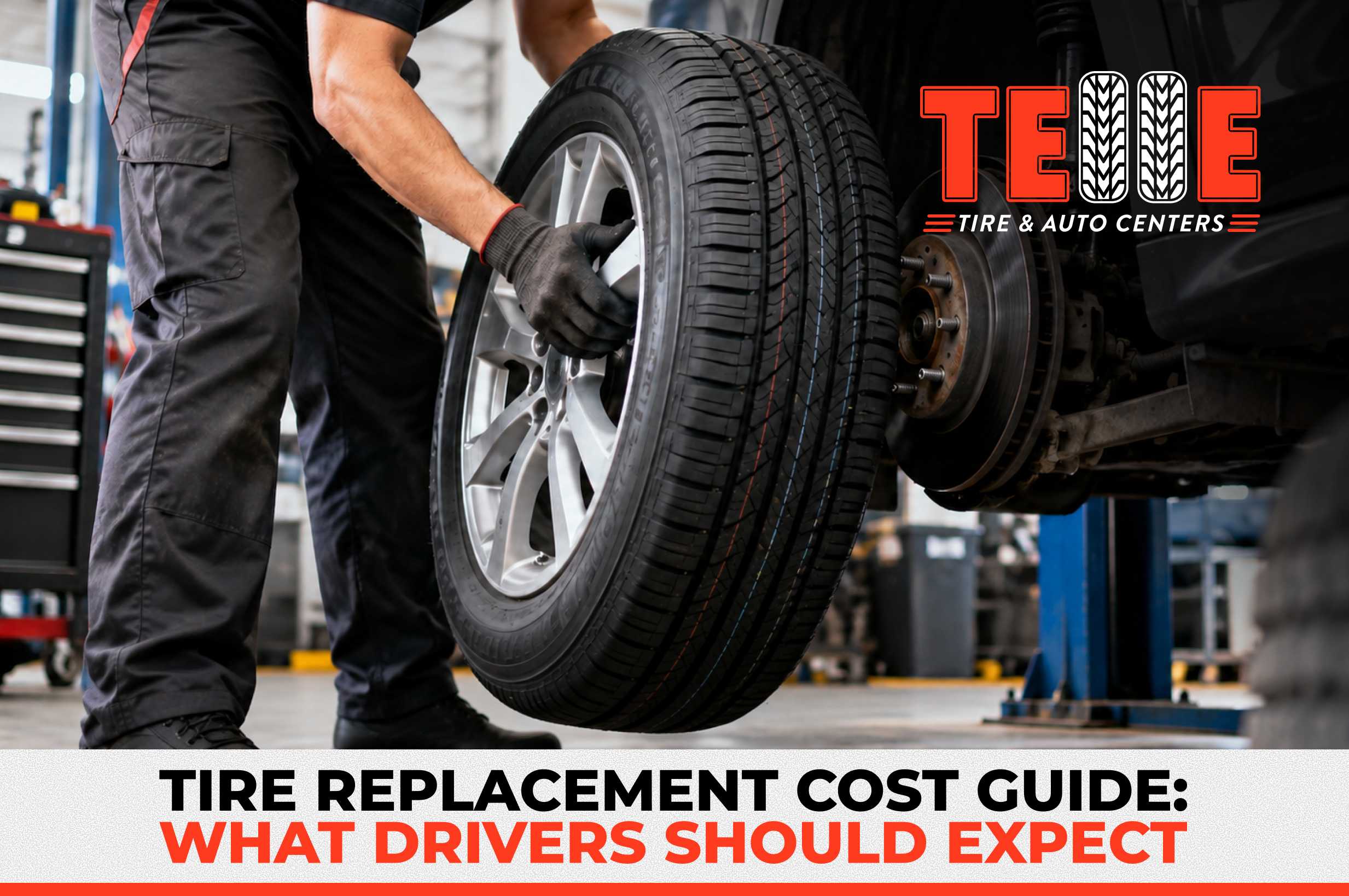
Replacing your tires is one of those vehicle expenses that can catch you off guard if you only look at the price printed beside the tire. This tire replacement cost guide explains what drivers can expect to pay for new tires, installation, balancing, and other common services in 2026. Whether you drive a compact car in St. Louis, an SUV in Kansas City, or a pickup in Springfield, understanding the complete cost can help you make a smarter decision for your vehicle and budget.
TL;DR – Tire Replacement Cost Guide at a Glance
- A typical set of four passenger tires costs around $400 to $1,200, while SUVs, trucks, and specialty tires may cost more.
- Mounting, balancing, disposal, taxes, and other services can increase the final price.
- Larger wheels, wider tires, and higher load ratings usually cost more.
- Depending on tire condition, you may need to replace one, two, or all four tires.
- Consider tread life, traction, warranty, and driving needs when comparing tire prices.
How Much Does Tire Replacement Cost
So, how much does it cost to replace tires? For a typical passenger vehicle, current estimates commonly fall around $100 to $300 per tire installed, putting many four-tire replacements in the $400 to $1,200 range. Specialty, performance, truck, and large-diameter tires can push the total substantially higher.
Here is a general starting point for budgeting:
| Vehicle or tire type | Approximate cost per tire | Approximate set of four |
|---|---|---|
| Economy compact car | 80–150 | 400–700 |
| Mid-size sedan | 100–200 | 500–900 |
| SUV or light truck | 150–350 | 700–1,500 |
| Performance or specialty | 200–500+ | 900–2,100+ |
These are planning ranges rather than guaranteed shop prices. Tire brand, size, availability, location, installation services, taxes, and current promotions can all change the final amount.
For that reason, a driver in St. Louis may receive a different quote from a driver in another market with the same vehicle. The best approach is to compare the complete estimate and confirm what is included.
What Makes Up Your Tire Replacement Cost
The tire replacement cost per tire starts with the tire itself, but several other charges can appear on the final invoice.
- Tire price – Brand, size, construction, tread design, speed rating, load rating, and intended use all affect the base price. A basic all-season tire for a compact sedan will generally cost less than a large truck tire or a low-profile performance tire.
- Mounting – The old tire must be removed from the wheel, and the new tire mounted properly. This is part of the professional installation process and is often included in the installation fee.
- Wheel balancing – A technician balances the tire-and-wheel assembly to help prevent vibration and uneven wear. Proper balancing also contributes to a smoother ride.
- Tire disposal – Many shops charge a disposal or recycling fee for old tires. Ask whether this charge is already included when comparing quotes.
- Alignment and related services – A wheel alignment may be recommended if the vehicle has uneven tire wear, steering concerns, or alignment problems that could damage the new tires.
NHTSA specifically recommends proper balancing and wheel alignment to improve tire safety and maximize tire life.
A quote that looks cheaper because it lists only the tire price may ultimately cost more than an all-inclusive quote. Always ask for the out-the-door price before making your decision.
What Affects the Cost of New Tires
The new tire installation cost can vary significantly from one vehicle to another. Two drivers may visit the same shop on the same day and receive very different estimates because their vehicles require different tire sizes or specifications.
Tire size and wheel diameter
Larger tires typically require more material and can cost more. A vehicle with 20-inch wheels, for example, will usually have a higher tire budget than a compact car equipped with smaller wheels.
Check the tire size printed on your current tire or listed in your owner’s manual before shopping. Buying the wrong size can create fitment, handling, and safety problems.
Tire brand and quality
Tires are available at several price points, from budget options to premium models.
A lower-priced tire may make sense for a driver who has a tight budget and modest driving needs. A premium tire may offer characteristics such as longer tread life, improved wet traction, lower road noise, or better handling.
The right choice depends on how and where you drive.
Vehicle type
SUVs and pickup trucks often require larger tires with higher load ratings than compact passenger cars. That can increase the cost of four new tires, especially for heavy-duty or off-road applications.
Drivers who tow, carry heavy loads, travel frequently on highways, or spend time on rough roads should also pay close attention to the tire’s load and performance specifications.
Tire performance rating
Speed rating, load rating, tread design, and other specifications can influence price.
Do not automatically select a tire based solely on the lowest price. The replacement tire should meet the specifications recommended for your vehicle and fit your normal driving conditions.
Where you live and drive
Regional demand, tire availability, taxes, labor rates, and weather conditions can influence pricing.
For example, drivers throughout Missouri may have different tire needs depending on whether they primarily commute around St. Louis, travel highways around Kansas City, or drive rural roads near Springfield. Telle Tire & Auto Centers serves multiple communities across Missouri and Tennessee, making local availability an important consideration when choosing tires.
Do You Need to Replace One, Two, or Four Tires
One of the most important questions when estimating tire replacement cost is how many tires actually need to be replaced.
Replacing one tire can be appropriate in certain situations, such as a relatively new tire that suffered damage and can be properly matched to the vehicle. However, replacing only one tire is not always the best choice.
- Replace one tire when appropriate – A single replacement may make sense when the other tires have very little wear and the replacement can be properly matched. A technician should evaluate tread depth and tire specifications before recommending this approach.
- Replace two tires when needed – If two tires are significantly more worn than the other pair, replacing them as an axle set may help maintain more consistent traction. Tire placement also matters, so follow the technician’s recommendation for your vehicle.
- Replace all four tires for even wear – When all four tires are worn or aging, installing a complete set can provide more consistent handling and traction across the vehicle.
- Consider drivetrain requirements – AWD and some 4WD vehicles can have specific tire-matching requirements. Differences in tire circumference can potentially create drivetrain concerns, so check your owner’s manual and consult a qualified technician.
- Look at the remaining tread – A tire that looks acceptable at first glance may have significantly less tread than a new tire. Comparing tread depth across all four tires helps determine whether replacing fewer tires is a sensible option.
NHTSA says tires should be replaced when tread reaches 2/32 of an inch and recommends checking tread regularly.
If you are unsure whether one tire, two tires, or a full set makes sense, have all four inspected before buying. That can prevent you from spending money on a single replacement only to discover that the other tires are also nearing the end of their useful life.
How to Tell When You Need New Tires
Price should never be the only factor in deciding when to replace your tires. The condition of the tire matters first.
Watch for these warning signs:
- Tread is at or below 2/32 inch – This is the replacement threshold identified by NHTSA. Built-in treadwear indicators can also show when the tread has worn down to the replacement point.
- Cracks or visible damage – Cracking, cuts, bulges, or other damage to the sidewall can indicate a serious tire problem. Have suspicious damage inspected promptly.
- Uneven tread wear – Wear concentrated on one edge or across certain sections of the tread can point to alignment, inflation, suspension, or rotation issues.
- Persistent vibration – Vibration through the steering wheel or vehicle can be related to tire balance, tire damage, wheel problems, or other mechanical issues.
- Repeated loss of air pressure – A tire that keeps losing pressure may have a puncture, a valve problem, a bead issue, or another concern that needs attention.
Tire age also deserves consideration, even when the tread appears acceptable. Your tire’s manufacturing date can be found on the DOT code on the sidewall, and a technician can help assess whether age-related deterioration is becoming a concern.
How to Get a Fair Tire Replacement Quote
Knowing the new tire installation cost before you visit a shop can make the buying process much easier. Instead of asking only, “How much is each tire?” ask for a complete estimate.
Here are practical questions to ask:
-
What is the total installed price for all four tires?
This gives you a useful number for comparing shops.
-
Does the quote include mounting and balancing?
These services are commonly part of professional tire installation, but packages vary.
-
Are disposal, valve, or other fees included?
Ask about additional charges before approving the work.
-
Is an alignment recommended for my vehicle?
If your tires show uneven wear or the vehicle pulls to one side, an alignment may help protect your new set of tires.
-
What warranty or tire protection is included?
Compare coverage carefully rather than assuming every tire purchase provides the same benefits.
Telle Tire & Auto Centers states that new tire purchases include professional mounting, balancing, and a safety inspection, along with complimentary lifetime rotations, lifetime rebalancing, flat repairs, and TPMS reset service.
That kind of package can change the value calculation because the cheapest tire quote is not necessarily the lowest total cost over the life of the tires.
Get the Right Tire Replacement Cost for Your Vehicle
A realistic tire replacement cost guide should help you understand the complete purchase, from the tire itself to mounting, balancing, and any services needed to protect your investment. For many vehicles, several hundred dollars is a reasonable starting point for four tires, while larger or specialized vehicles can require a much larger budget.
Telle Tire & Auto Centers helps drivers compare tire options based on their vehicle, driving needs, and budget. With locations across Missouri and Tennessee, drivers can find a nearby Telle Tire location for professional tire installation and automotive service.
Ready to replace worn or damaged tires? Schedule service with Telle Tire & Auto Centers and let the team help you find the right tire options for your vehicle and driving needs. You can also find a Telle Tire location near you before booking your appointment.

Take it to telle
Stay Safe with a Tire Check from Telle Tire
Worried about your tread depth or tire condition heading into the summer storm season? Take it to Telle. Our expert technicians can assess your tires, check pressure levels, and recommend replacements when necessary, helping you stay in control regardless of the weather conditions. Stay safe, stay prepared, and if you’re unsure about your tires, schedule a visit with your nearest Telle Tire & Auto Centers location today.
Stay Informed
Recent Articles from Telle Tire
AWD Tire Replacement: Can You Replace Just One Tire?
A flat tire can turn an ordinary day into an unexpected expense, especially when you drive an all-wheel-drive (AWD) vehicle. You might wonder whether you can…

How Weather Affects Tires in Tennessee: Tire Care Tips
Tennessee drivers deal with a wide range of weather throughout the year, from hot and humid summer days to heavy spring thunderstorms and occasional winter freezes.…

Best All-Season Tires Springfield MO: Top Buying Tips
Choosing the best all-season tires Springfield MO, drivers can rely on takes more thought than picking the most familiar brand. Springfield drivers deal with hot summer…