How Weather Affects Tires in Tennessee: Tire Care Tips
 ITServices@telletire.com 15 min read
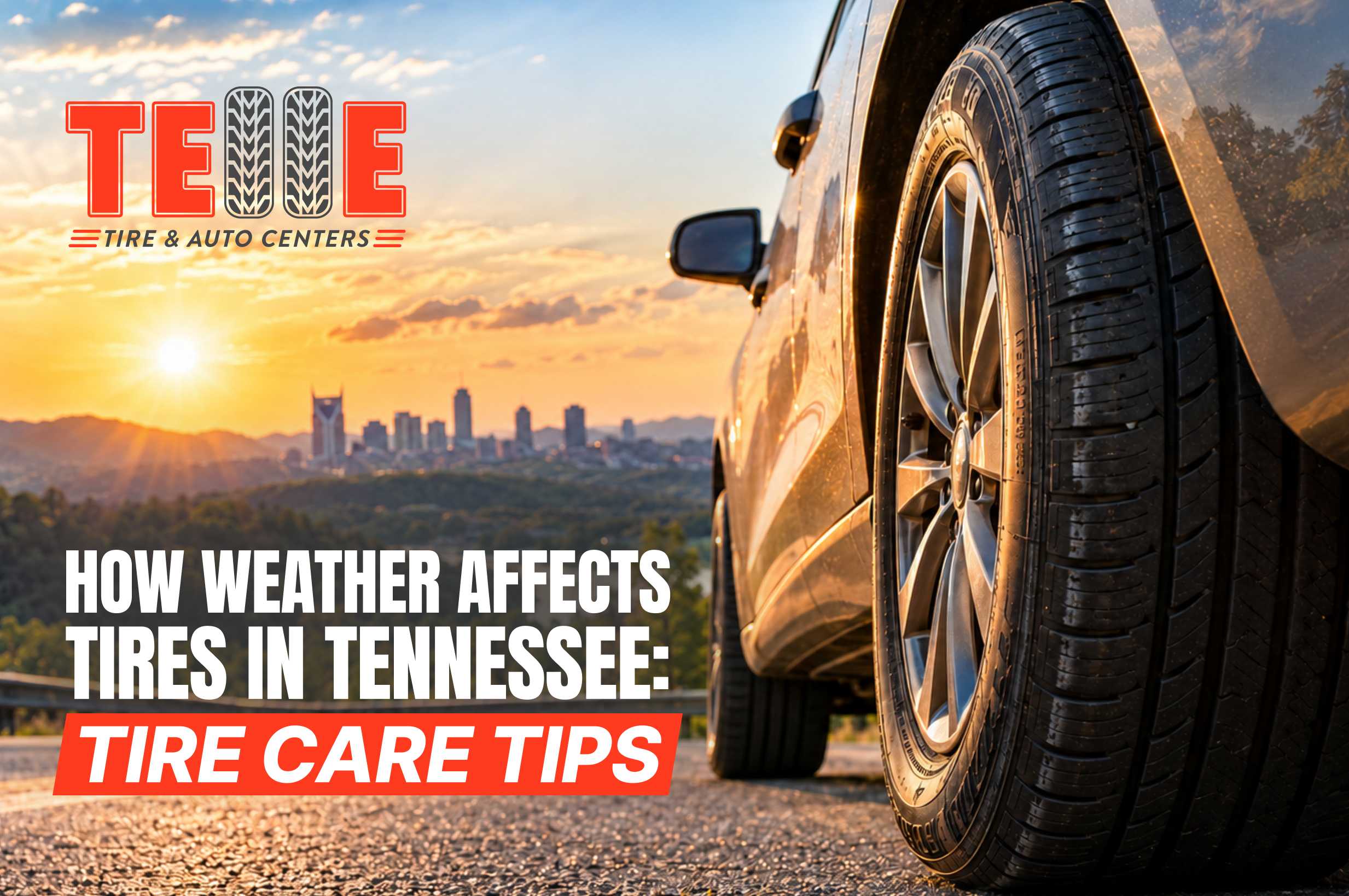
Tennessee drivers deal with a wide range of weather throughout the year, from hot and humid summer days to heavy spring thunderstorms and occasional winter freezes. Understanding how weather affects tires in Tennessee can help you maintain better traction, prevent uneven wear, and recognize tire problems before they become safety concerns.
For drivers in Covington, Paris, Ripley, and Dyersburg, changing temperatures can affect tire pressure and performance in ways that are easy to overlook. Telle Tire & Auto Centers currently serves Tennessee drivers through locations in Covington, Paris, Ripley, West Dyersburg, and North Dyersburg.
TL;DR – How Weather Affects Tires in Tennessee Quick Guide
- Hot weather increases the temperature and pressure inside your tires, so check inflation when the tires are cold.
- Good tread depth and proper inflation help your tires maintain contact with wet Tennessee roads.
- Tire pressure can drop as temperatures fall, making seasonal checks especially important.
- Heat, rain, potholes, and temperature swings can contribute to uneven wear and tire stress.
- Monthly pressure checks, tread inspections, rotations, and alignment checks can help your tires perform throughout the year.
How Weather Affects Tires in Tennessee
Tennessee’s changing weather can affect your tires in several different ways. Understanding these seasonal effects makes Tennessee tire maintenance easier because you can address potential problems before they become roadside emergencies.
The important point is that the weather rarely damages a healthy tire on its own. Problems become more likely when weather changes combine with low tire pressure, worn tread, excessive loads, misalignment, or existing tire damage.
How does hot weather affect tires?
Hot weather increases the temperature of the air inside your tires. As that air heats up, pressure rises. Tire pressure can also increase as the tire itself heats up from friction during driving.
According to the U.S. Tire Manufacturers Association, tire inflation pressure can change by about 1 to 2 PSI for every 10-degree change in temperature.
That makes summer tire checks especially important in Tennessee.
- Higher tire temperatures – Long drives on hot pavement generate additional heat in the tire. Sustained high temperatures can contribute to tire deterioration, particularly when a tire is already damaged or improperly inflated.
- Pressure changes – A tire that reads correctly in the cool morning can show a higher pressure later after sitting in the sun or driving for several miles. That is normal, which is why manufacturers specify cold inflation pressure.
- Greater stress on underinflated tires – An underinflated tire flexes more as it rolls, generating additional heat. Combined with high ambient temperatures, that can increase stress on the tire.
- Faster rubber deterioration – Prolonged exposure to heat and sunlight can accelerate rubber aging. Cracks, bulges, or other visible damage deserve professional attention.
- Heavy summer loads – Road trips, luggage, trailers, and fully loaded SUVs put additional demands on tires. Check the recommended cold pressure before a long trip or when carrying a heavy load.
Tennessee’s summer heat is a good reminder that tire pressure should be checked based on the manufacturer’s recommendation rather than adjusted by appearance.
A tire that looks fine can still be several PSI below the correct pressure. This makes Tennessee summer tire care especially important before long road trips or extended highway driving.
How does rain affect tires in Tennessee?
Rain is another major part of how weather affects tires in Tennessee. Heavy storms can leave water across the road, while worn tread can make it harder for a tire to channel that water away from the contact patch.
Adequate tread depth helps tires maintain traction on wet pavement. USTMA recommends replacing tires once tread depth reaches 2/32 of an inch, although drivers may notice reduced wet-weather performance before reaching that point.
- Wet roads reduce traction – Water between the tire and pavement can reduce available grip, especially when traveling too quickly for road conditions.
- Worn tread handles water less effectively – Tire grooves are designed to move water away from the contact area. As tread wears, that ability decreases.
- Hydroplaning becomes a concern – A tire can lose contact with the pavement when enough water builds between the tread and road surface.
- Braking takes more care – Wet pavement can increase stopping distance, making it important to leave additional following space during heavy rain.
- Sudden movements can cause trouble – Smooth steering, braking, and acceleration give your tires a better chance to maintain traction.
For Tennessee drivers, tire pressure in Tennessee also matters during wet weather because proper inflation helps maintain the tire’s intended contact with the road. Rain also makes tire condition easier to overlook. A driver may have adequate traction during dry conditions but discover a problem when a sudden Tennessee storm creates standing water.
If your vehicle feels unstable, pulls during braking, or repeatedly loses traction on wet roads, have the tires and alignment inspected.
How does cold weather affect tires?
Tennessee winters vary across the state, but cold snaps can still create noticeable changes in tire pressure. When temperatures fall, the air inside the tire contracts and pressure decreases.
Tire Rack explains that a 10-degree Fahrenheit change in ambient temperature can produce roughly a 2% change in tire pressure, while USTMA gives a general range of 1 to 2 PSI for a 10-degree temperature change.
- Lower tire pressure – A cold morning can cause a tire pressure warning even when the tire has no puncture.
- Reduced handling – Significant underinflation can affect steering response and tire stability.
- More irregular wear – Driving for extended periods with incorrect inflation can contribute to premature or uneven tread wear.
- Reduced fuel efficiency – Underinflated tires can increase rolling resistance, requiring more energy to move the vehicle.
- Winter road hazards – Freezing temperatures can combine with rain, ice, or snow to create challenging driving conditions, particularly in colder parts of East Tennessee.
Tennessee Highway Patrol specifically recommends checking tire pressure and tread depth before winter travel and advises drivers to reduce speed according to road conditions.
The easiest approach is to check your tires when they are cold and adjust them to the vehicle manufacturer’s recommended pressure. Regular Tennessee tire maintenance should therefore continue through winter rather than stopping once summer ends.
How Tennessee’s changing seasons affect tire wear
Weather changes can affect tires in ways that are easy to miss because the damage happens gradually. A tire may experience heat during a summer commute, heavy rain later in the season, and significant temperature changes as fall turns into winter.
That is one reason tire pressure in Tennessee should be checked regularly rather than only when the warning light appears.
What should Tennessee drivers check throughout the year?
- Tire pressure – Check all four tires and the spare at least once a month when they are cold. Use the pressure listed on the driver’s doorjamb or in the owner’s manual, rather than the maximum PSI printed on the tire sidewall.
- Tread depth – Look across the entire tread surface for uneven wear and measure tread when you are unsure. The legal replacement threshold commonly used by tire safety organizations is 2/32 of an inch.
- Sidewall condition – Look for cracks, cuts, bulges, or other visible damage. These signs can indicate that the tire needs professional inspection.
- Uneven wear patterns – Wear on one edge, cupping, or unusual patches can point to alignment, suspension, balance, or inflation problems.
- TPMS warnings – Treat the tire pressure warning light as a reason to inspect the tires promptly. TPMS is useful, but USTMA notes that it is not a substitute for regular manual pressure checks.
A quick inspection takes only a few minutes, but it can reveal a problem before it affects a daily commute or road trip.
If one tire repeatedly loses pressure, do not keep adding air without finding the cause. A puncture, valve problem, wheel issue, or other leak may need professional attention.
What tire pressure should you use in Tennessee?
There is no single tire pressure that works for every vehicle in Tennessee. The correct pressure depends on the vehicle, load, and manufacturer’s specifications. The best time to check tire pressure in Tennessee is before driving or after your vehicle has been parked long enough for the tires to cool.
Look for the Tire and Loading Information label on the driver’s doorjamb or check your owner’s manual. NHTSA specifically recommends using the vehicle manufacturer’s recommended cold inflation pressure rather than the maximum pressure listed on the tire.
When should you check tire pressure?
The best time is before driving or after the vehicle has been parked for several hours.
Checking after a long highway drive can give you a higher reading because heat has increased the tire’s internal pressure. Do not release air simply because the pressure appears higher when the tires are hot.
For Tennessee drivers, it is particularly useful to check pressure:
- Before a long road trip
- After a major temperature change
- Before carrying a heavy load
- When the TPMS warning light comes on
- At least once every month
Tire pressure should also be checked before towing or hauling. Additional weight increases the demands placed on the tires, so follow the vehicle manufacturer’s loading and inflation recommendations.
Make pressure checks part of your regular Tennessee tire maintenance routine, especially before long trips.
How can Tennessee drivers protect tires from weather damage?
Good tire care is mostly about consistency. You do not need a complicated maintenance routine, but you do need to pay attention when conditions change.
- Check pressure before road trips – Start with cold tires and use the manufacturer’s recommended PSI. This gives you a reliable baseline before heat from driving changes the reading.
- Inspect tread before rainy seasons – Look for worn or uneven tread before periods when heavy rain is expected. Strong wet-weather traction depends heavily on having usable tread.
- Rotate tires regularly – Tire rotation helps distribute wear more evenly. USTMA recommends following the vehicle manufacturer’s schedule and gives 5,000 to 8,000 miles as a general recommendation when no interval is specified.
- Check alignment after impacts – Tennessee roads can expose vehicles to potholes, rough pavement, and other hazards. A hard impact can affect wheel alignment and contribute to uneven tire wear.
- Watch for visible damage – Heat, road hazards, and age can all contribute to tire deterioration. Cracks, bulges, cuts, or exposed cords should be inspected promptly.
One useful habit is to combine tire checks with another routine, such as filling your fuel tank or checking your engine oil. Making tire care part of an existing routine makes it easier to remember.
What tires work well for Tennessee weather?
Choosing the right tire depends on where and how you drive. NHTSA notes that tire selection should consider the weather where you live, with all-season, winter, summer, and all-terrain tires each serving different purposes.
For many Tennessee commuters, an all-season tire can provide a practical balance of wet-weather traction, comfort, and year-round usability. Drivers who frequently travel into colder or mountainous areas may have different needs.
- All-season tires – A practical option for many daily drivers who experience rain, heat, and occasional cold weather.
- All-weather tires – These can be worth considering for drivers who regularly encounter colder conditions and occasional snow.
- Winter tires – Dedicated winter tires can provide an advantage in areas that regularly experience significant snow and ice.
- All-terrain tires – These may suit truck and SUV owners who regularly drive on gravel, unpaved roads, or rough terrain.
- Performance tires – These can provide responsive handling in warm conditions, but drivers should consider temperature limitations and seasonal conditions when selecting them.
There is no universal “best tire for Tennessee.” The right choice depends on your vehicle, driving habits, typical routes, climate exposure, and budget.
Telle Tire & Auto Centers can help Tennessee drivers compare tire options based on their vehicle and driving needs. The company’s Tennessee locations include Covington, Paris, Ripley, West Dyersburg, and North Dyersburg.
Protect Your Tires Through Tennessee Weather
Knowing how weather affects tires in Tennessee makes it easier to spot pressure changes, tread wear, and other problems before they interfere with your daily driving. Regular inspections matter even more when temperatures shift quickly or severe rain and winter weather are in the forecast.
Telle Tire & Auto Centers serves Tennessee drivers with tire services and complete auto care, including locations in Covington, Paris, Ripley, and Dyersburg. Our Tennessee teams include ASE-certified technicians, and Telle backs qualifying repairs with a 3-year/36,000-mile warranty.
If your tires are losing pressure, showing uneven wear, or struggling to maintain traction, schedule an inspection with Telle Tire & Auto Centers. You can use the online appointment system to find a Tennessee location and choose a convenient service time.

Take it to telle
Stay Safe with a Tire Check from Telle Tire
Worried about your tread depth or tire condition heading into the summer storm season? Take it to Telle. Our expert technicians can assess your tires, check pressure levels, and recommend replacements when necessary, helping you stay in control regardless of the weather conditions. Stay safe, stay prepared, and if you’re unsure about your tires, schedule a visit with your nearest Telle Tire & Auto Centers location today.
Stay Informed
Recent Articles from Telle Tire
Best All-Season Tires Springfield MO: Top Buying Tips
Choosing the best all-season tires Springfield MO, drivers can rely on takes more thought than picking the most familiar brand. Springfield drivers deal with hot summer…

How to Make Brakes Last Longer With Proper Maintenance
Your brakes work hard every time you slow down, stop at an intersection, or navigate traffic. Learning how to make brakes last longer can help you…

Transmission Fluid Change vs Flush: What Does Your Car Need?
Transmission fluid plays a key role in keeping your vehicle shifting properly, managing heat, and protecting internal components from wear. However, when your car needs transmission…