Do Low-Mileage Tires Need Replacing? Tread, Age & Condition
 ITServices@telletire.com 15 min read
A car that spends most of its time in the garage may have tires that look nearly new. However, low mileage does not automatically mean those tires are safe to use. Rubber can deteriorate with age, even when the tread still has plenty of depth.
So, do low-mileage tires need replacing? Sometimes, yes. The decision depends on the tire’s age, physical condition, tread depth, storage environment, and road performance. Drivers in Springfield, Missouri, should also consider how temperature changes, rain, potholes, and long periods of inactivity may affect tire condition.
A careful inspection can help you avoid premature tire replacement while catching problems that could put you and your passengers at risk.
TLDR – Low-Mileage Tires Replacement Quick Guide
- Low mileage does not guarantee safety. Tires can age and deteriorate even when a vehicle rarely leaves the driveway.
- Check the manufacturing date and follow the vehicle and tire manufacturer’s recommendations, especially as tires approach five years of service.
- Inspect tread depth and look for sidewall cracks, bulges, cuts, and unusual wear patterns that may require professional attention or replacement.
- Watch for repeated pressure loss, vibration, unusual road noise, or changes in handling, which may signal a tire problem.
- Schedule regular tire inspections to check inflation levels, visible wear, and other warning signs that may be difficult to detect at home.
Do Low-Mileage Tires Need Replacing Based on Age?
Yes, tires on infrequently driven vehicles may need to be replaced because of age, even when they have plenty of tread left. Tire rubber and internal components change over time because of environmental exposure, storage conditions, and normal material aging.
The National Highway Traffic Safety Administration (NHTSA) warns that low-mileage vehicles can be especially vulnerable to tire aging. It also notes that some vehicle and tire manufacturers recommend replacement when tires reach six to 10 years old, regardless of tread wear.
These are not universal deadlines. Always check your owner’s manual and the tire manufacturer’s guidance for your specific vehicle and tires.
Why do tires age even when you barely drive
Tires experience gradual changes while parked. Sunlight, heat, ozone exposure, and poor storage conditions can contribute to rubber deterioration. Over time, this may affect the tire’s ability to perform as intended.
Low-mileage vehicles can be particularly vulnerable because their tires may reach an age-related replacement point before the tread wears down.
For example, imagine two SUVs with the same tires. One travels 15,000 miles annually, while the other covers only 3,000 miles. The second SUV may retain considerably more tread, but its tires could still require replacement due to age or wear.
The difference matters because tread depth measures the remaining tread, not the overall condition of the tire’s rubber and internal structure.
When should older tires be inspected?
Michelin recommends annual professional inspections after five years of tire service and precautionary replacement 10 years after the manufacturing date, regardless of tread depth or apparent condition. Other manufacturers and vehicle makers may recommend earlier replacement.
Use the following as a general guide, not a universal rule:
- Under five years old: Check inflation, tread, and physical condition regularly. Damage can require replacement at any age.
- Five years and older: Arrange at least annual professional inspections, following manufacturer guidance.
- Six to 10 years old: Review the vehicle and tire manufacturer’s replacement recommendations carefully. Some require replacement earlier within this range.
- Ten years old: Michelin recommends replacement as a precaution, even when the tire appears serviceable.
The correct decision depends on the tire manufacturer’s instructions and your vehicle’s requirements. Never continue driving on a tire that shows serious damage simply because it has not reached a particular age.
How to Check Tire Age and Replacement Needs
You can find the manufacturing date on the tire sidewall. Look for the Department of Transportation (DOT) Tire Identification Number, which includes a four-digit date code at the end.
The first two digits indicate the manufacturing week, while the final two identify the year.
For example, a code ending in 3521 means the tire was manufactured during the 35th week of 2021. In October 2026, that tire would be approximately five years old, depending on its exact production date.
Remember that manufacturing age and time in service are different. A tire may have been manufactured months before it was installed on your vehicle.
Where to find the DOT date code
- Park on level ground and switch off the vehicle.
- Inspect the sidewall of each tire for the DOT identification marking.
- Find the final four digits of the complete code.
- Record the manufacturing dates for all four tires.
- Compare the dates with your vehicle and tire manufacturer’s recommendations.
The complete date code may appear on only one sidewall. If you cannot find it, ask a tire professional to help identify it.
Checking the date is a useful first step in understanding tire age and replacement needs. However, the date alone cannot confirm whether a tire is safe or unsafe. A professional must also consider the condition, use, and manufacturer guidance.
What Are the Signs Tires Need Replacing?
A tire can look acceptable from the driver’s seat and still have a problem. Walk around your vehicle periodically and look for changes in the tread, sidewalls, and overall shape.
The following signs that tires need replacing or prompt professional assessment, should not be ignored.
1. Tread wear indicators are flush with the tread
Tread wear indicators are small raised bars molded into the grooves of a tire. When the surrounding tread wears down to the level of these bars, the tire has reached its built-in wear limit.
In the United States, the commonly used minimum tread depth is 2/32 of an inch. Do not wait for this point if the tire performs poorly in wet conditions or the manufacturer recommends replacement sooner.
2. Cracks appear in the sidewalls
Small cracks, sometimes called weather cracking, can develop as rubber ages and dries out. They may appear along the sidewalls or between tread blocks.
Fine surface marks do not always mean immediate replacement, but deeper or spreading cracks need professional evaluation. Do not assume that an older tire is safe simply because it holds air.
3. Bulges or blisters develop
A bulge in the sidewall may indicate damage to the tire’s internal structure. This can happen after an impact with a pothole, curb, or road debris.
A tire with a suspected structural bulge should be removed from service and replaced. Do not drive on it to see whether the problem gets worse.
4. The tire repeatedly loses air
A tire that needs frequent inflation may have a puncture, a leaking valve, a damaged wheel, or another problem. Aging tires can also develop issues that affect their ability to retain pressure.
Have the cause identified instead of repeatedly adding air. Underinflation can contribute to excessive heat buildup and further tire damage.
5. You notice vibration or unusual handling
New vibration, pulling, or changes in steering response can indicate tire damage, uneven wear, wheel imbalance, or alignment problems.
These symptoms do not automatically mean you need new tires. However, they should be checked promptly, especially if they begin after hitting a pothole or curb.
If the vehicle becomes difficult to control or a tire appears to be seriously damaged, stop in a safe location and arrange assistance rather than continue driving.
6. The tread wears unevenly
Uneven wear can appear as excessive wear along one shoulder, a worn center, or alternating high and low areas across the tread.
Possible causes include incorrect inflation, alignment problems, worn suspension components, or inadequate rotation. Correcting the underlying cause can help protect replacement tires from the same problem.
These warning signs help you decide when to arrange a tire inspection. If you spot more than one, have the tires assessed before your next long trip.
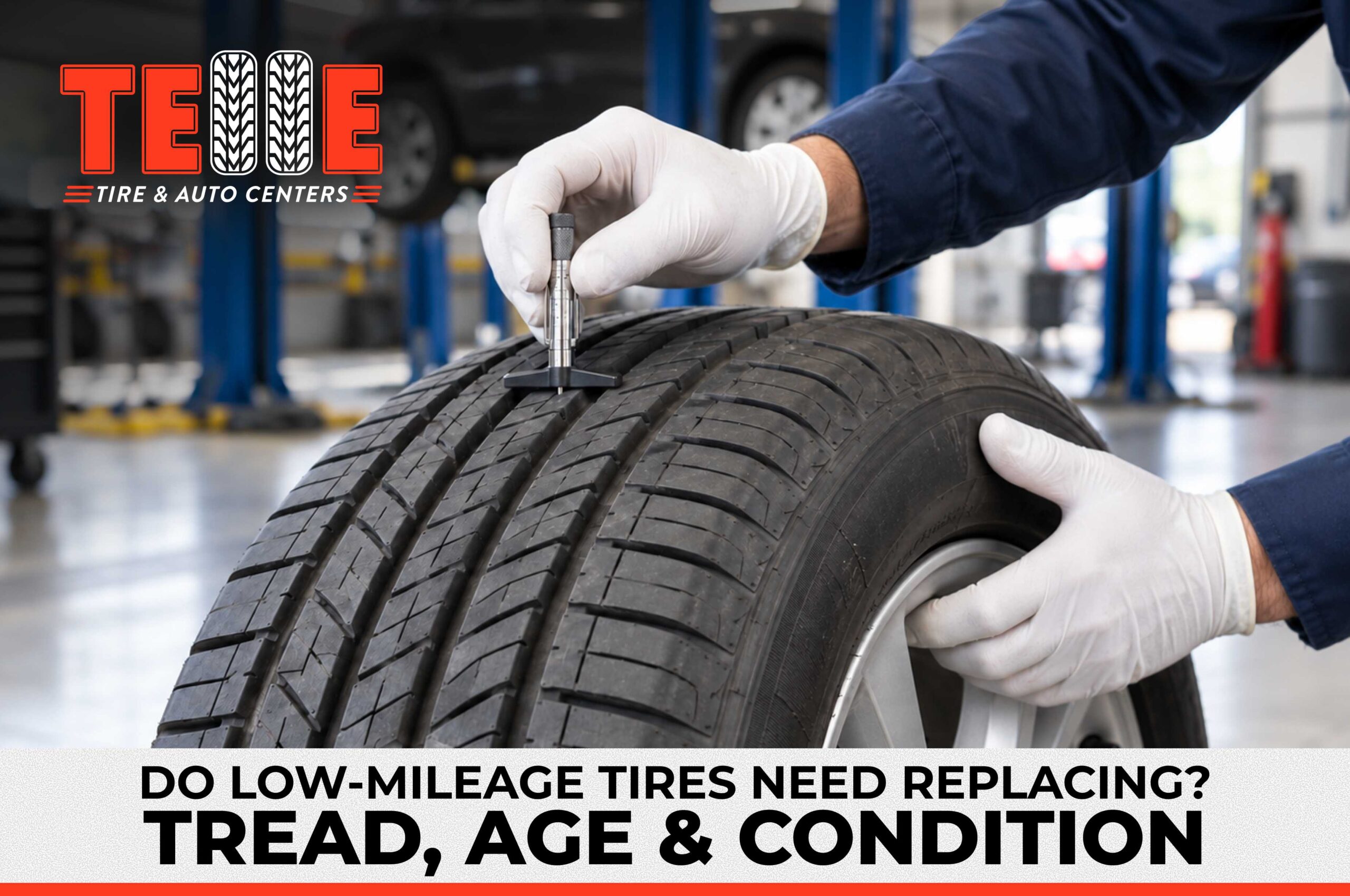
How to Measure Tire Tread Depth
Tread depth helps determine how much tread remains to channel water away from the contact patch. It is particularly important for drivers who travel in rain or encounter wet roads.
You can check tire tread depth using a dedicated tread depth gauge. This tool provides a more precise measurement than a visual estimate.
Follow these steps
- Park safely. Turn off the engine and engage the parking brake.
- Check several points. Measure the inner, center, and outer portions of the tread where accessible.
- Inspect all four tires. The front and rear tires may wear at different rates.
- Compare the readings. Look for unusually low measurements or differences across the same tire.
- Check the wear bars. If the tread is level with the indicators, the tire has reached its wear limit.
A penny can provide a rough visual check, but a tread depth gauge gives a more reliable measurement. Remember that adequate tread does not rule out age-related deterioration or internal damage.
For low-mileage vehicles, tread depth should be considered alongside tire age and replacement guidance. Replacing tires based on tread alone can overlook problems that develop while a vehicle sits unused.
How to Protect Tires on a Low-Mileage Vehicle
You do not need to drive every day to keep your tires properly inflated. A few regular checks can help reduce avoidable wear and identify developing problems before they become serious.
Follow these tire maintenance practices
- Check tire pressure monthly. Use a reliable gauge and follow the pressure listed on the driver’s door placard or in the owner’s manual. The number molded into the sidewall is generally the tire’s maximum pressure, not the vehicle’s recommended operating pressure.
- Inspect the tires before long trips. Look for cracks, cuts, bulges, embedded objects, and uneven wear. Check the spare tire too, if your vehicle has one.
- Follow the recommended rotation schedule. Rotation helps manage uneven wear, even if you accumulate relatively few miles. Follow your vehicle manufacturer’s schedule and any tire-specific restrictions.
- Park away from prolonged direct sunlight when possible. A garage or shaded area can reduce exposure to sunlight and weather. Keep tires away from sources of excessive heat and ozone.
- Avoid prolonged underinflation. Tires can lose pressure while a vehicle sits. Check them before driving, particularly after extended periods of inactivity.
- Keep a record of tire dates. Note each tire’s manufacturing date, installation date, inspection findings, and replacement recommendations. This makes future maintenance decisions easier.
- Arrange a professional inspection as tires age. A technician can assess visible deterioration, wear patterns, and other concerns that may require closer examination.
For SUV drivers, follow the tire pressure, load, and replacement requirements specified for the vehicle. Some all-wheel-drive systems also have strict limits on differences in tire circumference or tread depth, so replacing only one tire may not be appropriate.
Good maintenance can help tires last as long as their condition permits, but it cannot stop the aging process. Even well-maintained tires eventually reach a point when replacement is the safer option.
Do Low-Mileage Tires Need Replacing Before a Long Trip?
Sometimes. A long trip puts sustained demands on tires that may have spent most of their time parked. Before leaving, check the tire age, inflation pressure, tread depth, and overall condition.
This is particularly important if your vehicle has been sitting for several months or you cannot remember when the tires were installed.
Before a road trip, check the following:
- Confirm that each tire is inflated to the recommended cold pressure.
- Look for sidewall cracks, cuts, bulges, and embedded objects.
- Measure tread depth and inspect the wear indicators.
- Check the DOT date codes and review any age-related replacement guidance.
- Pay attention to any vibration, pulling, or loss of pressure during recent drives.
If you notice a problem, arrange an inspection before traveling. Do not rely on a short test drive to prove that an old tire is safe for hours of highway driving.
Tire Inspection in Springfield MO
Drivers in Springfield, Missouri, can benefit from routine tire checks even when their vehicles accumulate few miles. Changes in temperature, exposure to sunlight, road impacts, and long periods of inactivity can all influence tire condition.
If you are unsure about tire age and replacement, a professional inspection can help determine whether your tires remain serviceable or need further attention.
Telle Tire & Auto Centers can help drivers assess tire condition and identify maintenance concerns before they become more serious. Visit the East Republic Road location in Springfield for tire service and guidance based on your vehicle’s needs.
An inspection is particularly useful if you have purchased a used vehicle, inherited a car that sat unused, or discovered that your tires are several years old. You can make a better-informed replacement decision when you know the tire’s age, tread measurements, and physical condition.

Take it to telle
Stay Safe with a Tire Check from Telle Tire
Worried about your tread depth or tire condition heading into the summer storm season? Take it to Telle. Our expert technicians can assess your tires, check pressure levels, and recommend replacements when necessary, helping you stay in control regardless of the weather conditions. Stay safe, stay prepared, and if you’re unsure about your tires, schedule a visit with your nearest Telle Tire & Auto Centers location today.
Stay Informed
Recent Articles from Telle Tire
Car Battery in Cold Weather: Why Testing Matters
A car that starts reliably during mild weather can struggle on a freezing morning, leaving you late for work or stranded in a parking lot. For…
Missouri Car Maintenance Schedule for Older Vehicles
If you drive an older car in Missouri, having a consistent Missouri car maintenance schedule can make ownership much easier. A vehicle with 100,000 miles or…
Tennessee Vehicle Maintenance Checklist for Reliable Driving
Owning a vehicle in Tennessee means dealing with changing road conditions, seasonal weather, and daily driving demands. A reliable car does not happen by accident. It…