Car Battery in Cold Weather: Why Testing Matters
 Telle Tire 14 min read
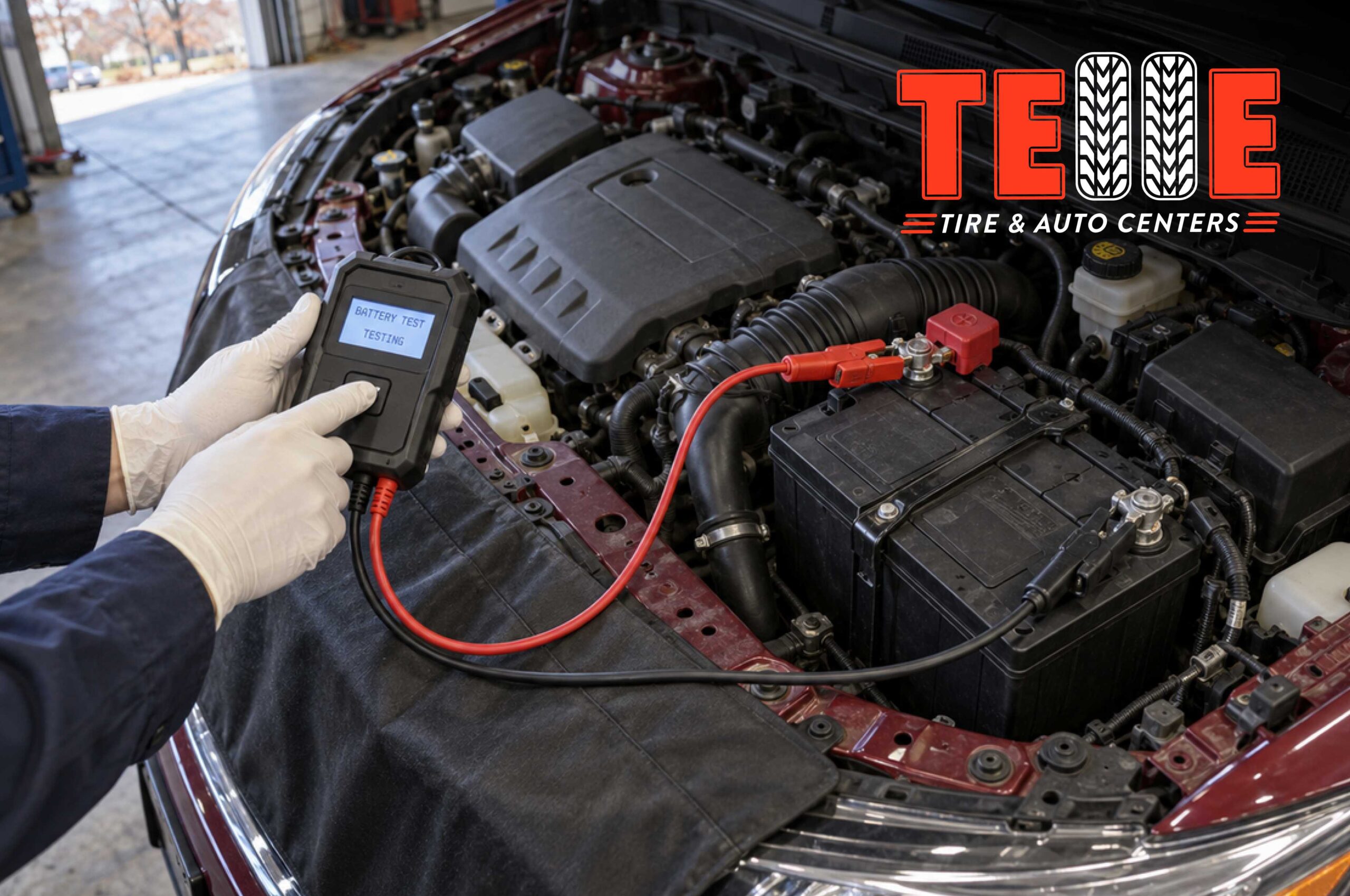
A car that starts reliably during mild weather can struggle on a freezing morning, leaving you late for work or stranded in a parking lot. For drivers in Kansas City, Missouri, preparing for winter means paying attention to the battery before temperatures drop.
A car battery in the cold weather has to deliver power under tougher conditions. Low temperatures slow the chemical reactions inside the battery, while cold engine oil makes the engine harder to turn over. A battery that is already aging or undercharged may not have enough starting power when you need it most.
Testing can reveal a weakening battery before it fails completely. Drivers can then make an informed decision about maintenance or replacement instead of dealing with an unexpected no-start.
TL;DR – Car Battery in Cold Weather at a Glance
- Cold temperatures reduce battery power while making engines harder to start.
- A cold-weather car battery test can identify weak batteries before winter temperatures drop.
- Slow cranking, clicking sounds, dim lights, and repeated jump-starts can signal battery trouble.
- Winter battery maintenance includes checking connections, monitoring battery age, and choosing the correct replacement.
- Drivers in Kansas City can contact Telle Tire & Auto Centers in Midtown to ask about battery testing before winter.
Car Battery in the Cold Weather and Why Testing Matters
Testing a car battery before winter helps identify reduced starting power, charging problems, and deteriorating connections. It gives you a clearer picture of your vehicle’s readiness for cold mornings and helps prevent avoidable breakdowns.
Cold weather does not automatically mean your battery will fail. Its age, charge level, condition, and your vehicle’s demands all affect how well it performs.
What happens to a battery when temperatures drop
Most conventional car batteries use chemical reactions to store and deliver electrical energy. Cold temperatures slow those reactions, reducing the current a battery can provide.
At the same time, engine oil becomes more viscous in cold conditions, increasing resistance when the starter turns the engine. Headlights, windshield defrosters, heaters, and other electrical accessories can add to the vehicle’s power demands.
This combination puts extra pressure on a battery that has already lost some of its capacity.
Why a battery test is better than guessing
A battery may still start your vehicle on a mild afternoon even when its starting capacity has declined. Waiting until the first freezing morning to find out can leave you with fewer convenient options.
A professional cold-weather car battery test evaluates the battery’s ability to deliver starting power. Depending on the equipment and test procedure, a technician may also assess its state of charge, inspect the terminals, and check the charging system.
Testing is especially worthwhile if your battery is three years old or older, although battery life varies with driving habits, climate, vehicle design, and maintenance.
For Kansas City drivers, scheduling an inspection before winter settles in gives time to address a developing problem before a roadside emergency.
What a Cold-Weather Car Battery Test Checks
A proper inspection looks beyond whether the engine starts today. The goal is to determine whether the battery and related components can reliably support the vehicle’s starting and electrical needs.
Here are the main areas a technician may evaluate.
- Battery health and charge level – The test checks whether the battery has enough charge and can deliver the power needed to start the engine. A low charge does not always mean the battery needs replacement, so the result must be interpreted alongside its overall condition.
- Cold cranking amps – Cold cranking amps, or CCA, indicate how much current a battery can supply for 30 seconds at 0°F while maintaining a specified minimum voltage. Comparing its measured performance with the battery’s rating helps assess its ability to start an engine in severe cold.
- Battery terminals and cables – Corrosion, loose clamps, or damaged cables can restrict electrical flow even when the battery itself remains serviceable. Checking these connections helps identify problems that a battery replacement alone might not solve.
- Alternator and charging system – The alternator replenishes battery power while the engine runs. If the charging system underperforms, even a relatively new battery can become undercharged and struggle to start the vehicle.
- Starting system performance – If the engine turns slowly or produces repeated clicking sounds, the starter and its electrical connections may need further inspection. Testing helps distinguish a weak battery from other possible causes.
A cold-weather car battery test should be interpreted according to the battery’s condition, temperature, charge level, and the testing equipment’s procedure. An undercharged battery may need to be charged and retested before a technician can make a reliable replacement recommendation.
Signs of a Weak Car Battery You Should Not Ignore
Batteries often show warning signs before they stop working. Recognizing them early gives you an opportunity to arrange an inspection at a convenient time.
Pay attention to these symptoms, especially as temperatures fall.
- Slow engine cranking – The engine turns over more slowly than usual when you start the car. This can indicate a weak battery, although poor connections, a failing starter, or other mechanical issues can cause similar symptoms.
- Clicking when you turn the key or press Start – Repeated clicking may mean the starter is not receiving enough current. A discharged battery is one possible cause, but a technician should check the electrical connections and starting system before confirming the diagnosis.
- Dim headlights or interior lights – Lights that appear unusually weak may indicate a battery or charging system problem. If they brighten or change noticeably as engine speed changes, the charging system deserves attention.
- Electrical accessories behaving inconsistently – Slow power windows, flickering dashboard lights, or electronic systems that reset unexpectedly can accompany low voltage. These symptoms are not exclusive to battery trouble, so a proper diagnostic check is important.
- A battery that repeatedly needs a jump-start – A jump-start can get you moving, but it does not fix the reason the battery lost power. Repeated incidents call for a battery and charging-system inspection rather than continued reliance on jumper cables.
- An older battery with a recent change in performance – Many conventional car batteries last around three to five years, but some fail sooner and others last longer. If an aging battery begins showing symptoms as winter approaches, have it tested rather than assuming it will last through the season.
Do not ignore these warning signs simply because the car starts again later. Intermittent problems can become complete starting failures when temperatures fall further.
Winter Battery Maintenance for Kansas City Drivers
Good winter battery maintenance starts before the first hard freeze. Small changes in driving habits and routine inspections can help reduce avoidable battery strain, although they cannot restore a battery that has reached the end of its service life.
Consider these practical steps.
- Schedule a battery inspection before winter – A pre-winter check can identify a weak battery while you still have time to plan a replacement. This is particularly useful if you depend on your vehicle for commuting, school drop-offs, or daily errands.
- Keep battery connections clean and secure – Corrosion and loose connections can interfere with starting performance. Have damaged or heavily corroded terminals inspected and cleaned safely, rather than scraping or disconnecting components without following the vehicle manufacturer’s instructions.
- Avoid relying on very short trips alone – Starting the engine consumes energy, and a brief drive may not give the charging system enough time to replace it. If your regular routine involves several short trips, ask a technician whether your driving pattern could contribute to a low battery charge.
- Reduce unnecessary electrical loads before starting – Turn off accessories that are not needed, such as heated seats and audio equipment, before attempting to start the engine. This will not repair a weak battery, but it can reduce some electrical demand during startup.
- Use the correct replacement battery – If replacement becomes necessary, match the battery to the manufacturer’s specifications for size, terminal layout, battery type, and starting capacity. A higher CCA rating is not a substitute for correct fit and compatibility.
- Check the battery after repeated jump-starts or extended parking – A vehicle that sits unused can gradually lose charge. For longer storage periods, a compatible battery maintainer may help, provided you follow the manufacturer’s instructions and safety precautions.
These winter battery maintenance habits can help you spot developing problems and avoid preventable strain. They work best when paired with professional car battery testing in Kansas City, particularly if the battery is older or the vehicle has already shown signs of starting trouble.
How Cold Cranking Amps Affect Winter Starting
Cold cranking amps can help you understand why one battery may be better suited to a vehicle’s starting requirements than another.
The CCA rating measures a battery’s ability to deliver current under a standardized cold-weather test. It is one of the factors used to assess starting performance, but it should not be the only consideration when selecting a replacement.
Should you choose a battery with higher CCA?
Not necessarily. Your vehicle’s manufacturer specifies the minimum starting capacity and other battery requirements for its engine and electrical system.
When comparing replacement options, consider the following.
- Manufacturer recommendations – Start with the requirements in your owner’s manual or the vehicle manufacturer’s approved specifications. These provide the baseline for a compatible replacement.
- Battery group size – The physical dimensions and terminal arrangement must fit the battery tray and cable connections. An incorrectly sized battery can create installation and safety problems.
- Battery type – Some vehicles require an absorbed glass mat (AGM) battery or another specific design. Replacing it with an incompatible battery type may affect performance or charging behavior.
- Starting capacity – The replacement should meet the specified CCA requirement for your vehicle. A higher rating may be appropriate when compatible, but it does not automatically make a battery the best choice.
- Overall battery condition – A battery’s rating when new does not tell you how much starting capacity it retains today. Testing the installed battery is more useful than relying on its original label alone.
A technician can use the vehicle’s specifications and test results to recommend an appropriate replacement if needed. This helps you avoid paying for features your vehicle does not require or choosing a battery that does not meet its specifications.
When Should You Test or Replace Your Car Battery?
The best time to test your battery is before it leaves you stranded. You do not need to wait for a warning light or a complete failure to arrange an inspection.
Consider booking a battery check if any of the following applies.
- Your battery is at least 3 years old and has not been tested recently.
- Your engine cranks more slowly than it did a few weeks ago.
- You have needed a jump-start, even if the car now starts normally.
- Your battery terminals show corrosion or the connections appear damaged.
- Your vehicle has been sitting for an extended period.
- Your battery repeatedly loses charge despite regular driving.
A technician can use the test results to determine whether the battery needs charging, further diagnosis, or replacement. Age alone does not prove a battery has failed, and a single low-voltage reading may not tell the whole story.
If your vehicle will not start and you suspect the battery may be frozen or physically damaged, do not attempt to jump-start or charge it. A damaged battery can pose a safety risk and should be assessed by a qualified professional.
Prepare Your Car Battery for Winter With Telle Tire & Auto Centers
Cold mornings can put an aging or undercharged battery to the test, especially when your vehicle needs to start reliably for work, school, and everyday errands. Taking action before the first severe cold snap gives you time to identify problems and make an informed decision about repairs.
Telle Tire & Auto Centers encourages drivers to pay attention to slow starts, repeated jump-starts, and other signs of battery trouble. A timely inspection can help determine whether the battery, charging system, or electrical connections need attention.
Drivers in Midtown Kansas City can visit Telle Tire & Auto Centers in Midtown to explore local service options and prepare their vehicles for colder weather.
Do not wait until your vehicle refuses to start on a cold morning. Contact Telle Tire & Auto Centers to ask about car battery testing in Kansas City and schedule service at the Midtown Kansas City location.
A timely battery check can give you a clearer picture of your vehicle’s starting condition and help you plan any necessary maintenance before winter travel gets underway.

Take it to telle
Stay Safe with a Tire Check from Telle Tire
Worried about your tread depth or tire condition heading into the summer storm season? Take it to Telle. Our expert technicians can assess your tires, check pressure levels, and recommend replacements when necessary, helping you stay in control regardless of the weather conditions. Stay safe, stay prepared, and if you’re unsure about your tires, schedule a visit with your nearest Telle Tire & Auto Centers location today.
Stay Informed
Recent Articles from Telle Tire
Do Low-Mileage Tires Need Replacing? Tread, Age & Condition
A car that spends most of its time in the garage may have tires that look nearly new. However, low mileage does not automatically mean those…
Missouri Car Maintenance Schedule for Older Vehicles
If you drive an older car in Missouri, having a consistent Missouri car maintenance schedule can make ownership much easier. A vehicle with 100,000 miles or…
Tennessee Vehicle Maintenance Checklist for Reliable Driving
Owning a vehicle in Tennessee means dealing with changing road conditions, seasonal weather, and daily driving demands. A reliable car does not happen by accident. It…