Kansas City Tire Care Tips for Better Road Safety
 ITServices@telletire.com 12 min read
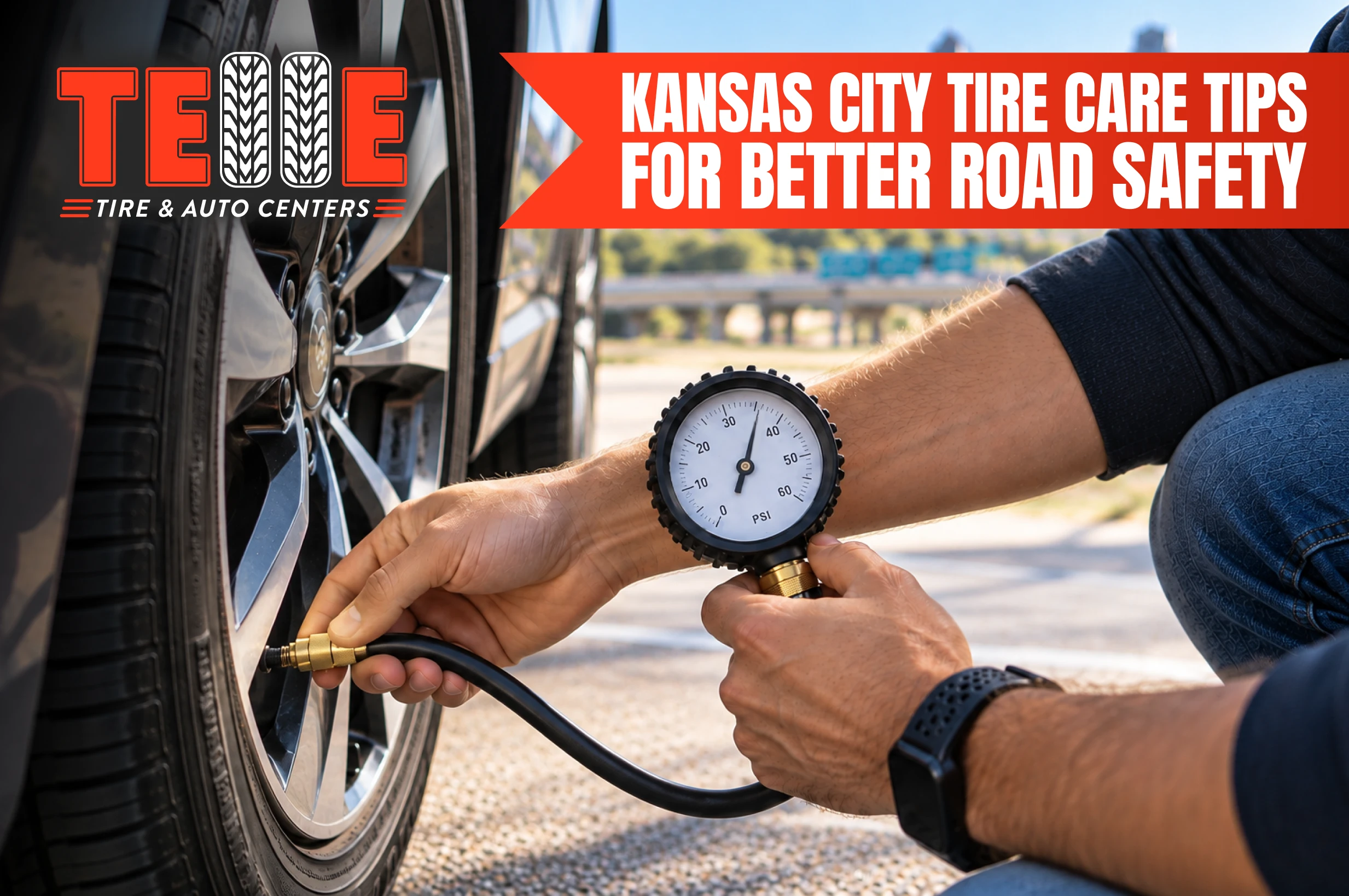
Kansas City drivers deal with changing road conditions throughout the year, from hot summer pavement and heavy rain to winter cold, potholes, and stop-and-go traffic. Following practical Kansas City tire care tips can help you maintain traction, reduce uneven wear, improve handling, and get more useful miles from your tires.
Your tires are the only parts of your vehicle that maintain direct contact with the road. That makes regular inspections and proper maintenance an important part of everyday driving, whether you commute across the metro, take I-435 to work, or use your SUV for family trips.
The best approach is simple. Check your tires regularly, follow the maintenance schedule in your owner’s manual, and have unusual wear or damage inspected before it becomes a bigger problem.
TL;DR Kansas City Tire Care Tips at a Glance
- Check tire pressure monthly. Use the PSI recommended on your vehicle’s door placard and check tires when they are cold. Seasonal temperature changes in Kansas City can affect pressure.
- Inspect tread and sidewalls. Look for low tread, cracks, bulges, cuts, or objects stuck in the tire. Replace tires when tread reaches 2/32 of an inch.
- Rotate your tires regularly. Many vehicles need rotation every 5,000 to 7,500 miles, but follow your owner’s manual for the correct interval.
- Watch for unusual tire wear. Pulling, vibration, uneven tread, or repeated pressure loss can signal alignment, wheel, tire, or suspension problems.
- Schedule professional inspections. Regular tire service can help Kansas City drivers catch problems early and keep cars and SUVs safer as road and weather conditions change.
Kansas City Tire Care Tips Every Driver Should Follow
Good tire maintenance does not require complicated tools or hours in the garage. A few simple checks each month can help you catch problems while they are still easier and less expensive to address.
Kansas City drivers also deal with changing temperatures, potholes, heavy rain, highway driving, and stop-and-go traffic, all of which can affect tire condition. Here are some of the most useful Kansas City tire care tips for everyday drivers.
- Check tire pressure regularly – Check your tires at least once a month and before longer trips. Use the recommended PSI listed on the driver’s door placard or in your owner’s manual rather than the maximum pressure printed on the tire sidewall.
- Inspect the tread – Look for uneven wear, bald areas, cracks, cuts, or objects stuck in the tread. NHTSA recommends replacing tires when tread depth reaches 2/32 of an inch.
- Rotate tires on schedule – Rotation helps distribute wear across the tire set. Many vehicles require rotation every 5,000 to 7,500 miles, although your manufacturer’s recommendation should take priority.
- Watch for alignment problems – If your vehicle pulls to one side, the steering wheel sits crooked, or one tire wears faster than the others, have the alignment checked. Misalignment can shorten tire life and affect handling.
- Pay attention to vibrations – A steering-wheel shake, steering vibration, or unusual road noise can point to tire imbalance, wheel problems, uneven wear, or suspension issues. A professional inspection can identify the source before it causes additional damage.
- Check the sidewalls – Look for bulges, deep cuts, cracks, or other visible damage along the sidewalls. A bulge can indicate internal tire damage and should be inspected by a tire professional.
- Inspect tires after impacts from potholes – Kansas City roads can expose vehicles to potholes and rough pavement. If you hit a pothole or curb hard, check for tire damage and consider having the wheel alignment and balance inspected.
- Keep an eye on slow leaks – If the same tire repeatedly loses air, there may be a puncture, damaged valve, or wheel-related problem. Adding air can provide a temporary fix, but finding the cause helps prevent a sudden flat.
- Check your spare tire – If your vehicle has a spare, make sure it is properly inflated and accessible. A spare that has been ignored for years may also need attention when you need it most.
- Match tires to your vehicle – When replacing tires, use the correct size, load rating, and speed rating for your car or SUV. Consider your typical Kansas City driving conditions, mileage, and seasonal weather when choosing a replacement tire.
A little attention between service visits can make a noticeable difference. Your tires can look acceptable from a distance while still developing pressure loss, internal damage, or irregular tread wear, so a closer inspection is worthwhile.
Making these checks part of your regular vehicle routine can also help you notice changes sooner. If something looks unusual or your vehicle starts handling differently, getting it inspected early can help protect both your tires and other components.
How Often Should You Check Tire Pressure in Kansas City
Tire pressure deserves special attention because temperature changes can affect the pressure inside your tires. Kansas City drivers experience substantial seasonal changes, so a pressure reading that looks fine at one point in the year can change as temperatures rise or fall.
For reliable tire pressure for Kansas City drivers, check your tires when they are cold, preferably before driving or after the vehicle has been parked for several hours.
Keep these habits in mind:
- Check once a month – A monthly pressure check gives you a consistent baseline and can reveal a slow leak before it becomes obvious. Drivers who frequently carry heavy loads or travel long distances should check more often.
- Check before road trips – Highway driving puts additional heat into the tires. Confirm pressure before leaving Kansas City for a longer trip, especially when the vehicle is fully loaded with passengers or luggage.
- Use the correct PSI – Your vehicle’s recommended PSI is usually found on the driver’s door jamb label. The number on the tire sidewall represents a maximum pressure specification and may differ from your vehicle’s recommended operating pressure.
- Inspect all four tires – Do not assume one low tire means the others are fine. Include the spare if your vehicle has one that requires regular inflation.
- Take warning lights seriously – If the tire pressure monitoring system activates, check the pressure as soon as it is safe to do so. A warning can indicate a gradual leak or a significant loss of air.
Proper inflation supports handling, tread life, and fuel efficiency. If one tire repeatedly loses pressure, adding air solves the immediate problem but does not identify the cause; have the tire inspected for a puncture, a valve issue, or another leak.
When Should You Rotate Your Tires in Kansas City
Tire rotation is one of the simplest ways to promote more even tread wear. Front tires often experience greater demands because they handle steering and, on front-wheel-drive vehicles, power delivery as well.
The right interval depends on your vehicle, tire type, drivetrain, and driving habits. For many cars and SUVs, a rotation around every 5,000 to 7,500 miles is a useful general guideline, but the owner’s manual remains the best source for your specific vehicle.
Regular tire rotation in Kansas City can be especially useful for drivers who spend a lot of time in urban traffic. Frequent acceleration, braking, turns, and short trips can create different wear patterns between the front and rear axles.
Look for these signs that your vehicle may need attention:
- Uneven tread wear – If the inside, outside, or center of a tire is wearing faster than the rest, rotation may be overdue or another issue may be present.
- Different tread depths – A noticeable difference between front and rear tires can indicate that the tires are wearing at different rates. This is especially important on vehicles with all-wheel drive.
- Steering vibration – Vibration can sometimes accompany irregular wear or wheel imbalance. Have the vehicle checked rather than assuming the tires simply need rotation.
- Vehicle-specific requirements – Directional tires, staggered tire sizes, and some performance tires require specific rotation patterns. A technician should follow the tire and vehicle manufacturer’s requirements.
- Maintenance timing – Consider combining rotation with another scheduled service when appropriate. This makes it easier to remember and helps keep tire maintenance consistent.
Rotation cannot correct damage that has already occurred. If a tire has developed severe uneven wear, have the underlying cause investigated before simply moving it to another position.
Kansas City Roads Can Make Tire Inspections More Important
Kansas City drivers encounter a mix of city streets, highways, construction zones, bridges, and roads that can develop potholes. A hard impact can damage a tire or bend a wheel even when the vehicle continues driving normally.
This is where a routine Kansas City tire inspection becomes valuable. A technician can check areas that are difficult for drivers to evaluate at home, including wheel balance, alignment, and signs of suspension-related wear.
Pay particular attention after:
- Hitting a pothole – A severe impact can cause a sidewall bulge, internal tire damage, or a bent wheel.
- Striking a curb – Even a low-speed curb impact can alter alignment or damage the tire’s sidewall.
- Driving through road debris – Sharp debris can create punctures that develop into slow leaks.
- Experiencing a sudden vibration – A new vibration after an impact deserves an inspection, particularly if it increases with speed.
- Noticing repeated pressure loss – A tire that needs frequent inflation may have a puncture, damaged valve, wheel issue, or another leak.
Do not wait for a flat tire before investigating a problem. Early inspection can sometimes prevent a small issue from becoming an inconvenient roadside emergency.
Keep Your Kansas City Tires Ready for the Road
Following a few practical Kansas City tire care tips can help you spot problems earlier, maintain better handling, and get more value from your tires. Regular pressure checks, tread inspections, rotations, alignment checks, and timely replacements all contribute to safer, more predictable driving.
Your tires also tell you a lot about your vehicle’s health. Uneven wear, repeated pressure loss, or vibration can indicate alignment, wheel, suspension, or other issues that warrant attention.
If you need a tire inspection, rotation, repair, alignment, or replacement in the Kansas City area, Telle Tire & Auto Centers offers full-service tire and automotive care at multiple local locations. You can choose the Kansas City-area location that works best for you and schedule service online.
Schedule service with Telle Tire & Auto Centers and get your vehicle checked by a professional team.

Take it to telle
Stay Safe with a Tire Check from Telle Tire
Worried about your tread depth or tire condition heading into the summer storm season? Take it to Telle. Our expert technicians can assess your tires, check pressure levels, and recommend replacements when necessary, helping you stay in control regardless of the weather conditions. Stay safe, stay prepared, and if you’re unsure about your tires, schedule a visit with your nearest Telle Tire & Auto Centers location today.
Stay Informed
Recent Articles from Telle Tire
St Louis Tire Buying Guide: Compare Tires Before Buying
St Louis Tire Buying Guide: Compare Tires Before Buying Buying new tires can feel overwhelming. With dozens of brands, tire types, sizes, and price points available,…
Do Low-Mileage Tires Need Replacing? Tread, Age & Condition
A car that spends most of its time in the garage may have tires that look nearly new. However, low mileage does not automatically mean those…
Car Battery in Cold Weather: Why Testing Matters
A car that starts reliably during mild weather can struggle on a freezing morning, leaving you late for work or stranded in a parking lot. For…