Car A/C and Heater Stop Working and How They’re Fixed
 Telle Tire 10 min read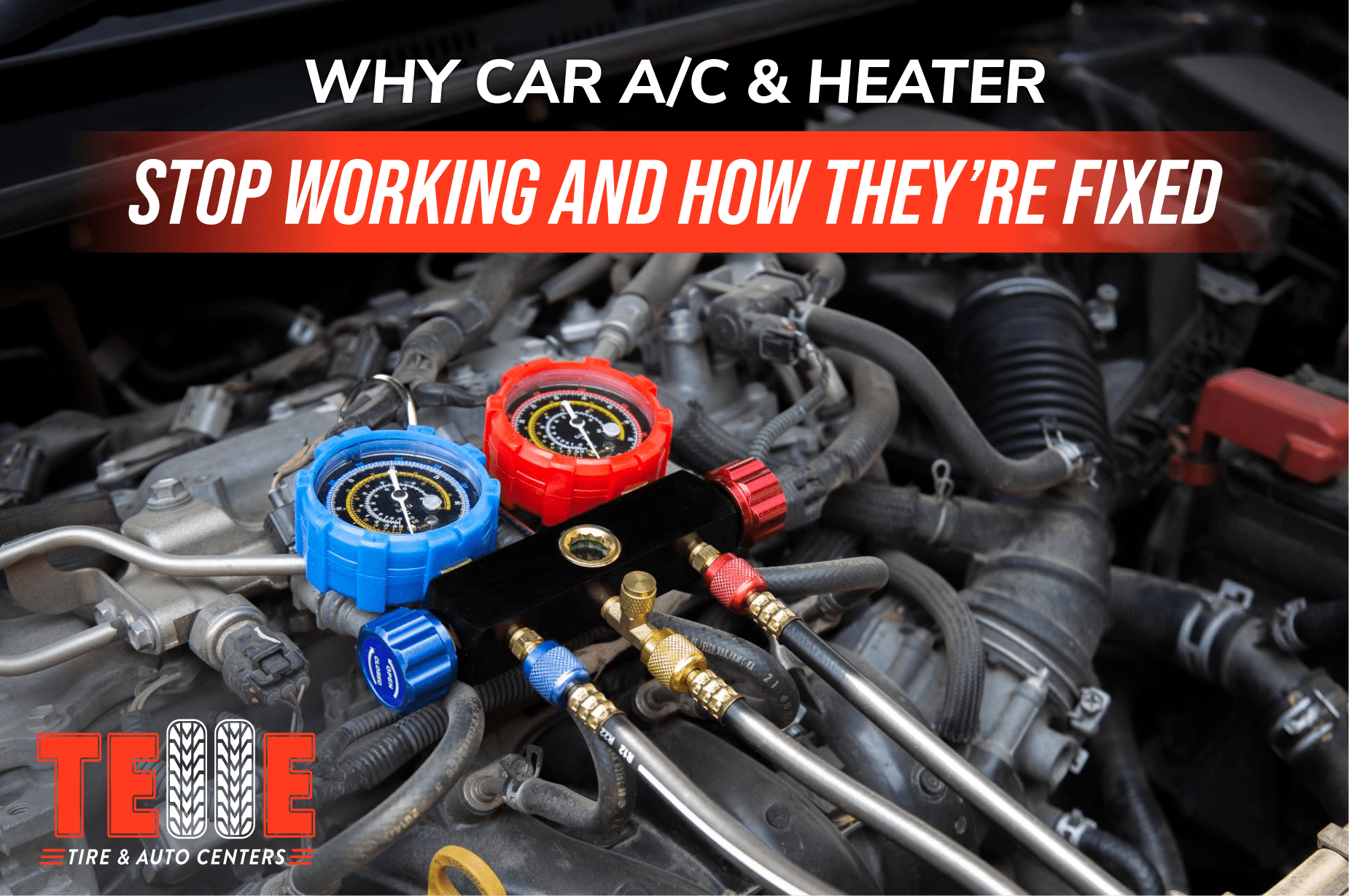
When your car A/C and heater stop working, it usually feels sudden, but the truth is most failures build up over time. One day, the air is cold or warm like normal, and the next day, you are stuck with the AC blowing warm air or a heater pushing only cold air.
In Missouri’s extreme seasons, this becomes more than a comfort issue. Summer heat can push cabin temperatures above 120°F, while winter mornings can drop below freezing. That is why understanding what causes HVAC failure early can save you from costly repairs and uncomfortable driving conditions.
TL;DR – Car A/C and Heater Stop Working: Causes and Fixes
- Most A/C and heater failures start with small issues like leaks or airflow restrictions
- A refrigerant recharge alone often does not fix the real problem
- Heater and A/C systems share airflow components like the blower motor and cabin air filter
- Repairs range from simple cabin filter changes to full compressor replacement
- Seasonal maintenance in Missouri helps prevent sudden HVAC breakdowns
How Your Car’s A/C and Heating Systems Work
Before diagnosing why your car A/C and heater stop working, it helps to understand how both systems rely on shared components to control cabin temperature.
Your car’s A/C system works by circulating refrigerant through a closed loop. The compressor pressurizes refrigerant, the condenser releases heat outside the vehicle, and the evaporator cools air before it enters the cabin.
- Compressor function – The compressor is the heart of the system, pushing refrigerant through the cycle. If it fails, cold air stops completely.
- Condenser cooling – This component removes heat from the refrigerant. A clogged or damaged condenser quickly reduces cooling efficiency.
- Refrigerant flow – Systems using R-134a or R-1234yf depend on precise pressure levels. Even small leaks reduce cooling performance.
- Evaporator cooling – This inside-cabin component absorbs heat from the air. If it freezes or clogs, airflow becomes weak or warm.
- Pressure balance – Proper system pressure is critical. Low pressure often signals a leak, not just “low fluid.”
A properly functioning system depends on all parts working together, not just a refrigerant top-off.
Your heater uses engine heat instead of refrigerant. Hot coolant flows through the heater core, and air is directed through it using a blend door actuator.
- Heater core role – Transfers engine heat into cabin air. A clog here often prevents the car heater from working.
- Coolant circulation – Low coolant levels or air pockets significantly reduce heat output.
- Blend door actuator – Controls whether air passes through hot or cold channels. Failure leads to inconsistent temperatures.
- Engine temperature dependence – If the engine is not reaching operating temperature, heat output drops.
- Shared airflow system – Even if heating works, blower motor issues can still block warm air delivery.
Heating problems often mimic A/C issues because they share airflow systems.
Common A/C Problems and What They Mean
When drivers search for car AC not blowing cold, the cause is usually one of a few predictable issues.
1. Blowing warm air AC blowing warm air
Warm air is the most common complaint and often signals refrigerant loss or compressor trouble.
- Low refrigerant levels – Usually caused by a leak, not normal usage. Refrigerant does not “run out.”
- Compressor failure – If the compressor clutch fails, the system cannot circulate refrigerant.
- Electrical issues – A blown fuse or relay can stop the system entirely.
- Condenser blockage – Dirt or debris reduces heat exchange efficiency.
- Sensor malfunction – Temperature sensors can misread cabin conditions, causing the cooling to shut off.
A quick AC recharge can temporarily restore cooling, but it does not fix leaks.
2. Weak airflow
Weak airflow often feels like an A/C problem but is usually a circulation issue.
- Clogged cabin air filter – Reduces airflow and forces the blower motor to work harder.
- Blower motor wear – A failing motor reduces fan speed.
- Blocked evaporator core – Dirt buildup restricts air movement.
- Vent obstruction – Leaves or debris can partially block vents.
- Electrical fan control issues – Fan speed settings may not respond correctly.
This is one of the most misdiagnosed HVAC issues.
3. Bad smell from vents
Unpleasant odors usually point to moisture or bacterial buildup.
- Mold in evaporator – Moist environments encourage microbial growth.
- Dirty cabin filter – Traps dust and moisture.
- Drain tube blockage – Causes water to accumulate inside the HVAC housing.
- Coolant leak odor – Sweet smell may indicate heater core failure.
- Standing moisture – Often occurs in humid Missouri summers.
Cleaning and inspection usually resolve odor issues without major repairs.
Common Heating Problems
When car heater not working complaints appear, the issue is often coolant or airflow related.
1. Heater blowing cold
A heater that only blows cold air usually signals coolant or circulation issues.
- Low coolant levels – Prevents heat transfer from engine to heater core.
- Thermostat failure – Engine may not reach proper operating temperature.
- Heater core blockage – Limits hot coolant flow.
- Blend door malfunction – Air bypasses the heater core completely.
- Air pockets in the cooling system – Disrupts coolant flow.
These issues often require cooling system inspection, not just HVAC repair.
2. Defroster not clearing the windshield
Defroster issues can become safety risks in winter driving.
- Weak heater output – No warm air to clear fog or ice.
- Air distribution failure – Blend door not directing air correctly.
- Blower motor weakness – Insufficient airflow to windshield.
- Cabin filter blockage – Reduces defrost efficiency.
- Coolant circulation issues – Limits available heat.
Proper defrost function depends on both heating and airflow systems.
Why a Recharge Often Isn’t the Real Fix
Many drivers assume refrigerant recharge is the solution, but it often only masks the real issue.
The U.S. Environmental Protection Agency requires proper refrigerant handling under Section 609 because releasing refrigerant harms the environment. Certified shops, such as ASE-certified technicians, use recovery systems to safely diagnose leaks before refilling.
- Refrigerant does not disappear unless there is a leak
- R-134a and R-1234yf systems require correct pressure levels
- A recharge without leak detection leads to repeated failure
- Small leaks often worsen over time if ignored
- Proper diagnosis prevents unnecessary AC compressor replacement costs
At Telle Tire & Auto Centers, technicians always perform leak detection before recommending a recharge.
A/C and Heating Repair Costs
A/C and heating repair costs can vary widely depending on the vehicle, refrigerant type, and the cause of the problem. A basic refrigerant recharge may cost $150 to $400, while larger repairs, like AC compressor replacement, can range from $800 to over $2,000 due to labor and part complexity. Heater core repairs are also typically more expensive since they often require dashboard disassembly.
The best way to avoid unnecessary repairs is to start with professional diagnostics. Issues like AC blowing warm air or weak heat may be caused by leaks, electrical problems, or airflow restrictions, not just low refrigerant. For an accurate repair estimate based on your vehicle’s condition, visit Telle Tire & Auto Centers for a full inspection.
Best Time to Service Your A/C and Heat in Missouri
Timing matters more than most drivers realize when it comes to preventing HVAC problems. In Missouri, spring is the ideal time to schedule A/C service before the first stretch of 90-degree weather arrives. Seasonal humidity puts extra strain on your cooling system, especially if refrigerant levels are already low or airflow is restricted. Fall is also an important time for heating inspections, since cold snaps can expose hidden issues with the heater core, blower motor, or coolant system before winter fully sets in.
Preventive A/C maintenance helps reduce the risk of emergency breakdowns during peak weather conditions, when repair shops are often fully booked. If you notice AC blowing warm air, weak airflow from the vents, unusual odors, moisture buildup, or a heater blowing cold air during colder months, it is time to have the system inspected. Visible refrigerant leaks or oily residue around A/C components are also warning signs that should not be ignored. Professional automotive HVAC service can identify whether the issue is related to refrigerant loss, airflow restriction, electrical failure, or cooling system problems before unnecessary parts are replaced.
Keeping Your Car A/C and Heater Reliable Year-Round
When your car A/C and heater stop working, the root cause is rarely simple. Most failures involve multiple systems working together, from refrigerant pressure to airflow control and engine coolant flow.
The key takeaway is that proper diagnosis always comes before repair. A quick recharge or part replacement without testing often leads to repeated failures and higher long-term costs.
With seasonal extremes in Missouri, staying ahead of HVAC issues is the best way to ensure year-round comfort and safety. Telle Tire & Auto Centers provides comprehensive diagnostic and repair services to identify the root cause, not just treat the symptom.
Don’t wait until the first extreme temperature hits. AC and heating service appointments fill quickly before peak summer and winter seasons.
Schedule your inspection today and let trained technicians diagnose the real cause before it becomes a costly repair.

Take it to telle
Stay Safe with a Tire Check from Telle Tire
Worried about your tread depth or tire condition heading into the summer storm season? Take it to Telle. Our expert technicians can assess your tires, check pressure levels, and recommend replacements when necessary, helping you stay in control regardless of the weather conditions. Stay safe, stay prepared, and if you’re unsure about your tires, schedule a visit with your nearest Telle Tire & Auto Centers location today.
Stay Informed
Recent Articles from Telle Tire
Tennessee Vehicle Maintenance Checklist for Reliable Driving
Owning a vehicle in Tennessee means dealing with changing road conditions, seasonal weather, and daily driving demands. A reliable car does not happen by accident. It…
Tire Age Limit Explained: When Should You Replace Old Tires?
Many drivers assume tires only need to be replaced when the tread wears down. While tread depth is important, tire age is another major factor that…
Steering Wheel Shaking on Highway, Tires or Alignment?
When your steering wheel starts shaking on the highway, even a familiar drive can become stressful. You may notice the vibration around 55 to 70 mph,…