Brake Repair & Service: Warning Signs, Costs, and When to Act
 Telle Tire 9 min read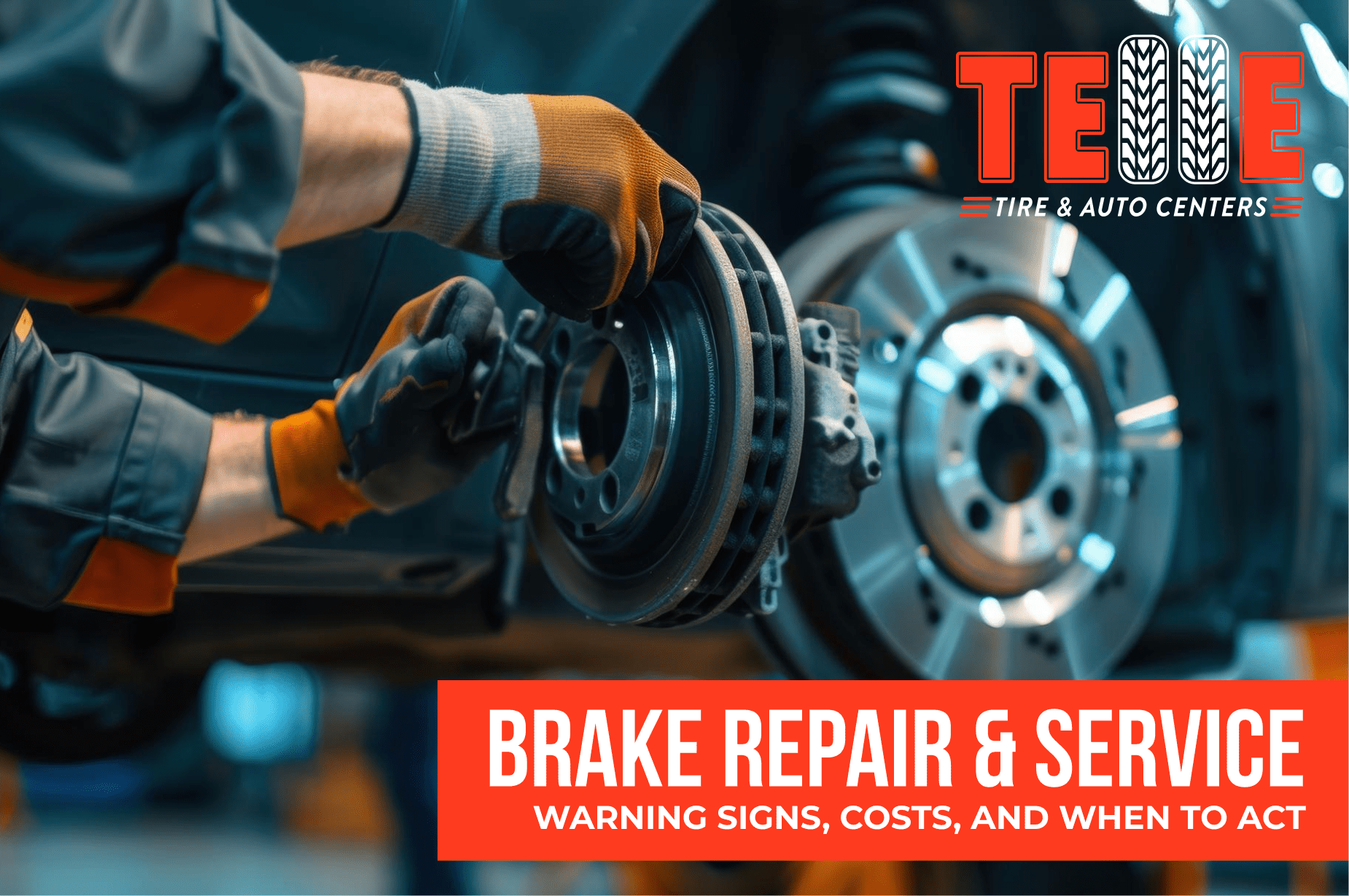
Squealing brakes? Hearing grinding when you stop? Feeling a soft brake pedal during traffic on I-64 or I-70?
These warning signs often indicate that your vehicle needs professional brake repair & service before a minor issue becomes a major safety problem. Some symptoms may only require routine brake pad replacement, while others may indicate rotor damage, brake fluid issues, or hydraulic failure.
This guide explains what common brake symptoms mean, when to replace brake pads, what factors affect brake repair costs, and when it’s no longer safe to keep driving. If you’re researching brake repair near you in Missouri, understanding these warning signs can help you make informed repair decisions more quickly.
TL;DR: Brake Repair & Service Warning Signs
Squealing brakes usually mean your brake pads are wearing thin, while grinding brakes often indicate dangerous metal-on-metal contact that needs immediate attention.
A soft brake pedal, brake vibration, pulling while braking, or an ABS warning light can all signal serious braking issues that affect stopping distance and vehicle safety.
Missouri driving conditions like stop-and-go traffic, winter road salt, and hilly Ozarks roads can cause brake pads, rotors, and calipers to wear out faster.
Professional brake repair & service may include brake pad replacement, brake rotor replacement, brake fluid service, caliper inspection, and ABS diagnostics, depending on the condition of the system.
Addressing brake problems early can reduce brake repair costs, improve vehicle safety, and help prevent more expensive repairs later.
6 Warning Signs You Need Brake Repair & Service
Brake problems often start with small warning signs that many drivers overlook. Catching these issues early can help reduce brake repair costs, improve stopping performance, and prevent more serious damage to your braking system.
- Squealing or Squeaking BrakesPersistent squeaking brakes often indicate worn brake pads, rotor wear, brake dust buildup, or wear indicator contact. If the noise becomes louder or happens during every stop, schedule a brake inspection.
- Grinding BrakesGrinding brakes usually indicate that the brake pads are completely worn out and that metal components are contacting the rotors. This can quickly damage rotors, calipers, and ABS components while increasing stopping distance.
- Soft or Spongy Brake PedalA soft brake pedal may indicate air in the brake lines, contaminated brake fluid, leaks, or a master cylinder issue that reduces braking performance.
- Vibration or Pulsing When BrakingBrake vibration often indicates uneven rotor wear, heat damage, or rotor thickness variation, especially after repeated heavy braking or downhill driving.
- Pulling or Longer Stopping DistanceIf your vehicle pulls while braking or suddenly takes longer to stop, uneven braking force, caliper issues, or hydraulic problems may be affecting the system.
- Brake or ABS Dashboard LightA brake or ABS warning light can signal low brake fluid, sensor failures, or electronic braking system issues that require professional diagnostics.
Even minor brake symptoms can become expensive repairs if ignored for too long. If you notice any of these warning signs, scheduling professional brake repair & service early can help protect your vehicle, improve stopping performance, and reduce the risk of more serious damage.
The Brake Repair Process, Step by Step
Understanding the brake repair process can help drivers better understand service recommendations and avoid unnecessary repairs. Depending on the condition of the system, a vehicle may need anything from routine brake pad replacement to more extensive brake repair & service.
1. Inspection and Measurement
A professional brake inspection involves checking brake pad thickness, rotor condition, caliper operation, brake fluid, brake lines, and overall wear patterns. Technicians also inspect for vibration, uneven wear, fluid leaks, ABS faults, and heat damage to determine whether the vehicle needs basic brake pad replacement or more extensive repairs.
2. Pads Only vs. Pads and Rotors
Whether rotors need replacement depends on their condition. If rotors remain within manufacturer specifications and show no cracking, vibration, or excessive wear, pad-only service may be possible. However, many modern vehicles use thinner rotors that wear faster, making brake rotor replacement common during brake repair & service. Installing new pads on damaged rotors can lead to noise, vibration, uneven braking, and premature pad wear.
3. Brake Fluid Flush, When It’s Needed
Brake fluid absorbs moisture over time, which can reduce braking performance and contribute to internal corrosion, brake fade, and hydraulic component wear. A brake flush may be recommended if the fluid is contaminated, moisture levels are high, ABS components were replaced, or the brake pedal feels soft.
A proper brake inspection helps catch problems early, improve stopping performance, and reduce the risk of more expensive repairs later.
How Much Does Brake Repair Cost?
Brake repair costs can vary widely depending on factors such as vehicle make and model, the type of brake pad material used, rotor condition, caliper wear or damage, labor requirements, electronic brake systems, and whether OEM or aftermarket parts are used. In most cases, a basic brake pad replacement ranges from about $150 to $400 per axle, while brake pad and rotor replacement typically falls between $300 and $800 per axle, depending on the quality of the parts and the vehicle type. More extensive brake repair & service, including caliper repairs, brake fluid service, ABS diagnostics, or performance braking systems, can exceed $1,000.
Larger vehicles, such as heavy-duty trucks, luxury SUVs, European models, and those with performance braking systems often require more expensive components and additional labor time, which increases overall brake service costs. It’s also important to note that online estimates and advertised specials may not include essentials like rotor replacement, brake hardware, fluid service, diagnostics, taxes, or shop fees, which can affect the final price after a full inspection.
While low-cost brake promotions can seem attractive, they may exclude key components such as rotors, hardware, fluid service, or warranty coverage. Lower-quality brake pads can also lead to increased noise, excess brake dust, faster wear, and reduced stopping performance. Choosing quality brake repair & service helps ensure more reliable performance, better safety, and fewer repeat repairs over time.
Independent Shop vs. Dealership for Brake Repair & Service
Many drivers compare dealership pricing against independent repair facilities when researching brake repair near me.
A trusted independent shop often provides:
- More transparent communication
- Personalized recommendations
- Faster scheduling
- Competitive pricing
- Warranty-backed repairs
At Telle Tire & Auto Centers, ASE-certified technicians perform brake repair & service using modern diagnostic equipment and manufacturer-informed procedures. Since 1942, Telle has served Missouri drivers with trusted automotive care backed by a 3-year/30,000-mile warranty on qualifying repairs.
Common Brake Repair Mistakes to Avoid
Many expensive brake repairs begin as small problems that were ignored for too long.
Common mistakes include:
- Delaying brake inspections
- Ignoring squeaking brakes
- Continuing to drive on grinding brakes
- Skipping brake fluid maintenance
- Replacing pads without inspecting rotors
- Choosing the cheapest possible parts
- Ignoring ABS warning lights
Addressing brake issues early usually reduces total brake repair costs and helps prevent unsafe driving conditions.
When to Stop Driving and See a Professional
Some brake symptoms require immediate attention. Stop driving and schedule professional brake repair & service if you experience:
- Grinding brakes
- A brake pedal sinking to the floor
- Fluid leaks
- Burning smells
- Severe brake vibration
- Sudden pulling during braking
- Brake failure warning lights
- Dramatically increased stopping distance
Braking problems rarely improve on their own. Continuing to drive with severe symptoms can compromise vehicle safety and significantly increase repair costs.
Why Missouri Drivers Trust Telle Tire
For more than 84 years, Telle Tire & Auto Centers has helped Missouri families stay safe with trusted automotive maintenance and repair.
Their ASE-certified technicians perform everything from brake inspections and brake pad replacement to brake rotor replacement, ABS diagnostics, and complete brake repair & service. Qualifying repairs are backed by a 3-year/30,000-mile warranty for additional peace of mind.
Whether you’re dealing with squeaking, grinding, or vibrating brakes, or a soft brake pedal, professional diagnosis matters.
Schedule Brake Repair & Service
Hearing a squeal or feeling a soft brake pedal? Schedule a brake inspection at your nearest Telle Tire & Auto Center for ASE-certified brake repair & service backed by a 3-year/36,000-mile warranty.
Whether you need brake pad replacement, brake rotor replacement, ABS diagnostics, or a complete brake inspection, Telle Tire has served Missouri drivers since 1942 with trusted automotive care.

Take it to telle
Stay Safe with a Tire Check from Telle Tire
Worried about your tread depth or tire condition heading into the summer storm season? Take it to Telle. Our expert technicians can assess your tires, check pressure levels, and recommend replacements when necessary, helping you stay in control regardless of the weather conditions. Stay safe, stay prepared, and if you’re unsure about your tires, schedule a visit with your nearest Telle Tire & Auto Centers location today.
Stay Informed
Recent Articles from Telle Tire
Tennessee Vehicle Maintenance Checklist for Reliable Driving
Owning a vehicle in Tennessee means dealing with changing road conditions, seasonal weather, and daily driving demands. A reliable car does not happen by accident. It…
Tire Age Limit Explained: When Should You Replace Old Tires?
Many drivers assume tires only need to be replaced when the tread wears down. While tread depth is important, tire age is another major factor that…
Steering Wheel Shaking on Highway, Tires or Alignment?
When your steering wheel starts shaking on the highway, even a familiar drive can become stressful. You may notice the vibration around 55 to 70 mph,…