Tire Sidewall Damage: Can It Be Repaired?
 Telle Tire 14 min read
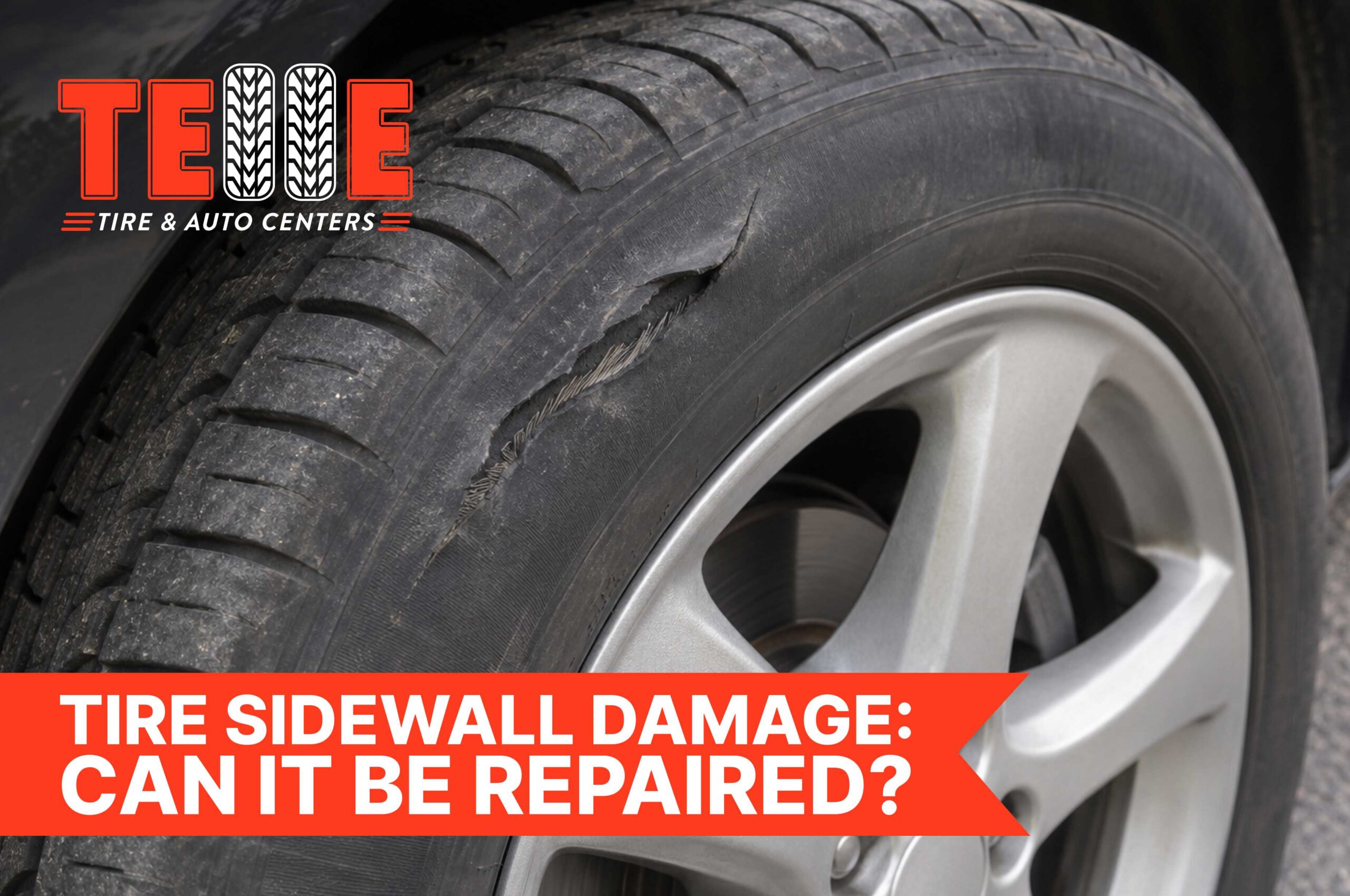
Finding a cut, bubble, crack, or puncture on your tire can be alarming, especially when you are unsure whether you can safely drive to a repair shop. Tire sidewall damage deserves particular attention because the sidewall plays an important structural role as the tire flexes and supports your vehicle.
In most cases, damaged sidewalls cannot be safely repaired. A professional inspection is the best way to determine whether the mark is cosmetic or whether the tire needs to be replaced.
This guide explains what different types of sidewall damage look like, why some damage requires immediate replacement, what to do after hitting a pothole or curb, and how drivers in Missouri and Tennessee can reduce their risk.
TL;DR – for Tire Sidewall Damage
- Tire sidewall damage is usually not repairable. Cuts, punctures, bulges, and structural damage can weaken the tire and generally require replacement.
- A tire sidewall puncture is different from a tread puncture. Tread punctures within approved repair limits may be repairable, while sidewall injuries are generally considered non-repairable.
- A tire sidewall cut needs professional inspection. A cut may look shallow from the outside while reaching the internal cords underneath the rubber.
- Bulges and bubbles are urgent warning signs. They can indicate damaged internal cords and increase the risk of sudden air loss.
- Do not rely on a plug or patch for sidewall damage. Proper tire repair requires an inspection of the tire’s internal condition, and sidewall damage generally calls for replacement.
What Is Tire Sidewall Damage?
The sidewall is the portion of the tire between the tread and the wheel rim. Unlike the tread, which is designed to contact the road and withstand wear, the sidewall is designed to flex as the vehicle moves.
That flexibility helps the tire absorb road impacts and maintain stability. It also means the sidewall experiences repeated movement and stress while you drive.
This is why sidewall tire damage can be more serious than a small puncture in the center of the tread. Damage to the tire’s internal structure may compromise its ability to safely contain air and withstand normal driving forces.
Michelin explains that sidewall damage can include scratches, cuts, bulges, cracks, deformation, and punctures. The Tire Industry Association also states that punctures in the shoulder or sidewall are not repairable under its consumer tire repair guidance.
If you see damage on the side of your tire, avoid making the decision based solely on how small the mark looks. The depth and location of the injury matter.
Can Tire Sidewall Damage Be Repaired?
Generally, no. A damaged sidewall usually needs to be replaced rather than patched or plugged.
The reason comes down to tire construction. The sidewall has to flex repeatedly while carrying the vehicle’s load. A conventional patch or plug cannot reliably restore the original strength and flexibility of a damaged sidewall.
A professional tire technician can inspect the injury and determine whether it is a superficial cosmetic mark or structural damage. If the cords or internal layers have been compromised, replacement is the safe solution.
Michelin’s current guidance states that sidewall punctures and damage that compromises the sidewall require replacement. The Tire Industry Association similarly limits conventional puncture repairs to the center portion of the tread and excludes shoulder and sidewall injuries.
Why Sidewall Repairs Are Different
Think of the tread and sidewall as having different jobs.
The tread is built with substantial reinforcement to provide traction and withstand contact with the road. The sidewall needs to flex with every rotation, particularly when you turn, brake, accelerate, or drive over uneven pavement.
A repair that appears solid while the tire is sitting still may behave very differently once the tire is repeatedly flexing under load. That is why a professional should evaluate the tire rather than relying on a DIY patch, plug, or sealant.
What Does Tire Sidewall Damage Look Like?
Sidewall damage can take several forms. Some marks are cosmetic, while others indicate a serious structural problem.
Knowing what to look for can help you decide when to stop driving and arrange an inspection.
Common types of sidewall damage
If you notice any of the following, take a closer look at the tire and consider having it inspected.
- Tire sidewall cut – A cut can result from road debris, a sharp object, a curb, or another impact. A shallow surface mark may be less concerning than a deep cut, but drivers often cannot determine the depth accurately from the outside.
- Tire sidewall puncture – A nail, screw, piece of metal, or another sharp object can penetrate the sidewall. Unlike many punctures in the central tread, a sidewall puncture generally requires tire replacement.
- Bulge or bubble – A raised area on the sidewall can indicate damaged internal cords. Michelin identifies a bulge or bubble as a condition requiring tire replacement because the internal structure may have been compromised.
- Cracks – Small surface cracks can develop as tires age or are exposed to sunlight and ozone. Deeper cracking can indicate deterioration of the tire’s structure and should be professionally evaluated.
- Deep gouges or abrasions – Scraping a curb can remove rubber from the sidewall. If the abrasion exposes cords or creates a deep groove, the tire may no longer be safe.
- Unusual deformation – A change in the shape of the sidewall can indicate internal damage. Any new bulge, indentation, or abnormal shape deserves attention.
The important point is that appearance alone does not always tell the whole story. If the injury followed a strong pothole or curb impact, the wheel, suspension, or alignment may also need inspection.
How Serious Is a Tire Sidewall Cut?
A tire sidewall cut can range from a superficial scrape to a structural injury.
The challenge is that the rubber you can see from the outside is only one part of the tire. Internal cords help provide the strength needed to contain inflation pressure and support the vehicle.
If those internal components are damaged, continuing to drive can increase the risk of tire failure.
A cut is particularly concerning when you can see cords, the cut is deep, the tire is losing air, or the surrounding area is bulging.
Do not use a household knife, screwdriver, or other object to probe the cut. Doing so can make the damage worse and will not give you a reliable assessment.
If you are unsure, have the tire examined by a qualified technician.
What Causes Sidewall Tire Damage?
Understanding how damage happens can help you avoid repeating the same situation. For many drivers, the problem begins with a seemingly ordinary encounter with a curb, pothole, or piece of road debris.
Here are some of the most common causes.
- Pothole impacts – A hard pothole strike can compress the tire against the wheel and damage internal components. A bulge may appear afterward, although some internal damage may remain invisible.
- Curb contact – Parking or turning too close to a curb can scrape the sidewall or create a stronger impact than you realize. SUVs with taller sidewalls can still suffer damage even when the vehicle feels fine afterward.
- Road debris – Sharp metal, broken glass, construction debris, and other objects can cut or puncture the sidewall.
- Underinflation – Driving with too little air increases sidewall flex and heat buildup. Maintaining the vehicle manufacturer’s recommended tire pressure helps reduce unnecessary stress.
- Age and environmental exposure – Sunlight, ozone, heat, and time can contribute to cracking and rubber deterioration. Older tires deserve regular visual inspections.
- Improper mounting or contact with equipment: Tire service should be performed using appropriate equipment and procedures to prevent damage during installation or removal.
The best defense is routine inspection combined with correct inflation. Michelin recommends checking tire pressure according to the vehicle manufacturer’s specifications and inspecting tires for cuts, cracks, and bulges.
What Should You Do After Hitting a Pothole or Curb?
A pothole or curb strike does not automatically mean your tire is ruined. It does mean you should pay attention to what happens next.
Use this simple process if you experience a significant impact.
- Find a safe place to stop – If the impact was severe, pull over when it is safe to do so. Avoid stopping in an active traffic lane simply to inspect the tire.
- Look at the sidewall – Check both the outside and, when possible, the inside sidewall for bulges, cuts, or unusual deformation. Damage on the side facing the vehicle may be difficult to see.
- Check tire pressure – Compare the pressure with the vehicle manufacturer’s recommended specification. A sudden loss of pressure is a reason to stop driving and arrange assistance.
- Check for handling changes – Vibration, pulling, steering changes, or a new thumping sensation can indicate tire, wheel, suspension, or alignment damage.
- Have the vehicle inspected – Even when the tire appears normal, a significant impact can affect the wheel or suspension. A professional inspection provides a better answer than a visual check alone.
Drivers in Missouri encounter potholes, uneven pavement, construction zones, and seasonal road conditions that can put additional stress on tires. If you experience a hard impact near St. Louis, Kansas City, Springfield, or another Telle service area, getting the vehicle checked can help catch problems before they become roadside emergencies.
How Can You Prevent Tire Sidewall Damage?
You cannot avoid every pothole or piece of road debris, but a few simple habits can reduce the chance of damage. These habits are especially useful for drivers who frequently commute, travel on highways, or drive through areas with rough pavement.
- Maintain proper tire pressure – Use the pressure listed on your vehicle’s tire information label or owner’s manual rather than the maximum pressure printed on the tire. Proper inflation supports handling, tire life, and overall performance.
- Slow down for potholes – If a pothole cannot be avoided, reducing speed can lessen the force of the impact. Leave enough following distance to identify road hazards early.
- Give curbs plenty of space – Avoid rubbing the sidewall against curbs while parking or making tight turns. Even a small scrape can remove protective rubber.
- Inspect tires regularly – Look for cuts, cracks, bulges, embedded objects, and unusual wear. Include the inner sidewall when possible because damage may not be visible from outside the vehicle.
- Avoid harsh tire-cleaning chemicals – Some aggressive products can contribute to premature rubber deterioration. Follow the tire manufacturer’s recommendations for cleaning and care.
- Check tires before long trips – A quick inspection before a road trip can help you find a problem while you are still close to home. Also verify tire pressure when the tires are cold.
- Have impact damage checked promptly – If you hit a major pothole or curb, do not wait for a vibration or flat tire before getting an inspection. The wheel and suspension may also need attention.
These small habits are particularly valuable for first-time car owners because tire problems can develop without obvious warning. Regular inspections make it easier to recognize what is normal for your vehicle and what deserves professional attention.
Tire Sidewall Damage Help From Telle Tire
Tire sidewall damage deserves a careful response because the sidewall is a flexible, load-bearing part of the tire. A superficial scuff may require nothing more than monitoring, while a puncture, deep cut, bulge, or exposed cord can mean the tire needs immediate replacement.
When in doubt, let a trained tire professional make the call. That is especially important after hitting a pothole or curb, because the visible damage may be only part of the problem.
Telle Tire & Auto Centers is here to help drivers across Missouri and Tennessee inspect damaged tires, identify replacement needs, and get back on the road with confidence. If your tire has a suspicious cut, puncture, bubble, or other damage, schedule an inspection before taking unnecessary chances.
If you have noticed tire sidewall damage after hitting a pothole, curb, or piece of road debris, schedule an appointment with Telle Tire & Auto Centers. Find a convenient location and book your service online at Telle Tire & Auto Centers schedule service.

Take it to telle
Stay Safe with a Tire Check from Telle Tire
Worried about your tread depth or tire condition heading into the summer storm season? Take it to Telle. Our expert technicians can assess your tires, check pressure levels, and recommend replacements when necessary, helping you stay in control regardless of the weather conditions. Stay safe, stay prepared, and if you’re unsure about your tires, schedule a visit with your nearest Telle Tire & Auto Centers location today.
Stay Informed
Recent Articles from Telle Tire
Tire Damage Guide: Problems That Mean You Need Inspection
If you have noticed a strange vibration, a slow leak, uneven tread wear, or a visible mark on your tire, this tire damage guide can help…
Kansas City Pothole Tire Damage and How to Prevent It
Kansas City pothole tire damage can happen in seconds. One hard impact can leave you with a flat tire, a bent wheel, an alignment problem, or…
Best Tires for St Louis Weather and Changing Seasons
St. Louis drivers deal with a little bit of everything. Hot, humid summers can be followed by heavy rain, sudden temperature drops, freezing conditions, and occasional…