Tire Damage Guide: Problems That Mean You Need Inspection
 Telle Tire 13 min read
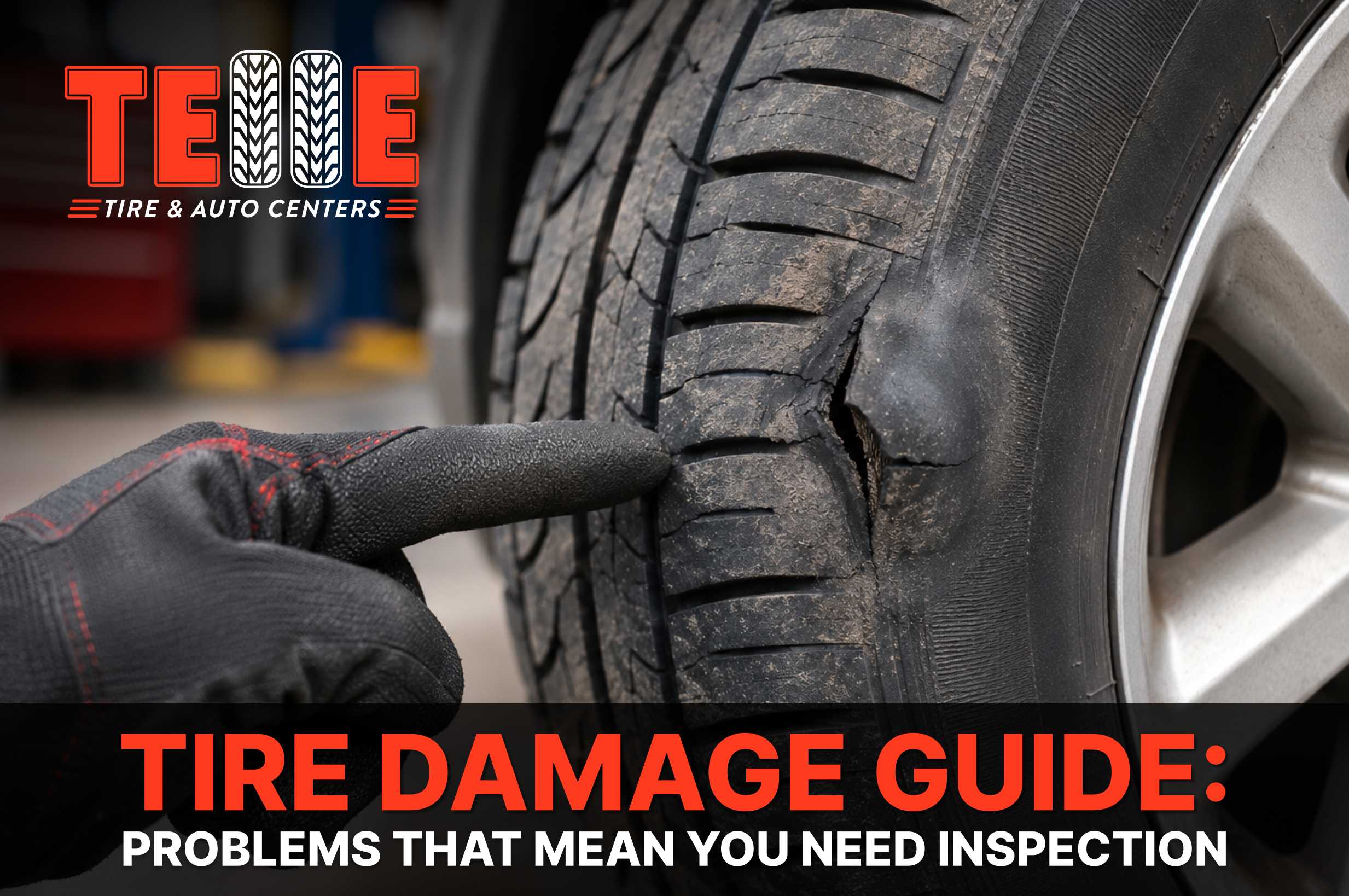
If you have noticed a strange vibration, a slow leak, uneven tread wear, or a visible mark on your tire, this tire damage guide can help you understand what you are seeing and when it deserves professional attention. Tire problems can develop from potholes, curbs, road debris, incorrect inflation, worn suspension components, or simple age.
For drivers in Missouri, regular tire checks are especially useful because everyday road impacts can cause damage that is difficult to see from the outside. A tire can appear acceptable even with internal damage, which is why a professional inspection can provide important peace of mind. Michelin and Bridgestone both emphasize that some impact damage may not be visible without removing the tire from the wheel for a closer examination.
TL;DR – Tire Damage Guide
- Bulges, bubbles, cuts, cracks, exposed cords, uneven wear, vibration, and repeated air loss can signal tire damage that needs attention.
- Sidewall bulges or bubbles may indicate internal damage and usually require tire replacement rather than repair.
- Potholes and curb impacts can cause hidden tire or wheel damage, even when no visible problem appears right away.
- Tires with severe cuts, exposed cords, structural damage, or tread worn to 2/32 of an inch should be removed from service.
- A professional tire inspection can identify whether the problem involves the tire, wheel, alignment, balance, suspension, or another vehicle component.
What Are the Most Common Tire Damage Signs
Some tire problems are easy to recognize. Others first appear as a change in how your vehicle drives.
Knowing the common tire damage signs can help you act before a minor issue becomes a roadside emergency. Walk around your vehicle regularly and pay attention to anything that looks or feels different from normal.
Look for these visible warning signs
- Sidewall bulges or bubbles – A raised bubble on the sidewall can indicate damaged internal cords, often following a pothole or curb impact. This type of structural damage can lead to sudden air loss, so a tire with a bulge should be inspected immediately and generally replaced.
- Deep cuts or tears – Small surface scratches may be cosmetic, but deeper cuts can reach the tire’s internal structure. Because it can be difficult for a driver to judge the depth of a cut, professional inspection is the safer choice.
- Cracks in the sidewall – Fine cracking can develop as rubber ages and is exposed to sunlight and ozone. Extensive cracking can indicate that the tire is approaching the end of its usable life.
- Uneven tread wear – Wear concentrated on one edge, both edges, or the center of the tread can point to different inflation, alignment, balance, suspension, or maintenance problems. Fixing the underlying cause matters because a replacement tire can develop the same pattern if the vehicle problem remains.
- Exposed cords or fabric – If you can see the material beneath the rubber, the tire is in a dangerous condition and should be replaced. Exposed structural material means the tire no longer has its intended protective tread and rubber layers.
- Embedded objects – Nails, screws, glass, and other debris can cause slow leaks or more serious internal damage. Leave an embedded object in place until a professional can assess the puncture because removing it may allow air to escape rapidly.
These tire damage signs are worth taking seriously, even when your vehicle still drives normally. A tire problem can progress while you are commuting, carrying passengers, or traveling at highway speeds.
A quick visual check is useful, but it has limits. The inside of a tire can reveal damage that cannot be confirmed from the outside, particularly after a significant impact.
How Does Tire Sidewall Damage Happen
Tire sidewall damage deserves special attention because the sidewall plays an important structural role. It helps the tire maintain its shape, supports the vehicle’s load, and contributes to handling and ride characteristics.
Missouri drivers may encounter several common causes during everyday driving.
- Pothole impacts – A deep pothole can compress the tire against the wheel and damage internal cords. The impact may leave a bulge, cut, or wheel problem, but sometimes the exterior looks surprisingly normal.
- Curb strikes – Hitting a curb while parking or turning can pinch and damage the sidewall. Even a low-speed impact warrants attention if you notice a new bulge, vibration, or loss of pressure afterward.
- Road debris – Sharp metal, broken glass, rocks, and other debris can cut or penetrate the sidewall. Sidewall punctures generally cannot be repaired safely because the damaged area flexes significantly under normal driving conditions.
- Incorrect tire pressure – Driving with significantly incorrect inflation can increase heat buildup and stress within the tire. Following the vehicle manufacturer’s recommended cold tire pressure helps reduce unnecessary strain.
- Age and environmental exposure – Rubber naturally changes over time, and sunlight and ozone can contribute to surface cracking. An older tire with visible deterioration deserves a closer professional assessment.
One important point in this tire damage guide is that sidewall appearance alone does not always tell the whole story. A slight indentation can be a normal feature of radial tire construction, while a protruding bubble can signal serious internal damage.
When you notice a new sidewall bulge after an impact, don’t treat it as a cosmetic issue. Michelin specifically advises immediate replacement of a tire with a bulge or bubble because the internal structural damage cannot be repaired.
When Should You Get a Tire Inspection
A professional tire inspection in Missouri makes sense whenever something changes unexpectedly. You do not have to wait until a tire goes completely flat before asking a technician to take a look.
Situations that call for an inspection
- You hit a large pothole – A hard impact can affect the tire, wheel, alignment, or suspension at the same time. If your steering wheel suddenly feels different or the vehicle begins vibrating, schedule an inspection.
- You strike a curb – Even a parking-lot impact can create a sidewall injury or bend a wheel. Look for a bulge, pressure loss, scuffing, or new vibration afterward.
- A tire keeps losing air – A slow leak can come from a puncture, valve, wheel, or other issue. Repeatedly adding air without finding the cause leaves you vulnerable to driving on an underinflated tire.
- The vehicle begins vibrating – A new vibration can be related to tire damage, imbalance, wheel problems, or suspension components. Speed-related vibration deserves prompt attention rather than being ignored.
- The vehicle pulls to one side – Check tire pressures first, then have the vehicle inspected if the pull continues. Alignment, uneven wear, tire problems, and braking issues can produce similar sensations.
- You notice unusual road noise – A rhythmic thumping, humming, or other new sound can accompany uneven wear or tire damage. A technician can determine whether the source is the tire or another rotating component.
- The TPMS warning light comes on – The warning may indicate low pressure, a puncture, or another tire-pressure system issue. Check pressure as soon as it is safe to do so and investigate recurring warnings.
A tire inspection in Missouri is particularly valuable after a serious road impact because damage can occur inside the tire without creating an obvious mark on the tread or sidewall. Bridgestone notes that tires can have no visible external damage and still fail later after an impact.
The goal of an inspection is also to identify the cause. If uneven wear resulted from alignment or suspension problems, replacing the tire alone may allow the same wear pattern to return.
When to Replace Damaged Tires
Knowing when to replace damaged tires can prevent drivers from taking unnecessary risks with a tire that has reached the end of its safe service life.
The decision depends on the type and severity of damage, tread condition, tire age, and the technician’s inspection.
- Replace a tire with a sidewall bulge – A bubble or bulge usually indicates internal structural damage and cannot be safely repaired. Use the spare or arrange appropriate assistance rather than continuing to drive on it.
- Replace tires with exposed cords – Visible cords or fabric indicate severe deterioration or damage. The tire should be removed from service immediately.
- Replace severely worn tread – NHTSA recommends replacing tires when tread reaches 2/32 of an inch. Built-in treadwear indicators provide another easy visual reference because they become level with the surrounding tread when the tire reaches its wear limit.
- Replace tires with serious sidewall cuts – A deep sidewall cut can damage the internal plies that contain air pressure. Sidewall punctures and structural cuts generally require replacement rather than conventional repair.
- Replace tires with severe cracking – Extensive cracking can indicate rubber deterioration. A technician should evaluate whether the tire remains suitable for service.
- Replace tires with significant structural damage – Belt separation, major impact damage, or other internal failures require professional evaluation. Some of these conditions cannot be identified reliably during a simple driveway inspection.
Understanding when to replace damaged tires also means recognizing that repairability depends on where and how a tire was damaged. A small puncture in an appropriate part of the tread may be repairable, while a similar penetration through the sidewall can require replacement.
That distinction is one reason professional inspection matters. A technician can remove the tire when necessary, inspect the interior, evaluate the wheel, and determine whether repair or replacement is appropriate.
Can a Tire Look Fine and Still Be Damaged
Yes. This is one of the most important lessons in any tire damage guide.
A tire can look normal from the outside after hitting a pothole or curb, even while still sustaining internal damage. Broken cords, belt problems, or carcass damage may be hidden beneath the rubber. Michelin recommends a professional inspection after significant impacts because internal damage cannot always be identified with a basic visual inspection.
Pay attention to changes that happen after an impact. If your car suddenly vibrates, pulls, loses pressure, or feels different through the steering wheel, those symptoms provide useful clues even if the tire looks acceptable.
A professional tire inspection in Missouri can also uncover related problems. A pothole, for example, may damage the tire and wheel while also affecting alignment or suspension components.
Protect Your Tires With Telle Tire & Auto Centers
The most useful lesson from this tire damage guide is simple: pay attention to changes before they become emergencies. A small vibration, a slow leak, an unusual wear pattern, or a sidewall mark can provide an early warning that something needs attention.
Telle Tire & Auto Centers serves drivers across Missouri with tire service, inspections, maintenance, and automotive repairs. With ASE-certified technicians and locations throughout major Missouri markets, Telle gives local drivers a convenient place to have tire concerns evaluated by professionals.
If you have noticed a bulge, cut, unusual wear pattern, vibration, pressure loss, or other tire damage signs, schedule an inspection with Telle Tire & Auto Centers. You can find a nearby location and request an appointment through the official Telle Tire & Auto Centers service scheduling page.

Take it to telle
Stay Safe with a Tire Check from Telle Tire
Worried about your tread depth or tire condition heading into the summer storm season? Take it to Telle. Our expert technicians can assess your tires, check pressure levels, and recommend replacements when necessary, helping you stay in control regardless of the weather conditions. Stay safe, stay prepared, and if you’re unsure about your tires, schedule a visit with your nearest Telle Tire & Auto Centers location today.
Stay Informed
Recent Articles from Telle Tire
Kansas City Pothole Tire Damage and How to Prevent It
Kansas City pothole tire damage can happen in seconds. One hard impact can leave you with a flat tire, a bent wheel, an alignment problem, or…
Best Tires for St Louis Weather and Changing Seasons
St. Louis drivers deal with a little bit of everything. Hot, humid summers can be followed by heavy rain, sudden temperature drops, freezing conditions, and occasional…
Tire Vibration While Driving: Causes and How to Fix It
Tire vibration while driving can make even a familiar commute feel uncomfortable. You might notice the steering wheel shaking on the highway, a buzzing sensation through…