Kansas City Pothole Tire Damage and How to Prevent It
 Telle Tire 13 min read
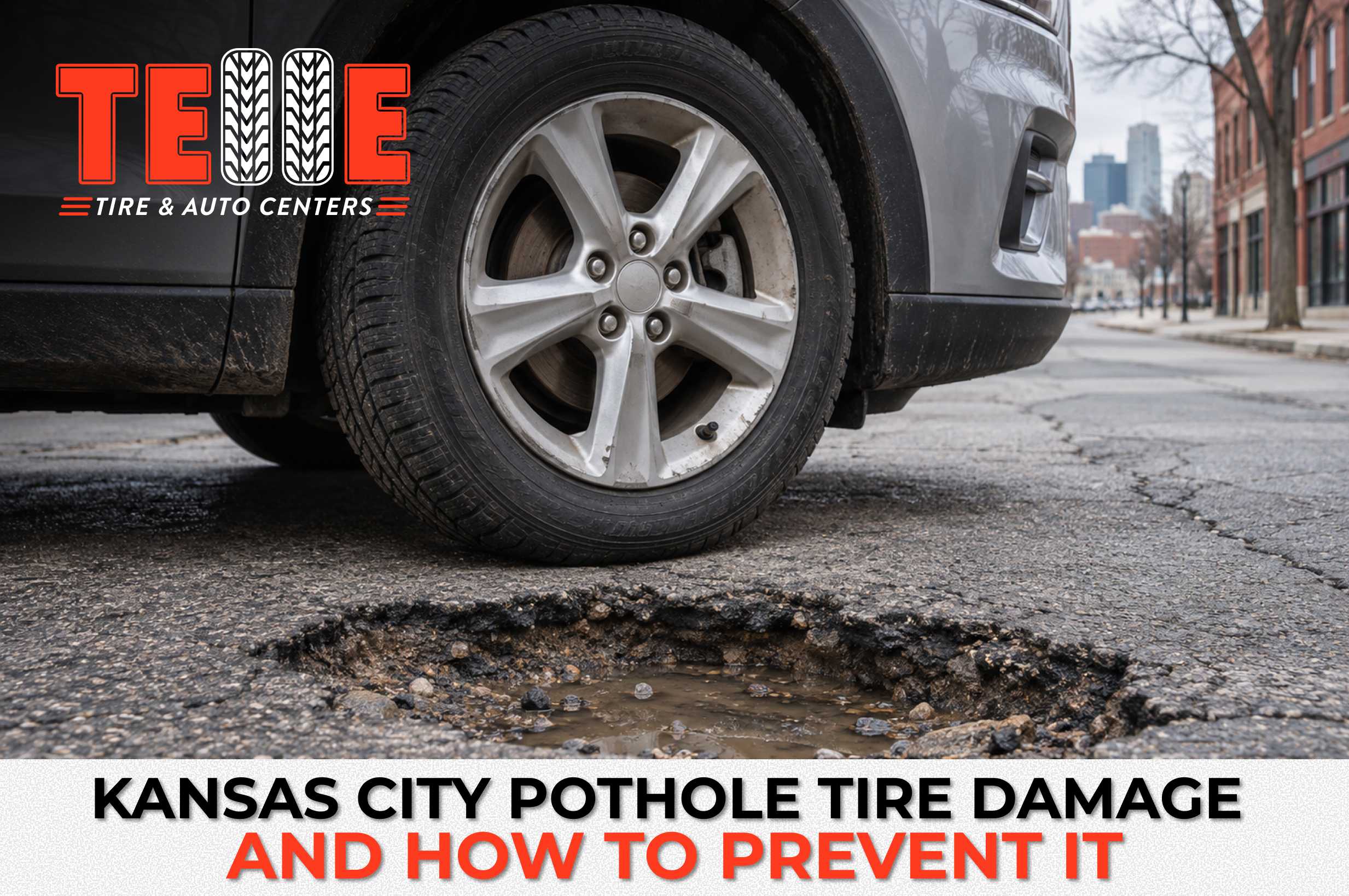
Kansas City pothole tire damage can happen in seconds. One hard impact can leave you with a flat tire, a bent wheel, an alignment problem, or damage that is difficult to see from the outside. For drivers commuting across Kansas City, dealing with potholes is a familiar part of navigating local roads, especially after winter weather and repeated freeze-thaw cycles.
The good news is that knowing what to look for can help you catch problems early. This guide explains how potholes damage tires and wheels, what symptoms to watch for, what to do immediately after an impact, and how Kansas City drivers can reduce the risk of expensive repairs.
TL;DR for Kansas City pothole tire damage
- A hard pothole impact can affect the tire, wheel, alignment, steering, and suspension components.
- A slow leak after hitting a pothole can point to tire or wheel damage even when there is no obvious puncture.
- Bulges, bubbles, cuts, or exposed cords can indicate structural damage that makes a tire unsafe to drive on.
- Pulling, steering-wheel vibration, shaking, or a new wobble can signal alignment or wheel problems.
- If you hit a severe pothole, having the tire and wheel checked can identify hidden damage before it becomes a roadside problem.
What causes Kansas City pothole tire damage
Potholes form when water enters cracks in pavement, freezes, expands, and weakens the road surface. Traffic then breaks apart the weakened pavement, creating holes that can range from shallow depressions to deep craters.
That combination of road conditions and vehicle speed makes potholes particularly hard on tires and wheels. The impact is even more severe when the pothole is difficult to see because of darkness, rain, standing water, or traffic.
Kansas City drivers have seen the financial consequences firsthand. A 2019 KMBC report documented a local driver who faced a $1,200 repair bill after a pothole damaged a tire and wheel.
The damage can include:
- Sidewall damage – The tire sidewall can develop cuts, bubbles, bulges, or internal damage when compressed against the edge of a pothole. Some structural damage may not be obvious immediately after the impact.
- Tire punctures – A sharp pothole edge can damage the tread or force the tire against the wheel hard enough to create a leak. A tire that loses pressure afterward should be inspected promptly.
- Bent wheels – Alloy wheels can bend from a severe impact, allowing air to escape where the tire meets the wheel. A bent wheel can also contribute to vibration at certain speeds.
- Wheel cracks – A particularly hard impact can crack a wheel, especially when the vehicle has low-profile tires and larger wheels. Cracks can cause air loss and may make the wheel unsafe.
- Alignment problems – A pothole can knock the suspension or steering geometry out of specification. Your car may begin pulling to one side or the steering wheel may sit crooked while driving straight.
A pothole does not have to cause an immediate flat to be a concern. A vehicle that seems fine immediately after an impact can develop a slow leak, uneven tire wear, or handling problems later.
How do you know if a pothole damaged your tire
Kansas City pothole tire damage is sometimes easy to spot, but hidden damage can be more concerning. Pay attention to changes in tire pressure, steering, handling, and ride quality after a significant impact.
Look for visible tire damage
Park somewhere safe and inspect the tire when possible. Look closely at the sidewall and tread for cuts, bulges, bubbles, exposed cords, or other changes.
A bulge or bubble on the sidewall warrants particular attention, as it may indicate damage to the tire’s internal structure. Do not assume a tire is safe simply because it is still holding air.
Check for pressure loss
If the tire pressure warning light comes on after hitting a pothole, check the pressure as soon as it is safe to do so.
A damaged wheel can allow air to escape around the tire bead. A tire may also have a small puncture or internal damage that causes pressure to drop gradually.
Pay attention to steering changes
If your steering wheel is suddenly crooked or the vehicle pulls to one side, the impact may have affected the alignment or suspension.
Kansas City pothole tire damage can therefore show up as a driving problem rather than a visible tire problem. If the vehicle feels different after the impact, have it checked rather than assuming the sensation will disappear.
Watch for new vibrations
A bent wheel, tire imbalance, or suspension issue can create a vibration that becomes more noticeable as speed increases.
A new vibration after hitting a pothole is a good reason to have the tire and wheel inspected, particularly before taking the vehicle on the highway.
What should you do after hitting a pothole?
The safest response depends on how severe the impact was and whether the vehicle is showing symptoms. If you hear a loud bang or immediately notice a flat, pull over somewhere safe rather than continuing at normal speed.
Use these steps after a significant impact:
- Find a safe place to stop – Avoid stopping in traffic or immediately beside a dangerous section of roadway. If the vehicle is difficult to control, prioritize getting to a safe place.
- Inspect the tire – Look for obvious cuts, bulges, punctures, or a visibly damaged sidewall. Check the other tire on the same axle as well.
- Check tire pressure – Compare the pressure with the vehicle manufacturer’s recommended cold inflation pressure.
- Look at the wheel – Check for obvious bends, cracks, or fresh damage around the rim. Some wheel damage can be difficult to identify without professional equipment.
- Test the vehicle carefully – If there is no visible damage and the tire is properly inflated, pay attention to pulling, vibration, unusual noises, or changes in steering.
- Schedule an inspection if something feels different – A professional can check the tire, wheel, alignment, and suspension for problems that may not be visible in your driveway.
Avoid driving on a tire with a serious sidewall bulge, major cut, exposed cords, or significant pressure loss. Continuing to drive on a structurally damaged tire can increase the risk of a tire failure.
Can potholes damage wheels and alignment?
Yes. A pothole impact can affect the wheel and alignment even when the tire itself appears to be in good condition.
This is especially important for vehicles equipped with larger wheels and shorter sidewall tires. There is less tire sidewall available to absorb the impact, so the wheel can receive more of the force.
Common signs of wheel or alignment damage include:
- The steering wheel is off-center – If the wheel used to sit straight while driving and suddenly does not, the vehicle may need an alignment inspection.
- The car pulls left or right – A consistent pull after an impact can indicate alignment changes or another steering and suspension concern.
- The steering wheel vibrates – Vibration can come from a bent wheel, tire damage, imbalance, or suspension problems.
- The vehicle feels unstable – A new sensation of wandering or unusual handling should be checked before you continue driving normally.
- Tire wear becomes uneven – Alignment problems can cause one section of the tread to wear faster than another, reducing tire life.
Telle Tire & Auto Centers recommends addressing these symptoms rather than waiting for them to become severe. Its Kansas City locations handle tire, wheel, alignment, suspension, and related automotive services, giving local drivers a convenient place to have pothole-related concerns evaluated.
How can you prevent Kansas City pothole tire damage
You cannot control where every pothole appears, but you can reduce the risk of serious damage by keeping your tires properly maintained and adjusting your approach to rough roads.
These habits are particularly useful for drivers who regularly travel city streets, highways, and neighborhood roads around Kansas City.
- Maintain the recommended tire pressure – Proper inflation helps the tire perform as designed and can reduce unnecessary stress on the tire and wheel. Check pressure when the tires are cold and follow the vehicle manufacturer’s recommended setting.
- Inspect tires regularly – Look for cuts, cracks, bulges, uneven wear, and objects embedded in the tread. Catching an existing weakness before hitting a pothole can help prevent a minor tire problem from becoming a major one.
- Slow down when conditions allow – Reducing speed before rough pavement gives you more time to identify hazards and reduces the force of an unavoidable impact. Avoid sudden swerving into another lane to miss a pothole.
- Leave extra following distance – The vehicle ahead may hide potholes from view. More space gives you additional time to see the road surface and choose a safer path.
- Use tires appropriate for your vehicle – Tire size, load rating, construction, and sidewall characteristics all affect how a vehicle responds to rough roads. A tire professional can help you choose a suitable option for your driving conditions.
- Keep your wheels and alignment in good condition – A vehicle with existing alignment or suspension problems may handle poorly after another road impact. Regular inspections can identify worn components before they contribute to uneven tire wear or handling concerns.
Tire care also matters before longer trips. Telle Tire’s recent Kansas City tire guidance recommends checking tires before driving and highlights potholes, seasonal changes, and summer heat as local conditions that can place additional stress on tires.
When should you replace a pothole-damaged tire
Not every pothole impact means you need a new tire. The decision depends on the type and severity of damage.
A repair may be possible when the damage is a qualifying tread puncture and the tire’s internal structure remains sound. Sidewall and shoulder damage are different because these areas play an important role in maintaining the tire’s structural integrity.
A tire generally deserves immediate professional attention when you notice:
- A sidewall bulge or bubble – This can indicate internal structural damage and should not be ignored.
- A deep cut – A significant cut can compromise the tire’s internal layers even when the tire continues to hold air.
- Exposed cords – Visible cords indicate serious damage and require replacement.
- Persistent air loss – A tire that repeatedly loses pressure after a pothole impact needs to be inspected for leaks or wheel damage.
- Severe tread damage – Missing rubber, large tears, or other major tread damage can make the tire unsafe.
If replacement is necessary, ask whether the remaining tires have similar tread depth and condition. Replacing one tire may be appropriate in some situations, while replacing a pair or a complete set can make more sense depending on the vehicle and tread difference.
Protect Your Tires From Kansas City Pothole Damage
Kansas City pothole tire damage can range from a simple puncture to a damaged wheel, alignment problem, or hidden tire failure. Paying attention to tire pressure, steering changes, vibrations, and visible damage gives you a better chance of catching a problem before it becomes an expensive or unsafe repair.
For local drivers, Telle Tire & Auto Centers can help inspect pothole-related tire and wheel concerns and determine what needs attention. If your vehicle took a hard hit on a Kansas City road, getting it checked can provide peace of mind before your next commute or road trip.
Hit a pothole and something feels different? Telle Tire & Auto Centers can help check your tires, wheels, alignment, and related components. Schedule service online and get your vehicle inspected before a small pothole problem turns into a bigger repair.

Take it to telle
Stay Safe with a Tire Check from Telle Tire
Worried about your tread depth or tire condition heading into the summer storm season? Take it to Telle. Our expert technicians can assess your tires, check pressure levels, and recommend replacements when necessary, helping you stay in control regardless of the weather conditions. Stay safe, stay prepared, and if you’re unsure about your tires, schedule a visit with your nearest Telle Tire & Auto Centers location today.
Stay Informed
Recent Articles from Telle Tire
Best Tires for St Louis Weather and Changing Seasons
St. Louis drivers deal with a little bit of everything. Hot, humid summers can be followed by heavy rain, sudden temperature drops, freezing conditions, and occasional…
Tire Vibration While Driving: Causes and How to Fix It
Tire vibration while driving can make even a familiar commute feel uncomfortable. You might notice the steering wheel shaking on the highway, a buzzing sensation through…
Oil Change Intervals for Short Trips: Time or Mileage?
Short commutes, school drop-offs, grocery runs, and quick drives around Jefferson City can add very few miles to your odometer. However, frequent short trips can affect…