St Louis Pothole Tire Damage: Can Potholes Ruin Tires?
 Telle Tire 13 min read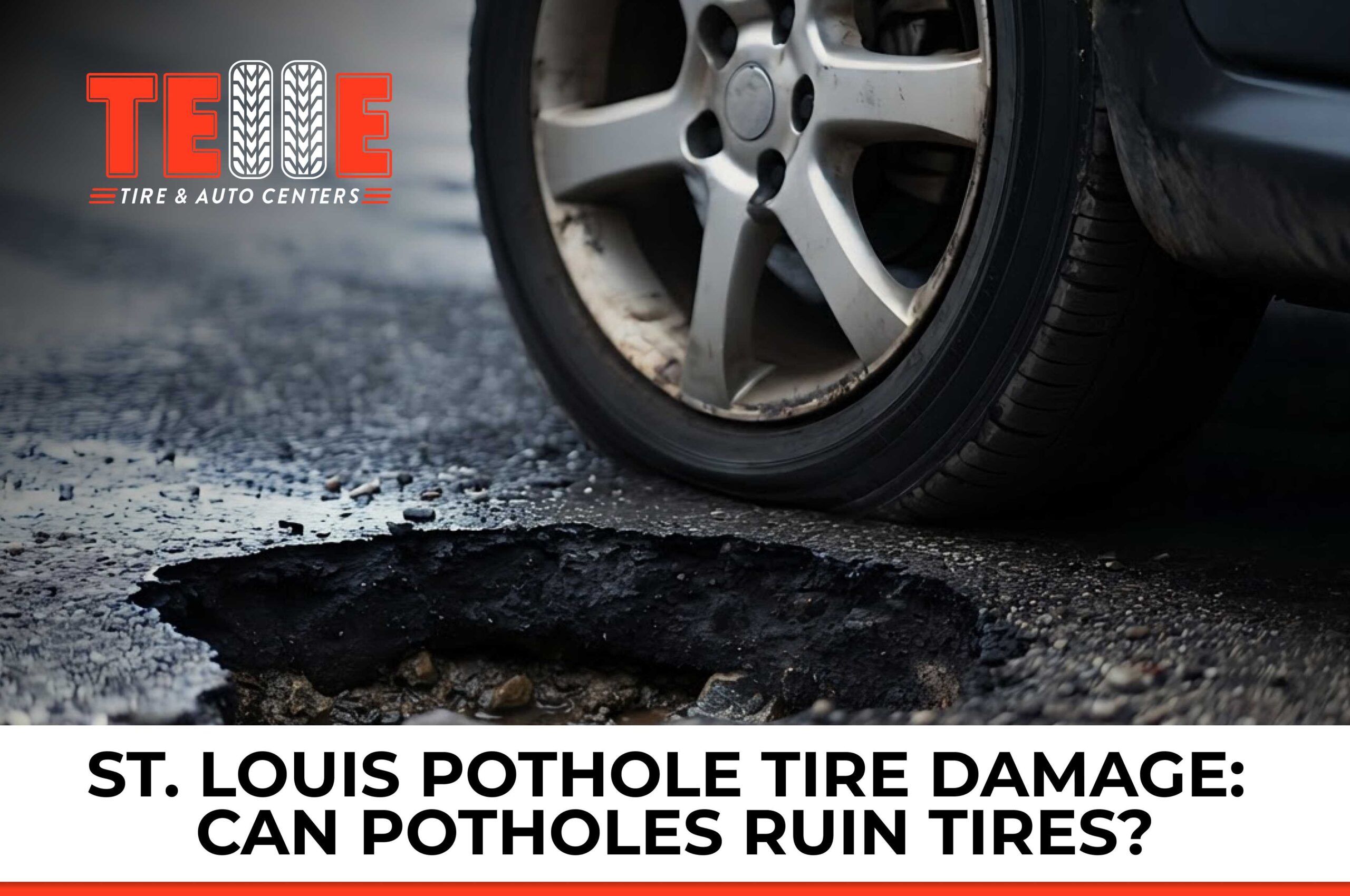
A pothole can feel like a quick bump, but the impact can be much harder on your vehicle than it seems. If you hit a deep hole in the road and hear a loud thud, notice your steering feels different, or see that a tire has lost air, you may be dealing with St Louis pothole tire damage.
Potholes are a familiar problem for St. Louis drivers, particularly when repeated freezing and thawing weaken pavement. The City of St. Louis explains that water can enter cracks in the road, freeze and expand, then leave gaps beneath the pavement as it thaws. Traffic can eventually collapse the weakened surface into a pothole.
So, can a pothole actually ruin a tire? Yes. A hard impact can damage the tire, wheel, alignment, steering, or suspension. Some problems are obvious immediately, while others may appear days or weeks later.
TL;DR – St Louis Pothole Tire Damage Quick Guide
- A pothole can ruin a tire – A hard impact can cause punctures, sidewall bulges, cuts, or internal damage.
- Pothole damage in St. Louis can affect more than tires – Wheels, alignment, steering, and suspension can also be damaged.
- Tire damage from potholes is not always visible – Watch for pressure loss, vibration, or changes in handling.
- Pothole tire repair in St. Louis depends on the damage – Tread punctures may be repairable, while sidewall damage usually requires replacement.
- St. Louis pothole damage to wheels can cause problems – Bent or cracked wheels can lead to air leaks, vibration, and poor handling.
Can a Pothole Tire Damage Really Ruin a Tire?
Yes. A pothole can cause enough force to damage the tire’s internal structure, especially when you hit it at speed, or the tire is underinflated.
The tire can be squeezed sharply between the road and the wheel. That sudden compression can cause a puncture, sidewall bulge, tread separation, or other structural damage. Tire manufacturers warn that impact damage can make a tire unsafe even when the problem is difficult to see from the outside.
The severity depends on several factors:
- Pothole depth – A deeper pothole creates a harder impact and increases the chance of damage.
- Driving speed – The faster you enter the pothole, the more energy the tire and wheel must absorb.
- Tire pressure – Incorrect inflation can alter how the tire responds to impacts. Proper inflation helps the tire perform as designed.
- Tire condition – Older or worn tires may have less remaining tread and structural strength to handle severe road impacts.
- Vehicle weight – Heavier vehicles, including many SUVs, place substantial force on the tires and wheels during an impact.
A hard hit does not automatically mean your tire needs to be replaced. The important step is determining exactly what happened.
What Does St Louis Pothole Tire Damage Look Like?
Some St Louis pothole tire damage is easy to spot. Other problems can go unnoticed until the tire begins to lose air or the vehicle starts to behave differently.
After a significant impact, look for these warning signs:
- Sidewall bulge or bubble – A bubble on the sidewall can indicate damage to the tire’s internal structure. Michelin warns that a sidewall bulge can create a risk of sudden air loss and should be inspected promptly.
- Cut or tear – A deep cut can penetrate beyond the outer rubber and damage the internal cords that help contain tire pressure.
- Low tire pressure – A pothole impact can cause a puncture, valve problem, or damage where the tire seals against the wheel.
- Uneven tread appearance – Changes in the tread may indicate impact or alignment problems.
- Vibration – A new vibration after hitting a pothole can point to tire or wheel damage.
- Pulling while driving – If the vehicle suddenly pulls left or right, the steering or suspension may be affected.
Do not assume that a tire is safe simply because it still holds air. Some impact damage can remain hidden, which is why a professional inspection is worthwhile after a particularly hard hit.
What Other Pothole Damage Should St. Louis Drivers Watch for?
When people think about pothole damage in St. Louis, tires are usually the first concern. They should be, but the impact can travel through the wheel and into the vehicle’s steering and suspension systems.
Here are other areas worth checking after a significant impact:
- Wheel damage – A pothole can bend or crack a wheel. Even a small deformation can interfere with the seal between the tire and wheel.
- Wheel alignment – A hard impact can knock the wheels out of their intended alignment, which may cause pulling, an off-center steering wheel, or uneven tire wear.
- Suspension components – Shocks, struts, springs, control arms, and related components can absorb the force of a pothole impact.
- Steering components – Tie rods and other steering parts can be affected by a severe road impact, potentially changing how the vehicle responds.
- Tire balance – A damaged tire or wheel can create vibration that becomes noticeable as speed increases.
MOOG notes that pothole damage can affect tires, wheels, alignment, steering, and suspension, with speed and pothole depth being two major factors in the severity of the impact.
That means a tire inspection can be only part of the picture. If your vehicle feels different after hitting a pothole, tell the technician exactly what you noticed and when it started.
How Do You Know if You Have Tire Damage From Potholes?
Tire damage from potholes can appear immediately or develop into noticeable symptoms later. A quick check after an impact can help you decide whether you need professional attention.
Start with these checks:
-
Look at the affected tire
Check the outer sidewall and tread for bubbles, cuts, cracks, or unusual deformation. If possible, inspect the inner sidewall as well because damage can occur where you cannot easily see it.
-
Check the tire pressure
Compare the pressure with the vehicle manufacturer’s recommended cold inflation pressure, usually found on the driver’s door-jamb label or in the owner’s manual. A tire that begins to lose pressure after impact deserves an inspection.
-
Pay attention to steering
Drive cautiously and notice whether the steering wheel is suddenly off-center or the vehicle pulls to one side.
-
Listen for unusual sounds
New humming, thumping, clicking, or other speed-related noises can indicate a tire or wheel problem.
-
Watch for vibration
A new vibration through the steering wheel or vehicle body can be a clue that the tire, wheel, or alignment needs attention.
SimpleTire’s post-impact inspection guidance similarly recommends checking the tire visually, monitoring steering response, listening for speed-sensitive noises, and verifying tire pressure.
If something feels different after the pothole, trust that change. Your vehicle does not need to become difficult to drive before it deserves an inspection.
Can Pothole Tire Damage Be Repaired?
Sometimes. The answer depends largely on where the damage occurred and whether the tire’s internal structure remains sound.
A small puncture in the appropriate part of the tread may be repairable. Continental states that a repairable puncture generally needs to be small, located within the central repairable portion of the tread, and free from internal structural damage.
By contrast, sidewall damage is a different situation.
- Small tread puncture – A qualified technician may be able to repair certain punctures when the tire meets repair criteria.
- Sidewall cut – Sidewall damage can compromise the tire’s structural strength and generally calls for replacement.
- Sidewall bubble – A bulge or bubble is a serious warning sign and is not a normal repair situation.
- Internal impact damage – Broken belts or other internal damage may make the tire unsafe even when the exterior looks acceptable.
- Damaged tire shoulder – Damage near the shoulder may fall outside the safe repair area and require tire replacement.
This is why pothole tire repair in St. Louis should begin with an inspection rather than an assumption that a tire can be patched.
A reputable shop should explain what caused the problem and whether repair or replacement is the safer choice. If replacement is necessary, the correct tire size, load rating, speed rating, and application should be considered rather than choosing a tire based on price alone.
When Should You Stop Driving After Hitting a Pothole?
Not every pothole impact requires a tow truck. However, some warning signs indicate you should stop driving on the affected tire.
Stop and arrange for professional assistance if you notice:
- A visible sidewall bubble or large bulge
- Rapid or significant loss of tire pressure
- A tire that appears severely damaged or misshapen
- A cracked wheel
- Severe steering problems
- Strong new vibrations
- A tire that is rubbing against another component
- A loud, persistent impact-related noise
A sidewall bulge deserves particular attention. Michelin explains that a bulge can indicate damage to the tire’s internal structure and can lead to sudden air loss.
Driving farther can increase the risk of turning a manageable repair into a more expensive problem. If you are unsure whether a damaged tire is safe to drive on, have it inspected instead of taking a chance.
What Should You Do After Hitting a Pothole in St. Louis?
If you experience St. Louis pothole damage to wheels, tires, or other components, your first priority should be safety. Move to a safe location when possible and avoid sudden steering or braking.
Then follow this simple process:
- Check your surroundings – Pull over somewhere safe where you can inspect the vehicle without standing in active traffic.
- Check the tire pressure – A pressure change can reveal a leak that may not be visible.
- Inspect the tire – Look for bubbles, cuts, punctures, and unusual tread or sidewall changes.
- Check how the vehicle drives – Notice pulling, vibration, steering changes, or unusual sounds.
- Arrange an inspection – If the impact was severe or the vehicle feels different, have the tire, wheel, alignment, and suspension evaluated.
You should also take photographs if the damage is significant. Pictures of the tire, wheel, location, and pothole may be useful for documenting what happened, particularly if you later investigate whether an insurance or municipal claim may apply.
Coverage for pothole damage depends on the circumstances and your insurance policy. For example, collision coverage may help with sudden accidental pothole damage in some policies, so check your specific coverage before assuming a claim will or will not be covered.
Get Your Pothole Damage Checked by Telle Tire
St Louis pothole tire damage can range from a minor tread problem to a serious tire, wheel, alignment, or suspension issue. The key is to pay attention to changes in tire pressure, steering, vibration, noise, and handling after a hard impact.
You do not need to diagnose the problem yourself. If you have concerns about pothole damage in St. Louis, a professional inspection can help identify the actual source of the problem before it becomes more expensive or compromises your safety.
If you have recently hit a pothole and something feels different, schedule an inspection with Telle Tire & Auto Centers. Their St. Louis-area teams can evaluate your tires and help determine whether you need tire service, wheel work, an alignment, suspension service, or another repair.
You can schedule service with Telle Tire & Auto Centers and choose a convenient St. Louis-area location.

Take it to telle
Stay Safe with a Tire Check from Telle Tire
Worried about your tread depth or tire condition heading into the summer storm season? Take it to Telle. Our expert technicians can assess your tires, check pressure levels, and recommend replacements when necessary, helping you stay in control regardless of the weather conditions. Stay safe, stay prepared, and if you’re unsure about your tires, schedule a visit with your nearest Telle Tire & Auto Centers location today.
Stay Informed
Recent Articles from Telle Tire
Where to Buy Tires in Missouri: Local Buying Guide
Finding the right place to buy tires can feel overwhelming. Missouri drivers have plenty of choices, from national retailers to independent tire shops and full-service auto…
Tennessee Car Maintenance Schedule to Avoid Major Repairs
Keeping up with a Tennessee car maintenance schedule is one of the smartest ways to protect your vehicle and avoid expensive breakdowns. Every oil change, tire…
Essential Springfield, MO, Vehicle Maintenance Checklist Tips
Keeping up with regular vehicle care is one of the smartest ways to protect your investment and enjoy a safer drive. Whether you commute across Springfield…